



Our customers say Excellent 4.7 out of 5 based on 1,640 reviews
Is solar-only right for you?

Who is solar-only best for?

Most homes do better with solar and a battery, but for some, panels alone already cover the bulk of the saving. If any of these sound like you, cost up solar-only first.

  • Electric car charging on a UK driveway in daylight

    EV driver

    Your EV charges in daylight

    Park up at lunchtime, plug in, and let your charger run on solar. Daytime EV charging soaks up most of the surplus that would otherwise need storing.

  • UK detached home with solar panels fitted, wall space free for a battery later

    Phased buyer

    You want solar now, battery soon after

    Spread the spend. You can add a battery later (next year, or whenever your EV arrives), so day-one is just panels.

Make the most of it

How can you use more of the solar you generate for free?

  • When should you run your appliances?

    Run the dishwasher, washing machine, and dryer between 11am and 3pm, when generation is highest.

  • Can you charge an EV with solar?

    Set your charger to solar mode (Ohme) so it tops the car up only on surplus. Free fuel on sunny days.

  • What if you want to use solar after dark?

    A battery stores midday surplus for the evening peak instead of exporting it cheap. See our solar and battery storage page for how the maths works.

How It Works

How fast does a solar-only install go?

Solar-only installs are quicker than a combined system because there's no hybrid inverter to commission and no battery to bench-test. Most jobs finish in 1-2 days.

  1. 01

    What does the online survey cover?

    Tell us about your roof and usage. Our quote tool maps the sun your roof gets across the year from satellite data, so the system is sized to your actual yearly exposure, not a postcode average. No site visit needed at this stage.

  2. 02

    How is your price calculated?

    An all-in fixed price based on your roof's modelled generation, your usage, and the inverter we size to match. No deposits chased and no surprise extras on the day.

  3. 03

    How long does the fit take?

    Scaffolding, panels, inverter, electrical work, commissioning and MCS registration in 1-2 days. Faster than a combined install because there's no battery to wire in.

Get your free solar quote Takes a few minutes. No obligation.

Want to see what solar-only would save you?

Tell us about your home and you'll get a fixed all-in price for solar-only and a combined solar + battery system on one quote, so you can compare like for like.

Costs & Payback

Should you add a battery now, or wait?

Both setups work. The right pick depends on when you actually use power and how much you want to spend up front. Here's the honest side-by-side.

Solar + battery

Higher upfront, longer payback, full evening cover and 0% VAT on the battery.

Upfront, fully fitted
From around £7,150
Typical year-one bill cut
50-70%
Payback window
~9-12 years
Evening cover
Yes, on stored solar
Install time
About a week

Best for: households out during the day, time-of-use tariff users, anyone wanting backup during a grid outage. See combined systems.

Roof orientation

Does roof orientation matter for solar panels?

Yes. It mostly comes down to which way your roof faces. The table below is the rough rule. Our quote tool figures out the specifics for your roof when you ask for a price.

South-facing roofs catch the most sun across the year.
Roof orientation Annual yield Yearly generation What it means for you
South 100% (baseline) ~3,400 kWh Best you can get. Highest yield through the year.
South-east or south-west ~95% ~3,240 kWh Almost as good as south. You'll barely see the difference.
East or west ~80% ~2,720 kWh Still pays off well. East peaks in the morning, west in the evening, so it can fit your daytime usage.
North-east or north-west ~65% ~2,200 kWh Noticeable drop, but still worth running the numbers against your actual usage.
North ~55% ~1,880 kWh Steep drop. We'd usually point you at another roof face if you have one.
Flat roof (0°) ~88% (tilted frame) ~3,000 kWh Works fine. We angle the panels on a tilt frame so they sit at the 10-15° sweet spot.
Standards & protections

What protections come with an MCS solar install?

Three schemes do real work on every UKEM solar install: certified quality, a consumer-code-backed contract, and a written estimate of what your system should produce.

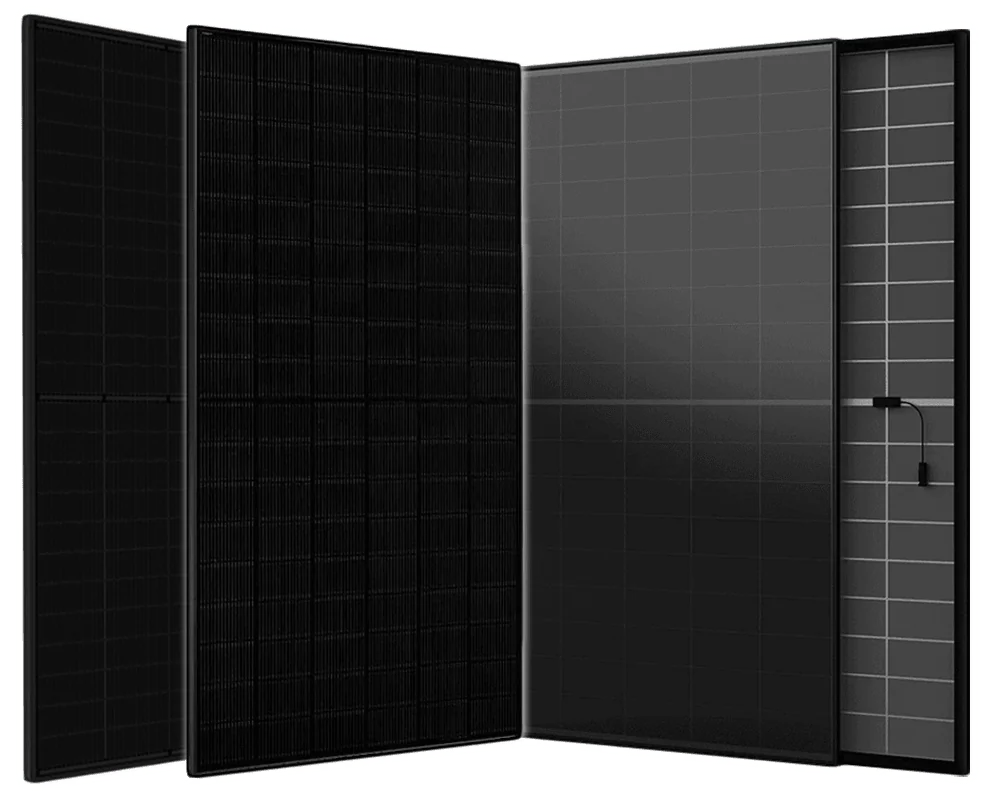
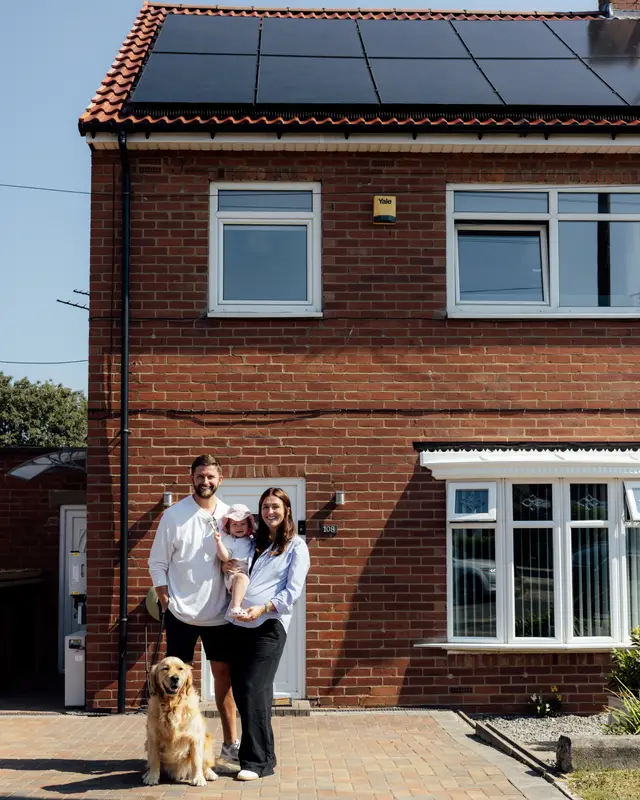
Black solar panels on a UK home tiled roof under a clear blue sky
MCS certified installer logo

MCS certification

The industry mark for product quality and installer workmanship on UK renewables, re-audited every 12 months. Installer MCS certification is mandatory to claim SEG payments. UKEM is MCS-certified for solar PV (mcscertified.com).
RECC consumer code member logo

RECC consumer code

The Renewable Energy Consumer Code is the TSI-approved code of practice for renewables firms, with binding rules on sales conduct, contracts, deposits, and dispute resolution (recc.org.uk).

MCS Performance Estimate

A written document we issue with every install predicting your system's annual generation in kWh, factoring in your roof's orientation, pitch, and shading. Your SEG supplier uses it to verify export payments.
Aerial view of a UK home with all-black solar panels fitted to a south-facing roof
Get a solar quote
Common Questions

Solar-only FAQ

Honest answers on whether solar makes sense without a battery, what you save, and how to add a battery later.

How much do solar panels cost in the UK?

A typical residential solar panel system costs between £5,000 and £12,000+, depending on system size, roof layout, and whether you add battery storage. UKEM installs systems from 6 panels (2.67 kW), with larger systems available where suitable. Get a fixed, personalised price through our online quote tool.

Is solar worth it without a battery?

Yes, for plenty of homes. Solar-only has the lowest upfront cost and often pays back within 7 to 10 years, suiting anyone home by day or running an EV on daylight hours. The trade-off is weaker evening cover: surplus exports under the Smart Export Guarantee rather than being stored. If you're out most days and use power mainly in the evening, see our combined solar and battery systems.

Can I add a battery later, and what does it cost?

Yes. Most retrofits use an AC-coupled battery alongside your existing inverter, fitting in about a day with no roof work. Standalone retrofits typically run from around £4,000 to £12,000+ by capacity. Bundling the battery into your original solar install is usually £1,500 to £4,000 cheaper than retrofitting later. See our battery-only options.

Which Smart Export Guarantee tariff pays the most?

SEG rates currently sit between roughly 3p and 16p per kWh. In June 2026, Ecotricity pays around 16p and EDF around 15p, usually requiring import from the same supplier. Octopus Outgoing pays around 12p with no tie-in, while default tariffs pay 3p to 8p. A headline rate is only useful if your chosen supplier can register your property (export-capable smart meter, export MPAN, and acceptance of your meter type). Check with the supplier before you model payback around export income. See the Ofgem SEG list and our SEG guide. Without a battery, export volume is higher, so a strong rate moves returns when registration is confirmed. Ofgem's latest annual figures show SEG paid households £57m in year five.

How can I use more of my solar without a battery?

The goal is self-consumption: use your generation directly instead of exporting cheap and buying back expensive. Schedule heavy appliances (dishwasher, washing machine, tumble dryer) between 11am and 3pm when generation peaks. With an EV, set your charger to solar mode for daylight top-ups. Together these can lift self-consumption well above the 30 percent solar-only average, without extra kit.

Do solar panels work in the UK climate?

Yes. Solar panel systems generate electricity from daylight, not direct sunshine, so they still perform on cloudy days. You'll generate more in summer and less in winter, but the annual output is usually strong enough to deliver meaningful savings for UK homes.

Do I need planning permission for solar panels?

Usually no. Most domestic rooftop systems fall under permitted development rights in England, Wales and Scotland. Exceptions include listed buildings, conservation areas, and some flat-roof setups where panels project above height limits. We check your property before your installation is booked so any extra permission is flagged early.

Which inverter comes with the system?

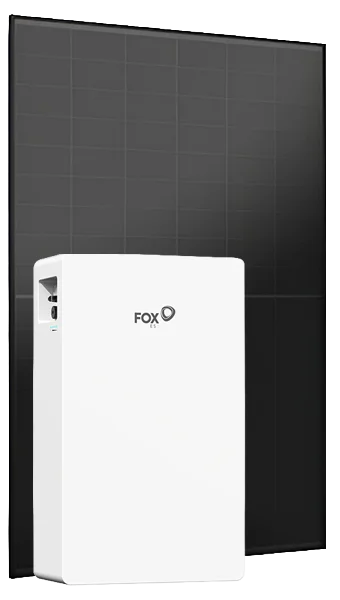
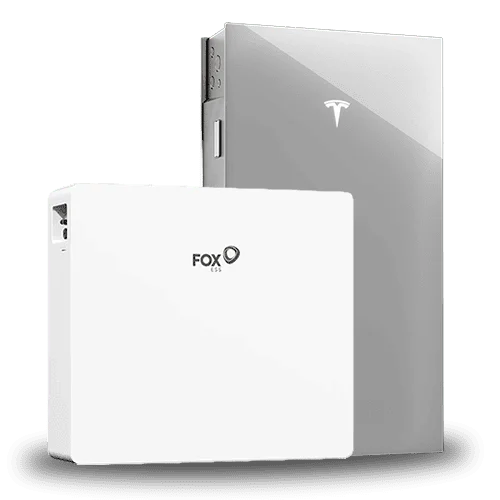
Solar-only installs get a Fox ESS single-phase string inverter: F-series (3, 5 or 6 kW, dual MPPT) for most homes, or G-series (8 or 10 kW with three MPPT trackers) for larger or multi-aspect roofs. Solar and battery systems get a Fox ESS H1 hybrid inverter (3.7 to 6.0 kW) that manages panels and battery together, while the Tesla Powerwall 3 has its own hybrid inverter built in. Fox ESS inverters carry up to a 10-year warranty, and we size the right unit to your roof and usage as part of your fixed online quote.

How long does solar panel installation take?

Most standard installs finish within around one week on site. Larger systems or complex roof layouts can take longer. We handle scaffolding, electrical work, commissioning, and MCS paperwork so the process stays straightforward. Quote-to-install timing depends on survey and DNO approval where needed.

Can I get a solar and battery system on finance?

Yes. Panels, inverter, and battery storage are usually bundled into a single fixed-rate APR agreement, so you have one monthly payment for the whole system. Bundling also means 0% VAT applies under the energy-saving materials relief (running until 31 March 2027). Many households structure repayments so the monthly cost lines up roughly with bill savings and Smart Export Guarantee income. See how our finance options are structured.

Will the monthly finance cost be less than my solar savings?

Usually it nets out close to even. Your electricity bill drops from the first month, and that saving plus Smart Export Guarantee income covers much of the finance payment. Most households see total monthly outgoings land around the same as before. Once finance is cleared, you keep generating for the panels' 25-year-plus lifespan at low running cost.

Aerial view of a UK detached home with all-black solar panels covering the roof

Want to know what you'd save? Get a price in a few minutes.

A few quick questions and you'll get a fixed all-in price for solar. We can talk savings and SEG tariff options at handover.