







Costs & grants
How much do solar panels cost in the UK?
A UKEM solar panel system costs around £5,700 to £10,800 fully fitted, or £7,600 to £25,500 with battery storage, depending on system size, roof layout and battery choice. UKEM installs systems from 6 panels (2.7 kW), with larger systems available where suitable. Get a personalised estimate through our online quote tool.
Are there grants for solar panels in the UK?
Not directly. There's no grant for owner-occupiers buying solar in 2026, but two main supports apply instead: 0% VAT on installation under the VAT relief scheme (running until 31 March 2027), and the Smart Export Guarantee paying you for surplus power. Low-income households may qualify through ECO4 or the Warm Homes Plan. See our grants guide.
How does the Smart Export Guarantee work?
The Smart Export Guarantee (SEG) requires larger energy suppliers to pay you for surplus electricity you export to the grid. Rates currently sit between roughly 2p and 16p per kWh, depending on supplier and tariff type. You need an export-capable smart meter, an MCS certificate, and an export MPAN from your DNO. Confirm with your chosen SEG supplier that registration is workable at your address before you bank on a headline rate; rollout and admin times vary by postcode. Full details on the Ofgem SEG page and our SEG guide.
How long does a solar system take to pay back?
For the systems we install, payback typically sits around 8 to 12 years for solar on its own and around 9 to 13 years with a battery. Solar-only costs less up front, so it usually pays back first; a battery lifts your savings but adds to the upfront cost. The main levers are your SEG rate, how much generation you use directly at home (self-consumption), your import tariff, and whether storage is fitted. Our solar and battery hub covers the maths in more detail.
Solar without a battery
Is solar worth it without a battery?
Yes, for plenty of homes. Solar-only has the lowest upfront cost and often pays back in around 8 to 12 years, suiting anyone home by day or running an EV on daylight hours. The trade-off is weaker evening cover: surplus exports under the Smart Export Guarantee rather than being stored. If you're out most days and use power mainly in the evening, see our combined solar and battery systems.
Can I add a battery later, and what does it cost?
Yes. Most retrofits use an AC-coupled battery alongside your existing inverter, fitting in about a day with no roof work. Standalone retrofits typically run from around £4,400 to £13,300 by capacity. Bundling the battery into your original solar install is usually £1,500 to £4,000 cheaper than retrofitting later. See our battery-only options.
Which Smart Export Guarantee tariff pays the most?
SEG rates currently sit between roughly 2p and 16p per kWh. In October 2026, Ecotricity pays around 16p, EDF and E.ON Next around 13p and Octopus Outgoing around 12p, all usually requiring import from the same supplier, while default tariffs pay 2p to 6p. A headline rate is only useful if your chosen supplier can register your property (export-capable smart meter, export MPAN, and acceptance of your meter type). Check with the supplier before you model payback around export income. See the Ofgem SEG list and our SEG guide. Without a battery, export volume is higher, so a strong rate moves returns when registration is confirmed. Ofgem's latest annual figures show SEG paid households £57m in year five.
How can I use more of my solar without a battery?
The goal is self-consumption: use your generation directly instead of exporting cheap and buying back expensive. Schedule heavy appliances (dishwasher, washing machine, tumble dryer) between 11am and 3pm when generation peaks. With an EV, set your charger to solar mode for daylight top-ups. Together these can lift self-consumption well above the 30 percent solar-only average, without extra kit.
Suitability
Do solar panels work in the UK climate?
Yes. Solar panel systems generate electricity from daylight, not direct sunshine, so they still perform on cloudy days. You'll generate more in summer and less in winter, but the annual output is usually strong enough to deliver meaningful savings for UK homes.
Do I need a south-facing roof?
No. South-facing roofs give the highest annual yield, but east-west systems work well too, generating around 15 to 20% less across the year while spreading output more evenly through the day. North-facing pitches generally aren't viable. A split east-west array can suit homes where usage is concentrated morning and evening.
Will solar work with a slate or flat roof?
Yes to both. Slate roofs use specific hook brackets that lift individual tiles rather than drilling through them. Flat roofs use ballasted or fixed mounting frames angled to roughly 10 to 15 degrees for optimal generation. We confirm the right mounting kit and any structural checks as part of preparing your installation.
Is it still worth getting solar panels in the UK?
Yes. Panel prices are well below their historic levels, 0% VAT applies until 31 March 2027, and the Smart Export Guarantee pays for every unit you export. A typical home system offsets a large share of daytime electricity use and keeps working for 25+ years under warranty. The maths is strongest if you're home during the day, add a battery, or charge an EV. Our 2026 worth-it analysis runs the numbers against record sunshine and the current price cap.
What are the downsides of solar panels?
The main ones: a four-figure upfront cost, generation that depends on your roof's orientation and shading, scaffolding for a day or two during install, and winter output at a fraction of summer's. Export payments are also lower than the price you pay to import, which is why pairing panels with a battery or EV usually strengthens the case. None of these change the long-term picture for a suitable roof. Our solar and battery guides work through sizing, payback, and export in detail.
Installation
Do I need planning permission for solar panels?
Usually no. Most domestic rooftop systems fall under permitted development rights in England, Wales and Scotland. Exceptions include listed buildings, conservation areas, and some flat-roof setups where panels project above height limits. We check your property before your installation is booked so any extra permission is flagged early.
How long does solar panel installation take?
Most standard installs finish within around one week on site. Larger systems or complex roof layouts can take longer. We handle scaffolding, electrical work, commissioning, and MCS paperwork so the process stays straightforward. Quote-to-install timing depends on survey and DNO approval where needed.
Will scaffolding be needed for installation?
Yes for most pitched roof installs. Scaffolding is standard for safe access and is usually erected 1 to 2 days before the panels go up, then removed shortly after the work is finished. Single-storey or low-eaves properties sometimes use a tower system instead. We arrange and cost scaffolding as part of the install.
Does the system need maintenance?
Very little. Panels are largely self-cleaning in UK rainfall and have no moving parts. The inverter is the main wearable component, typically lasting 10 to 15 years before replacement. We recommend a quick visual check every couple of years and a system health review if generation drops noticeably below expected output.
Can I install solar panels myself in the UK?
Legally, yes on your own roof, but it rarely makes sense. A DIY install isn't MCS-certified, and without MCS certification most suppliers will refuse you a Smart Export Guarantee tariff, so you give up export income. You also still need to notify your network operator. The exception is the new generation of plug-in balcony solar, legalised for the UK in 2026; see the plug-in solar legalisation guide.
Batteries & equipment
Is it worth getting battery storage with solar panels?
Yes, for many homes. Battery storage lets you use more of the electricity your panels generate, especially in the evening when tariffs are higher. That usually increases bill savings and reduces grid reliance. It's often most worthwhile for households out during the day who can't use daytime generation directly. UK home battery installations hit records in 2025 for exactly this reason.
What size battery do I need, and how long will it last?
Most homes suit a 5 kWh to 15 kWh battery, sized to how much electricity you actually use rather than a one-size-fits-all rule. A 10 kWh battery typically covers an average household's evening use for around 6 to 12 hours, with electric ovens, immersion heaters, or EV charging shortening that. We size around your daily consumption, whether you want backup power, and any future heat pump or EV plans.
What is the best battery storage for solar system UK?
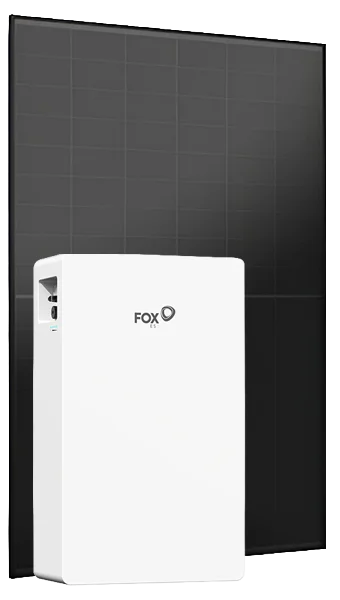
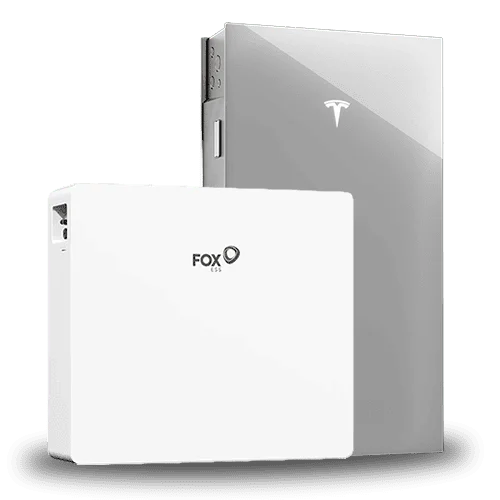
There is no single best battery for every home. In the UK, the best option is the one that matches your usage, budget, and space. We commonly install FOX ESS systems (built from EP6 and EP12 battery modules) and the Tesla Powerwall 3, and recommend based on capacity, efficiency, warranty, and smart controls.
Can I add battery storage to my existing solar panels?
Yes. We fit batteries to existing solar systems, including ones we didn't install. We'll ask a few questions about your current setup, then quote a battery sized to how you actually use electricity. The same options apply: FOX ESS from 6 kWh upwards, or Tesla Powerwall 3 from 13.5 kWh.
What happens during a power cut?
By default, battery systems disconnect from the grid during a power cut for engineer safety. Every battery we fit can keep your home running instead: Tesla Powerwall 3 installs include the Backup Gateway 2 as standard, and Fox ESS systems can add an optional Whole-Home Backup (EPS) upgrade, which switches the house to battery power and holds a reserve you choose for cuts.
How long do home batteries last?
Most modern lithium iron phosphate (LFP) home batteries carry a 10-year warranty or around 6,000 cycles, whichever comes first. After that, capacity typically sits at 70 to 80% of the original rating rather than failing outright. Many units continue running well beyond the warranty term. See our battery worth-it guide.
Finance & payment
Can I get a solar and battery system on finance?
Yes. Panels, inverter, and battery storage are usually bundled into a single fixed-rate APR agreement, so you have one monthly payment for the whole system. Bundling also means 0% VAT applies under the energy-saving materials relief (running until 31 March 2027). Many households structure repayments so the monthly cost lines up roughly with bill savings and Smart Export Guarantee income. See how our finance options are structured.
Will the monthly finance cost be less than my solar savings?
Usually it nets out close to even. Your electricity bill drops from the first month, and that saving plus Smart Export Guarantee income covers much of the finance payment. Most households see total monthly outgoings land around the same as before. Once finance is cleared, you keep generating for the panels' 25-year-plus lifespan at low running cost.
Will applying for solar finance affect my credit score?
No for a quote alone; yes if you apply for finance. Getting an installation price doesn't touch your credit file. A full finance application runs a credit check recorded on your file, and only happens once you choose regulated credit. See our pay monthly options for details.
Can I pay off solar finance early?
Yes, whenever you like. Ask the lender for a settlement figure - that is the remaining balance plus an early settlement charge of up to two months' interest, with the rest of the interest taken off. Pay it and the agreement closes. If you would rather chip away at it, you can overpay at any time, as a lump sum or a regular extra amount, with no charge. That cuts both the interest and the term.
Do I own the system?
Yes, from day one. It is not a roof lease or a rent-a-roof scheme, and UKEM has no rights over your roof or your panels. If you pay on finance, that is a personal loan in your name. The system is still yours.
What happens if I move home?
The panels stay with the house, so the new owner gets the panels, the MCS certificate and the manufacturer warranties. They can set up export payments with their own energy supplier. Solar usually helps the EPC rating too, which is a plus when you sell. The loan stays with you, not the house. Most people clear it from the sale or add it to the asking price.
Who provides the finance and is it regulated?
Finance is arranged through FCA-authorised lenders. UKEM Group is an Introducer Appointed Representative of Shermin Finance Limited, which is authorised and regulated by the Financial Conduct Authority and acts as a credit broker, not a lender. All agreements are fixed-rate APR finance with clear monthly payments and total cost shown up front. Full lender and regulatory details appear on the finance page.
Plug-in solar kits
Are plug-in solar panels legal in the UK?
Yes, from 27 August 2026. The government amended the plugs-and-sockets safety regulations (SI 2026/848, made 16 July 2026) so certified plug-in kits up to 800W output can be sold and self-installed in UK homes. The kit must be certified as a complete package, and you still need to notify your electricity network operator under G98 before connecting. For the full rulebook, including whole-kit certification and what the law excludes, read is plug-in solar legal in the UK.
How do plug-in solar panels work?
A plug-in kit is one or two panels on tilt stands wired to a microinverter, which converts the DC from the panels into mains AC and feeds it through a standard socket. While the sun is on the panels, your home draws less electricity from the grid, and everything running during daylight (fridge, broadband, appliances) uses the solar first. Output is capped at 800W by the inverter. Certified kits typically include WiFi and Bluetooth app monitoring so you can watch the generation live. For the legal framework and what to check before buying, see what to check before buying a plug-in kit.
Do I need an electrician to install a plug-in solar kit?
Not in the standard case. From 27 August 2026 a certified kit is designed for self-installation: stand the panels, plug the kit into a suitable socket, done. The rules require a direct connection to a socket circuit (no extension leads or adaptors), so if your home's wiring is old or its condition unclear, have an electrician check the circuit before you plug in. That is a wiring health check, not a solar installation job.
Do I need to tell my electricity network operator about plug-in solar?
Yes. Even a plug-in kit is a generator connected to the public network, so notification under G98 is still required before you connect. It is a quick online form to your Distribution Network Operator, not an approval process. You can find your operator through the Energy Networks Association.
Are plug-in solar panels safe?
Certified kits are, and that is precisely what the 2026 rules regulate. The microinverter is G98 type-tested and shuts off instantly when unplugged or during a power cut, the connection is RCD-protected, and the electronics are IP67 weatherproof. The rules also ban extension leads and require the whole kit (panels, inverter, cables, plug, mounting) to be certified as one package. What is not safe is uncertified imported kit that predates the standard, which is worth checking before any purchase.
How much electricity does a plug-in solar kit save?
A well-placed kit typically offsets 500-800 kWh a year, which covers a good slice of a household's base load: fridge, broadband, standby devices and daytime appliance runs. Placement decides everything, and a south-facing spot at a decent tilt can deliver 250-400 kWh per panel per year, while heavy shade can halve it. For context, a full rooftop array generates five to eight times more; if you own a home with a usable roof, compare rooftop solar panels first.
Can you use plug-in solar panels with a battery?
Not within the plug-and-play rules. The 2026 framework explicitly excludes storage, so a compliant kit generates but never stores. If evening power is the goal, a professionally wired home battery is the compliant route, either alongside rooftop solar or charging on a cheap overnight tariff.
Can I install plug-in solar on a balcony or in a rented flat?
Yes, balconies and flats are exactly who plug-in solar was legalised for, and a compliant kit needs no planning permission. Two caveats: renters and leaseholders should get written permission from the landlord, freeholder or managing agent before fixing anything to the building, and buildings with combustible cladding or higher-risk external walls face restrictions. The kit itself just needs a sunny spot and a suitable socket within reach.
More questions
Which inverter comes with the system?
Solar-only installs get a Fox ESS single-phase string inverter: F-series (3, 5 or 6 kW, dual MPPT) for most homes, or G-series (8 or 10 kW with three MPPT trackers) for larger or multi-aspect roofs. Solar and battery systems get a Fox ESS H1 hybrid inverter (3.7 to 6.0 kW) that manages panels and battery together, while the Tesla Powerwall 3 has its own hybrid inverter built in. Fox ESS inverters carry up to a 10-year warranty, and we size the right unit to your roof and usage as part of your online estimate.
Last updated: