








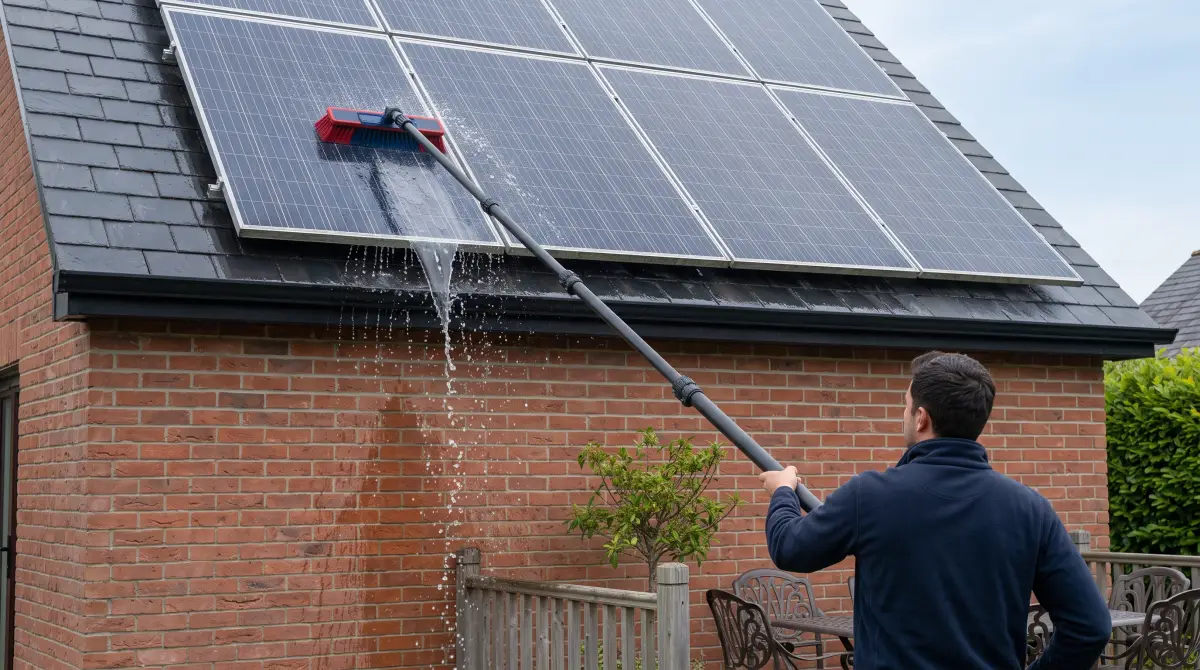
Solar panels in the UK rarely need cleaning. On a pitched roof, rain washes off most dust and pollen, and the Energy Saving Trust says routine cleaning is not essential in most cases. What a system does need is a look every 12 to 18 months, a professional clean when dirt is visible, and an owner who glances at the monitoring app. Maintenance is mostly about noticing problems early, because the panels themselves have no moving parts.
Do solar panels need cleaning in the UK?
Most do not, most of the time. The glass on a panel is smooth, the array sits at an angle, and a British year supplies plenty of rain. Light, even dust has little effect on output and is gone after the next wet week.
Some roofs collect more than rain can shift:
- Trees overhead: leaves, needles, sap and the birds that sit in the branches.
- Bird droppings: they bake on in summer and rain does not move them.
- Farmland, building work or a busy road nearby: dust and soot arrive faster than showers clear them.
- Shallow pitches and flat-roof frames: water runs off slowly, so a line of dirt builds along the bottom edge.
- Lichen: it grows slowly on shaded edges of older arrays and does not rinse away.
A patch of dirt matters more than a thin film. Panels are wired in a chain, so one droppings-covered corner or a drift of wet leaves can hold back more of the array than the small area it covers.
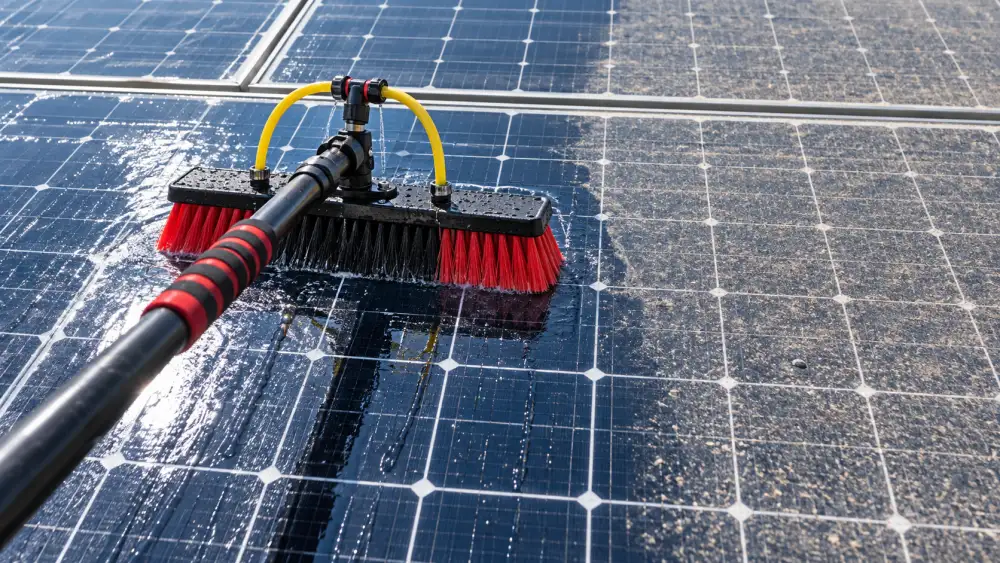
Is paying for a solar panel clean worth it?
Run the numbers on your own system before booking anyone. A 4 kWp array produces roughly 3,400 to 4,400 kWh a year, depending on location and roof direction. Take 3,800 kWh as a middle figure and suppose dirt is costing 3% of it.
The 3% is an illustration, not a measurement of your roof, and the real loss in pounds is lower because some of that electricity would have been exported at a lower Smart Export Guarantee rate. On those figures, a paid clean every year costs more than it recovers. A paid clean makes sense when the array is visibly fouled, or when the app shows a drop that dirt might explain.
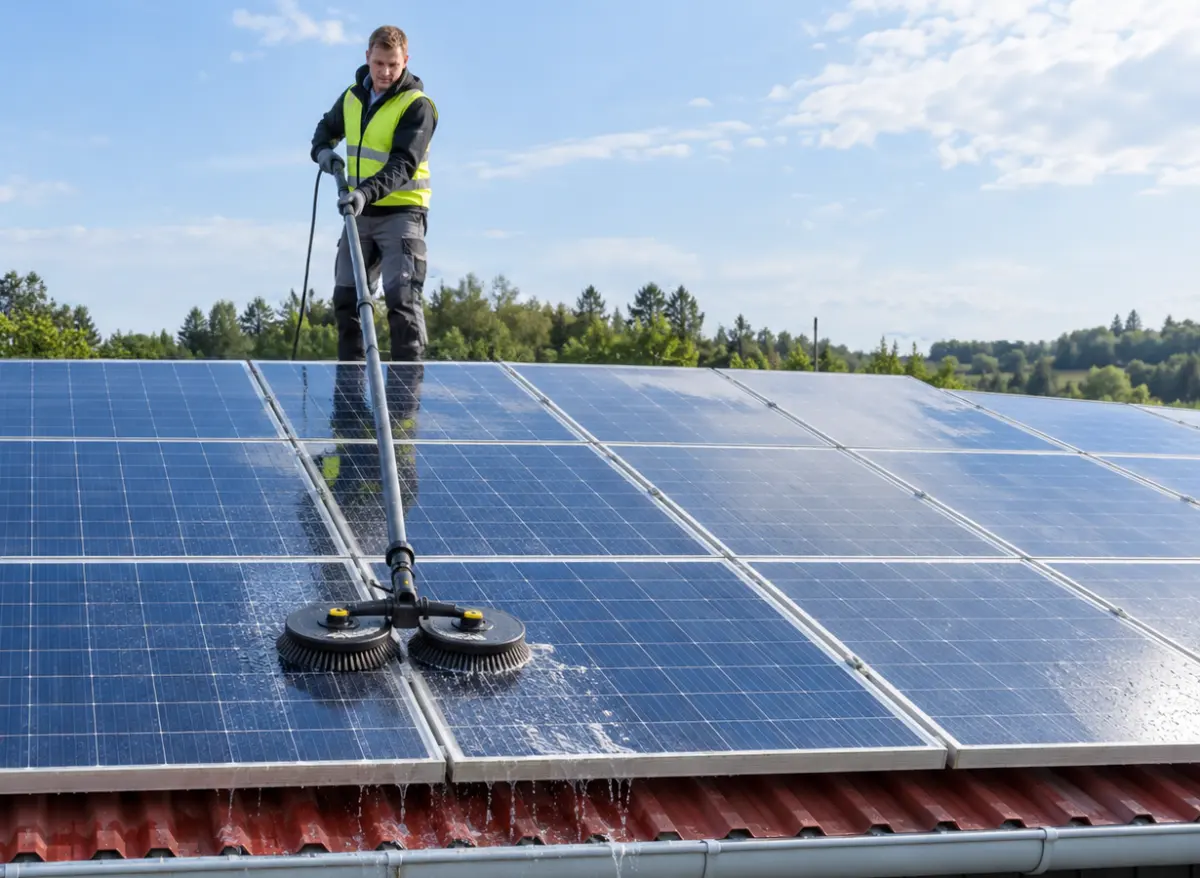
If you clean solar panels yourself anyway
We recommend a professional team, who will clean the array from the ground with a water-fed pole. If you decide to do it yourself anyway, treat the points below as pointers, not a guide: they cover the common mistakes, not every roof or every risk. Pick a cool, overcast day or an early morning, because water dries too fast on hot glass and leaves streaks, and switch the system off first, following the shutdown steps in your handover pack.
Do
- Work from the ground with a hose and a soft, long-handled brush.
- Use plain water, and loosen stubborn marks with the brush before rinsing.
- Look at the cables and frame while you are there, and stop if anything looks damaged.
Don't
- Use a pressure washer. It can push water past the seals and into the wiring.
- Use washing-up liquid or other detergents. They leave a film that holds dirt.
- Stand, kneel or lean on a panel. The glass can crack under a person's weight.
- Climb onto the roof without the training and equipment for working at height.
Damaged cabling is an electric shock risk, so leave it alone and call your installer. If you find yourself stretching or balancing to reach the top row, stop there: a professional with a water-fed pole will finish the job from the ground.
A maintenance schedule that fits most homes
There is no legal servicing interval for home solar, and nothing like the annual visit a gas boiler needs. The schedule below follows the Energy Saving Trust’s checklist, with the monthly app check added because it costs nothing.
| When | What to do | Who |
|---|---|---|
| Every month | Open the monitoring app and compare generation with the same month a year earlier | You |
| Every 12 to 18 months | Look over the panels, fixings and visible cable from the ground; book a clean if dirty | You |
| After a severe storm | Check for slipped panels, loose cable or debris on the array | You, from the ground |
| Every 3 to 5 years | Professional inspection of panels, mountings, wiring and inverter | Installer or electrician |
| After 10 to 15 years | Budget for a replacement inverter | Installer |
Check your warranty documents against this list. Some installers ask for a professional service within a set period to keep cover valid, and that condition overrides any general schedule.
How do you know something is wrong with a solar system?
The monitoring app is the best maintenance tool you own. It records every kilowatt-hour, so a fault shows up as a number long before it is visible from the garden. The difficulty is knowing what normal looks like, because output swings widely through the year.
TYPICAL UK ARRAY, MONTH BY MONTH
Solar output peaks from May to July
- Peak: May to July
- Lowest: December and January
| Month | Output (peak month = 100) |
|---|---|
| Jan | 21 |
| Feb | 33 |
| Mar | 58 |
| Apr | 81 |
| May | 98 |
| Jun | 100 |
| Jul | 98 |
| Aug | 86 |
| Sep | 65 |
| Oct | 42 |
| Nov | 23 |
| Dec | 16 |
Compare like with like: this October against last October, not against July. A sunny or dull month moves the figure by a fair margin, so look for a drop that persists across several weeks of mixed weather. Signs worth a call to your installer:
- Generation well below the same period a year earlier, with no new shading to explain it.
- A sunny day showing zero, or a flat line where the midday peak should be.
- A red or amber light, or an error code, on the inverter.
- The app showing the system offline for more than a day or two.
Keep the inverter connected to your Wi-Fi. The app depends on it, and some manufacturer warranties expect the unit to stay online. If your router changes, reconnect the inverter the same week.
The inverter and battery: the parts that wear
Panels are the long-lived part of the system. The Energy Saving Trust puts their working life at around 30 years, and manufacturers back them with product warranties of up to 25 years. The inverter works harder. It converts DC from the roof into mains AC all day, runs warm, and typically needs replacing after 10 to 15 years, at a usual cost of around £800 according to the Energy Saving Trust.
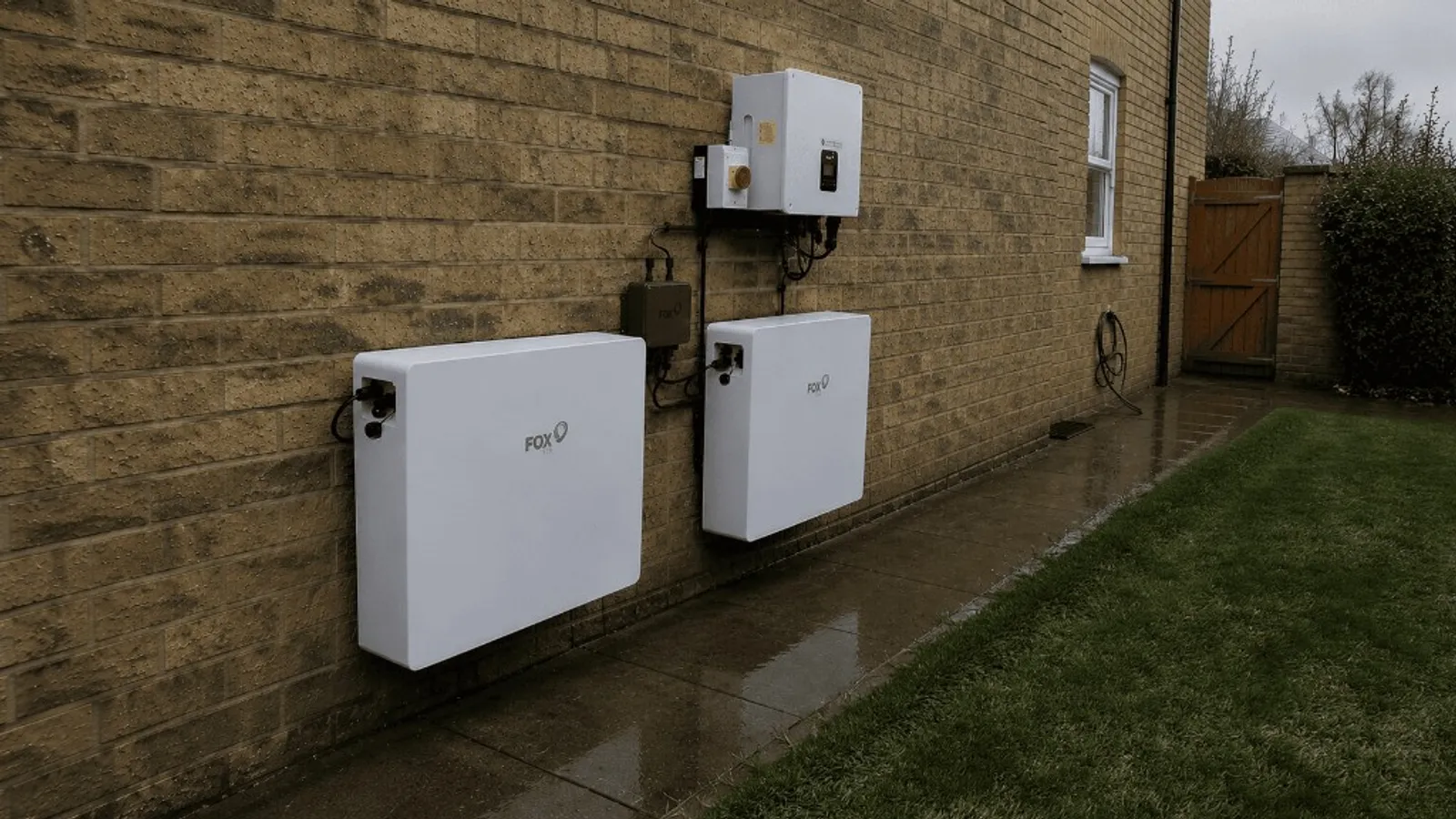
Give the inverter clear air. Do not box it in or stack storage against it, and wipe dust off the vents once or twice a year with a dry cloth. A home battery needs the same treatment and little else: it manages its own charging, and manufacturer cover on inverters and batteries runs up to 10 years. If an older inverter fails outside warranty, that is a sensible moment to look at adding a battery to existing solar, since a hybrid inverter can do both jobs.
What about birds, lichen and trees?
Pigeons like the sheltered gap between panels and tiles. Nesting material blocks airflow under the array, droppings foul the glass, and the noise is unwelcome above a bedroom. The fix is a mesh skirt clipped around the edge of the array, which keeps birds out without drilling the panels.
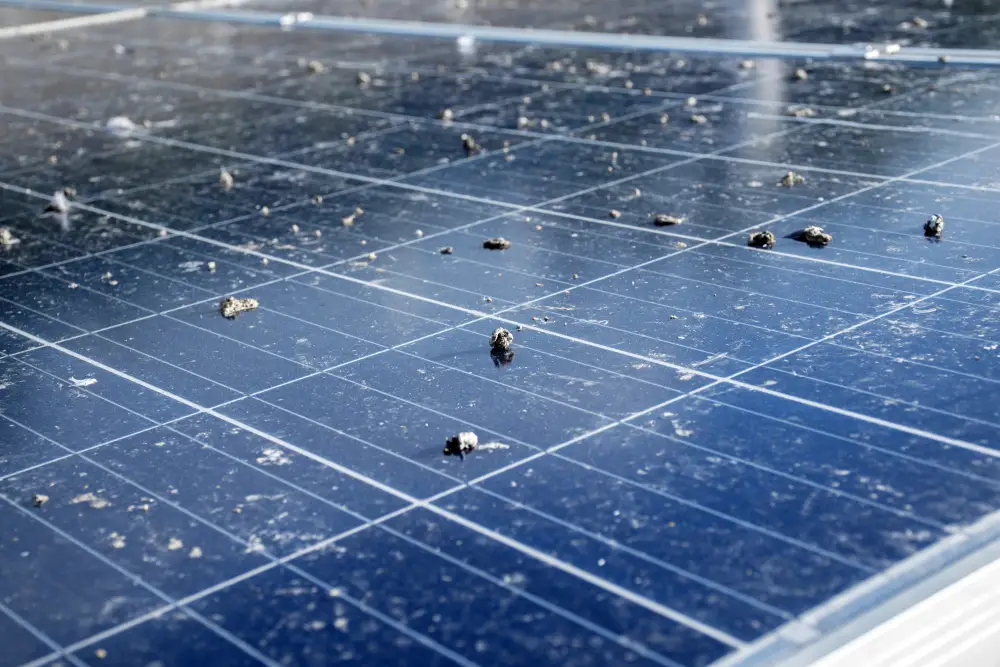
Lichen needs patience. Scraping it scratches the anti-reflective coating on the glass, so ask your installer what the panel manufacturer allows before trying anything stronger than water. Trees are simpler: a branch that has grown into the sun’s path since the system was fitted costs more output than dirt ever will. Shading was part of the calculation when the array was sized, as the guide to how many solar panels you need explains, so trim growth back to where it was.
When is solar maintenance not a DIY job?
Anything that means leaving the ground or opening an enclosure belongs to a professional. That covers arrays on three-storey roofs, panels above a conservatory, any visible damage to glass or cable, and every fault inside the inverter or consumer unit. The DC side of a solar system is live whenever there is daylight, including with the inverter switched off.
Call the installer before you pay a third party. A cracked panel, a failed inverter or a leak around a roof fixing may be covered by a manufacturer or workmanship warranty, and work by someone else can complicate a claim. UKEM installs carry a 2-year workmanship warranty and a 6-year insurance-backed MCS workmanship guarantee on top of the manufacturer cover.
Keep the paperwork from handover in one place: the MCS certificate, warranty documents, the system’s shutdown instructions and your monitoring login. The solar installation timeline lists what you should have received. Those documents are what a buyer’s solicitor asks for if you sell, and what an engineer needs on the day something does go wrong. For most owners that day is years away: solar panels ask for a look, an occasional clean and a monthly glance at an app.
Frequently asked questions
Do solar panels need cleaning in the UK?
Usually not as a routine job. Panels on a pitched roof are rinsed by rain, and the Energy Saving Trust says routine cleaning is not essential in most cases. Check them every 12 to 18 months and book a clean only when there is visible dirt, bird droppings, leaves or lichen.
How often should solar panels be cleaned?
Only when they look dirty. A visual check every 12 to 18 months is enough for most homes. Arrays under trees, near farmland or a busy road, or on a shallow pitch collect more and may need a rinse more often.
Can I use washing-up liquid or a pressure washer on solar panels?
No to both. Detergents can leave a film on the glass that holds dirt and cuts output, and a pressure washer can force water past the seals and wiring. Plain water and a soft brush are all a clean needs, and we recommend leaving the job to a professional.
How much does solar panel cleaning cost?
The Energy Saving Trust puts a professional clean at around £60 to £100 as a starting price for a standard home system, more for large arrays or roofs that need access equipment. We do not recommend cleaning panels yourself, because of the risk to you and to the panels.
Do solar panels need servicing?
There is no annual service in the way a gas boiler has one. A visual inspection every one to two years and a professional check every three to five years covers most systems. Read your warranty documents, because some installers ask for a service within a set period.
How long does a solar inverter last?
Typically 10 to 15 years, against 25 years or more for the panels, so most systems need one inverter replacement in their lifetime. The Energy Saving Trust puts the usual cost at around £800. Manufacturer inverter warranties run up to 10 years.
Last updated: