









Ofgem resets the energy price cap every three months, and the next change lands on 1 January 2027. The regulator will announce the January figure by 25 November 2026. Until then, all anyone has are forecasts, and they agree on the direction: up. This guide rounds up the energy price cap predictions for 2027 (January, April and July), how far to trust them, and what a higher cap means if you are weighing up a heat pump, solar panels or a battery.
Where the cap stands now
Under the Ofgem October to December 2026 price cap, a household on a default tariff pays an average of 26.32p per kWh for electricity and 7.97p per kWh for gas, with daily standing charges of 54.83p and 29.68p. These are direct debit averages. Your region and payment method move them a little either way.
For the three months from 1 October 2026 the cap works out at £1,723 a year for a typical dual-fuel household, a 4% rise on the summer. Our October 2026 price cap explainer covers that rise and the VAT cut that came with it. The cap limits rates, not bills: use more and you pay more.
What forecasters expect for January 2027
Two sets of forecasts are worth knowing about.
- Cornwall Insight, the energy consultancy whose forecasts are widely quoted, forecast on 30 September that the cap from 1 January 2027 will be £1,999 a year, up 16% (£276) on October. Its forecast unit rates are 30.28p per kWh for electricity and 9.76p for gas.
- E.ON Next, one of the big suppliers, publishes its own price cap predictions. Its figures from 17 November run higher: £2,169 for January, £2,241 for April and £2,063 for July 2027.
- British Gas updated its price cap forecast on 16 November: £2,215 for January, £2,195 for April and £1,975 for July 2027.
PRICE CAP FORECASTS FOR 2027
Every forecast for 2027 so far sits above the October 2026 cap
| Cap period | Figure | Source |
|---|---|---|
| October to December 2026 | £1,723 (set) | Ofgem |
| January to March 2027 | £1,999 (forecast, 30 September 2026) | Cornwall Insight |
| January to March 2027 | £2,169 (forecast, 17 November 2026) | E.ON Next |
| April to June 2027 | £2,241 (forecast, 17 November 2026) | E.ON Next |
| July to September 2027 | £2,063 (forecast, 17 November 2026) | E.ON Next |
Why the gap between them? Cornwall Insight’s published January figure still dates from 30 September, while the suppliers’ figures are from mid-November, and wholesale gas moved in between. Ofgem sets each cap from wholesale prices over a window that closes a few weeks before its announcement, so forecasts made late in that window tend to land closer. Both suppliers rate their January figure as medium confidence and their April and July figures as low or lowest, which is a fair reading of how uncertain this winter is. Treat both as a range, not a promise. We will update this page when Ofgem publishes the real figure.
Some help with January bills is on the way. The Budget on 28 October announced a £100 Household Energy Payment for homes in council tax bands A to D in England, paid through councils from January 2027.
Why are prices expected to rise?
Wholesale gas, again. Cornwall Insight puts the January rise down to the conflict in the Middle East disrupting gas supplies, and to EU gas storage at around 65% full at the start of September, the lowest September level in 15 years. Low stocks going into winter leave the market exposed to every cold snap and supply scare.
Gas rises faster than electricity in Cornwall Insight’s forecast: about 22% on the unit rate, against about 15% for electricity. Electricity follows gas because gas-fired power stations often set the wholesale price of electricity, but not one for one.
July 2027: VAT returns to electricity
The temporary zero rate of VAT on household electricity was due to end in March, just in time for the April cap. The Budget on 28 October extended it by three months, so it now ends on 30 June 2027. Unless the government extends it again, electricity carries 5% VAT again from 1 July, on the unit rate and the standing charge, the same day the July cap starts. That adds about 5% to the electricity part of a bill, whatever happens to wholesale prices. Our guide to 0% VAT on electricity this winter explains how the relief works and who it helps most.
Ofgem announces the April cap by 23 February. E.ON Next’s prediction of £2,241 (British Gas: £2,195) would make it the highest cap of the year, though a forecast that far out can move by hundreds of pounds before then. The Treasury says keeping electricity VAT-free to the end of June takes about £50 off the April cap.
Will energy prices go down in 2027?
Not in the first half of the year, on any forecast published so far. E.ON Next and British Gas both show a fall by July 2027, to £2,063 and £1,975, after the April peak. That would still be £250 to £340 a year above the October 2026 cap.
Cornwall Insight is more cautious about the year as a whole. If Europe ends the winter with depleted gas stores, more gas has to be bought over the summer to refill them, which it warns could keep pushing prices up “in a vicious circle”.
The honest answer is that nobody can tell you where bills will be in a year. What is easier to predict is the gap between gas and electricity, and for most homes that gap is what decides the cost of heating.
What a higher cap means for heating your home
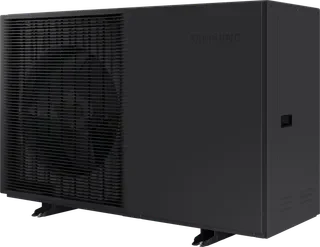
A gas boiler turns each unit of gas into slightly less than a unit of heat. A heat pump turns each unit of electricity into three or more units of heat, by moving warmth from the outside air. So the question is not whether prices rise, but whether gas or electricity rises faster.
Under the current cap, a heat pump at a seasonal efficiency of 3.5 makes heat for ~7.5p per kWh, against ~8.9p for a 90%-efficient gas boiler. On Cornwall Insight’s January forecast, those become about 8.7p and 10.8p. Gas rising faster than electricity widens the heat pump’s lead, and even a modest heat pump at a seasonal efficiency of 3.0 would come in at about 10.1p, still under gas. Real running costs depend on the home, the install and the tariff: our heat pump running costs guide has the full workings, including heat pump tariffs with cheaper overnight rates.
Going all-electric also ends the gas standing charge, which at 29.68p a day comes to ~£110 a year before you burn a single unit. The Budget on 28 October said gas standing charges will be scrapped by the end of 2027, with the cost moved onto the price of each unit of gas, so that saving will show up as dearer gas rather than a separate charge.
What it means for solar panels and batteries
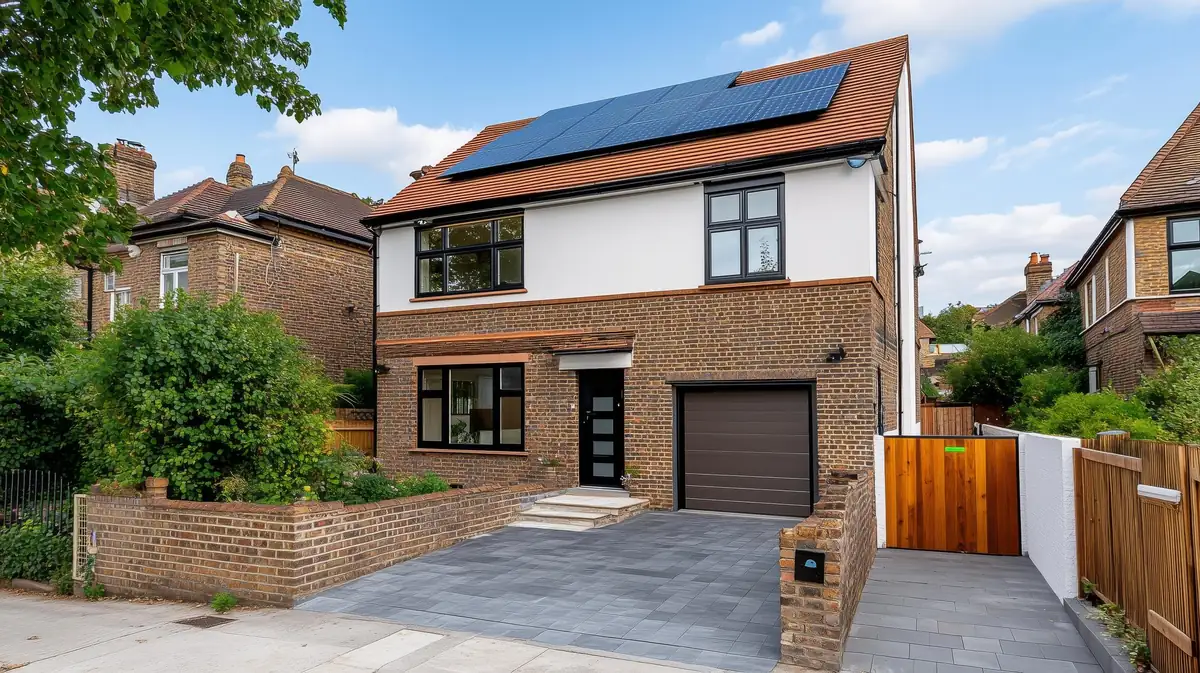
The cap only matters for the electricity you buy. Every unit your panels make and you use yourself is a unit you do not buy at the capped rate, so each one is worth more when the cap rises. If Cornwall Insight is right, that is 30.28p per kWh from January.
UK solar systems produce around 850 to 1,100 kWh per kWp a year, depending on location and roof direction, so a typical 4 kWp system makes roughly 3,400 to 4,400 kWh. Without storage, most households use around 40% of that themselves, because panels peak at midday and homes peak in the evening. A home battery lifts that to 70 to 80%, and our guide to whether battery storage is worth it sets out when the sums work.
Winter is the weakest season for solar, so panels will not erase a January bill. Their value builds over the year, and solar with battery storage also lets you charge from the grid on a cheap overnight rate when the panels are quiet.
Before 25 November: what to do now
- Find your tariff end date (2 minutes). It is in your supplier app or on your last bill. On a fixed deal, nothing changes until it ends, so put that date in your calendar now. On a standard variable tariff, the January cap applies to you from 1 January.
- Price up a fix against the forecasts. Compare a fixed deal's unit rates and standing charges with today's capped rates and the forecast January rates of 30.28p per kWh for electricity and 9.76p for gas. Check the exit fee before you sign.
- Read your meter on 1 January. Send your supplier a reading on the day the new cap starts, so the units you used in December are billed at December prices rather than estimated across the change. A smart meter does this for you.
- Get a price for using less gas (a few minutes). Gas carries most of the risk in every forecast. If a heat pump, solar or a battery is on your list, get a price online and run the numbers at today's rates and the forecast ones. A heat pump needs a survey before the price is final, so allow a few weeks from first quote to finished install.
- Check back on 25 November. We will update this page with Ofgem's January figure as soon as it is published.
None of this needs a big decision based on a forecast. It means you know your own numbers before the bills change.
Forecasts will keep moving until Ofgem announces. The pattern behind them is steadier: gas carries most of the risk, and homes that rely less on it are less exposed to whatever the cap does next.
See more from UKEM in your Google results.

Frequently asked questions
What is the prediction for the next energy price cap?
The next cap starts on 1 January 2027, and Ofgem announces it by 25 November 2026. Forecasts point to a rise. Cornwall Insight put it at £1,999 a year for a typical dual-fuel household paying by direct debit (30 September), 16% above the £1,723 cap that started on 1 October 2026. The big suppliers put it higher: E.ON Next at £2,169 (17 November) and British Gas at £2,215 (16 November). Until Ofgem announces, these are forecasts, not prices, and we will update this page when the real figure is out.
Will energy prices go down in 2027?
Not in the first half of the year, on any forecast published so far. E.ON Next and British Gas both expect a fall by July 2027, to £2,063 and £1,975, after a peak around April (£2,241 and £2,195). That would still be £250 to £340 a year above the October 2026 cap, and both give their April and July figures their lowest confidence ratings. Cornwall Insight has warned that low gas storage in Europe could keep prices high for many months.
Should I fix my energy for 2 years?
That depends on the price of the fix, not its length. A two-year fix runs past every published forecast, so you swap an unknown cap for known rates for the whole two years. Compare the fix's unit rates and standing charges with today's capped rates and the forecast January rates (Cornwall Insight: 30.28p per kWh for electricity, 9.76p for gas), and check the exit fee in case prices fall and you want to leave. Fixed tariffs still get the electricity VAT cut. A fix buys certainty; whether that is worth paying for is your call.
Why is the price cap expected to rise in January?
Wholesale gas. Cornwall Insight points to the conflict in the Middle East disrupting gas supplies, and to EU gas storage at around 65% full at the start of September, the lowest September level in 15 years. Ofgem sets each cap from wholesale prices over a window that closes weeks before the announcement, so the January cap reflects what suppliers paid this autumn.
Is Britain paying the highest electricity prices in the world?
No comparison covers every country, but among the richer ones Britain is near the top. The government's latest international comparison found the UK had the second-highest household electricity prices, including taxes and levies, of the 27 International Energy Agency countries that reported 2024 figures. Household gas was the opposite: the ninth-lowest of 24. That gap is why every unit of electricity you generate and use yourself is worth more in Britain than in most countries. Source: DESNZ Quarterly Energy Prices, September 2025.
What happens to electricity bills when VAT comes back in July 2027?
The temporary zero rate of VAT on household electricity in England, Scotland and Wales now ends on 30 June 2027, after the October 2026 Budget extended it by three months. Unless the government extends it again, the unit rate and standing charge carry 5% VAT again from 1 July 2027, which adds about 5% to the electricity part of a bill on top of whatever the July cap does. Gas has kept its VAT throughout, so it is not affected.
Does a higher price cap make a heat pump cheaper or dearer to run than gas?
What matters is the gap between gas and electricity prices, not their level. Under the current cap (October to December 2026), a heat pump at a seasonal efficiency of 3.5 makes heat for ~7.5p per kWh against ~8.9p for a 90%-efficient gas boiler. Cornwall Insight's January forecast raises gas faster than electricity, so on its figures the heat pump's lead grows: about 8.7p against about 10.8p per kWh of heat.