


Our customers say Excellent 4.7 out of 5 based on 1,640 reviews
Start with your system

Which electric heating is your park home running?

Electric comes in four flavours, and each changes what the swap involves. Find yours for the running reality, the scope of the job, and what happens to the old kit.

Electric storage heater with charge dial, indicator light and on-off switch

Storage heaters, including Economy 7

The bricks charge on the seven off-peak hours overnight, then give the heat back through the day whether you are home or not. By a cold evening they are often spent, so the boost element takes over at the full day rate of around 26p per kWh: the priciest electricity lands exactly when you need warmth most.

Wall-mounted electric radiator with control dials and a fused spur on the wall beside it

Panel heaters and electric radiators

Simple to fit, expensive to live with. A panel heater holds no store of heat at all, so the meter runs for every minute a room calls for warmth, and each unit of electricity buys exactly one unit of heat. The same unit through an air source heat pump comes back as roughly three units of warmth.

Wall-mounted electric boiler with digital controls and chrome flow and return pipework

Electric boiler with radiators

Your radiators and pipework already do their job; the electric boiler feeding them is the cost. It makes heat the way a kettle does, one unit out for every unit in, paying the full day rate for every radiator run and tank of hot water. A heat pump moves heat rather than making it, which is why the same radiators cost far less to run.

Electric fan heater on a living-room floor, the forced-air style of heat a warm air unit delivers for a whole park home

Electric warm air unit

One cabinet of elements and a fan, heating air for the whole home on the same one-in, one-out arithmetic. Air holds no heat, so rooms start cooling the moment the fan stops, and on a cold day the rooms furthest from the grilles never quite catch up.

The arithmetic

Heat pump vs electric heating: what a unit of heat costs

You already buy the right fuel. The difference is what your heating does with each unit before it reaches the room.

Your heating now

Direct electric heating

1 kWh of electricity in, 1 kWh of heat out

~26p per kWh of heat

What we install

Air source heat pump

1 kWh of electricity in, ~3 kWh of heat out

~8.7p per kWh of heat

The figures are public, not ours. The Ofgem July to September 2026 price cap puts electricity near 26p per kWh; a heat pump at a seasonal efficiency of 3.0 divides that by three, so each kWh of heat costs roughly 8.7p. The same maths reaches your hot water, because the cylinder replaces an immersion element paying the full rate today.

An electric park home is also spared every complication the other fuels bring to this swap: no tank to remove, no supply contract to unwind, no flue, no deliveries to cancel. The worked example behind park home pricing is in what a park home heat pump costs, including why small homes come out well under house prices. For the same figures scaled to a full year and set beside LPG and oil, see our guide to yearly heating costs by fuel.

The bigger job, done once

No radiators? What first-time wet central heating involves

Oil and LPG homes swap a boiler and keep their radiators. Most electric park homes start from zero, so the job builds the whole wet system in one visit.

Radiators

Sized room by room from an MCS heat-loss calculation. Park home rooms are small, so the radiators are too; our guide to heat pump radiators and emitters shows how the sizing works.

Pipework

The part most electric-heated park homes have never had. Runs go beneath the floor where the chassis allows and are boxed in neatly where they surface, all within the one quoted job.

Hot water cylinder

Stored hot water at heat-pump rates replaces the immersion at full price. Slimline models fit a park home airing cupboard, or an insulated cabinet outside beside the unit.

The tariff question

What happens to Economy 7 after the heaters go?

The tariff that made storage heaters make sense does not die with them. It just stops deciding when your home is warm.

Economy 7 is a workaround: storage heaters can only buy heat during seven off-peak hours, so the bricks carry the warmth forward, further on some days than others. An Economy 7 storage heater replacement removes the limitation itself: a heat pump draws modest power whenever the thermostat asks and multiplies every unit by roughly three.

The cheap-rate logic survives the swap. Keep Economy 7 and the cylinder heats water on the overnight rate from day one, or compare a dedicated heat-pump tariff once a month of smart-meter data is in. Our guide to heat pump running costs works through SCOP, tariffs, and real bills.

Smart electricity meter showing Time of Use Rate 1, the kind of multi-rate meter used with Economy 7 tariffs
The money

How the £7,500 grant works when you replace electric heating

Electric swaps sit on the Boiler Upgrade Scheme's standard tier. Here is what that means, including the number this page refuses to borrow.

The Boiler Upgrade Scheme takes £7,500 off an MCS-certified air source heat pump when your park home replaces electric heating. The £9,000 you may have seen around park home heat pumps is a time-limited uplift for oil and LPG swaps only, so we will not headline it here. What electric homes lose on the grant they reclaim in use: no other fuel type cuts its cost per unit of heat by two-thirds on switching. The scheme runs to 2030 under annual budget caps, so earlier in the scheme year is the safer timing.

Qualifying is short. The park home is your main residence, the park holds a residential licence, and you are in England or Wales. No EPC is needed: since 28 April 2026 a recent electricity bill plus photos of your heaters is the accepted evidence, and we submit the Ofgem application as part of the job. Your quote covers the whole conversion, heat pump, radiators, pipework, cylinder, commissioning and warranty registration, with the £7,500 already deducted.

Get Your Heat Pump Quote MCS certified. Survey first, then a fixed price with the grant already off.
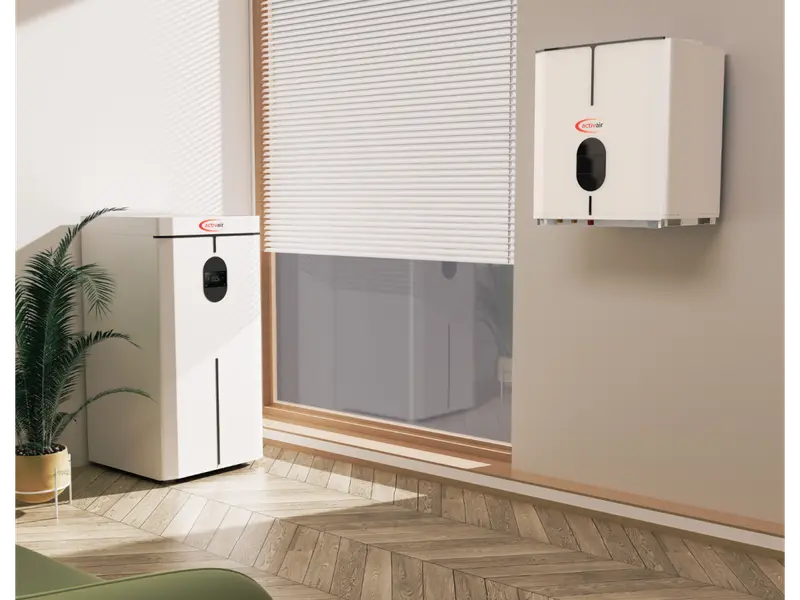
Trianco Activair indoor air source heat pump unit installed inside a utility space
Get a heat pump quote
Common questions

Electric heating questions, answered straight

Supply capacity, tariffs, asbestos-era heaters, and what a first-time system means for your home.

Why is the grant £7,500 for electric heating and not £9,000?

The £9,000 rate is a time-limited uplift for homes replacing oil or LPG, running to 31 March 2027. Electric replacements qualify at the scheme's standard £7,500, with no deadline beyond the scheme itself (2030, under annual budget caps). Electric homes also make the biggest running-cost saving of any fuel when they switch, which claws back that £1,500 difference year after year.

Is a park home electricity supply big enough for a heat pump?

Almost always, yes. The compact units we fit start at 5 kW and run on a standard single-phase supply, which is what every park home has. A home that has been running storage heaters or an electric boiler has already proven its supply can feed serious electric heating; the survey checks the fuse rating before anything is ordered.

Can one heat pump handle both the heating and the hot water?

Yes, and in a park home it always does. The heat pump feeds the radiators and heats a hot water cylinder, so taps and showers run from stored water made at roughly a third of the unit cost your immersion pays now. The cylinder is sized to your household at the survey.

How long does the installation take if my park home has no pipework?

On-site work runs 2 to 4 days, with a first-time wet system at the top of that range because radiators, pipe runs and the cylinder go in alongside the heat pump. The sequencing is planned at the survey so the home is not left without heat or hot water overnight.

Should I keep my Economy 7 tariff after the switch?

You can, and it still earns its keep: the cylinder can heat water on the cheap overnight units. Most owners then compare a heat-pump tariff once a month of smart-meter data is in, because those tariffs price units for exactly this load. Nothing about the installation locks you to either choice.

Is there a grant for new storage heaters or electric radiators?

Not on a park home through the Boiler Upgrade Scheme, so buying new storage heaters or electric radiators privately is full price. ECO4 can fund storage heaters for qualifying households until 31 December 2026, but that is a separate means-tested scheme and not the route we install on park homes. The funded swap we do here is the heat pump, at £7,500 off.

Will a heat pump actually keep a park home warm in winter?

Yes. The system is sized to a room-by-room heat-loss calculation to MCS standards for cold design conditions, and air source units keep working well below freezing. A park home helps its own case: the heat load is small and well defined, the easiest kind to size correctly. What owners tend to notice is steadier warmth, because the heat pump holds a temperature rather than blasting and fading.

My park home has electric warm air heating. Can you replace that?

Yes, it is one of the most common versions of this job. The warm air cabinet comes out, radiators go in room by room, and you gain stored hot water from the new cylinder in the same swap. The replacement cost is a full-system price with the grant already deducted, confirmed at your survey.

Do I need my park owner's permission for the outside unit?

Check your written agreement: some parks have rules on what sits outside a home, and the survey reviews them with you. Plot-friendly outdoor units keep the footprint small and quiet, and where a park is genuinely restrictive an indoor-sited model can carry the whole job from inside. Park rules are a routing question, not a dead end.

Stop paying triple for every unit of heat.

Your park home already runs on the right fuel. One MCS-certified job turns each unit of electricity into roughly three units of warmth, £7,500 off, radiators and cylinder included, and the old heaters gone by the time we leave.