






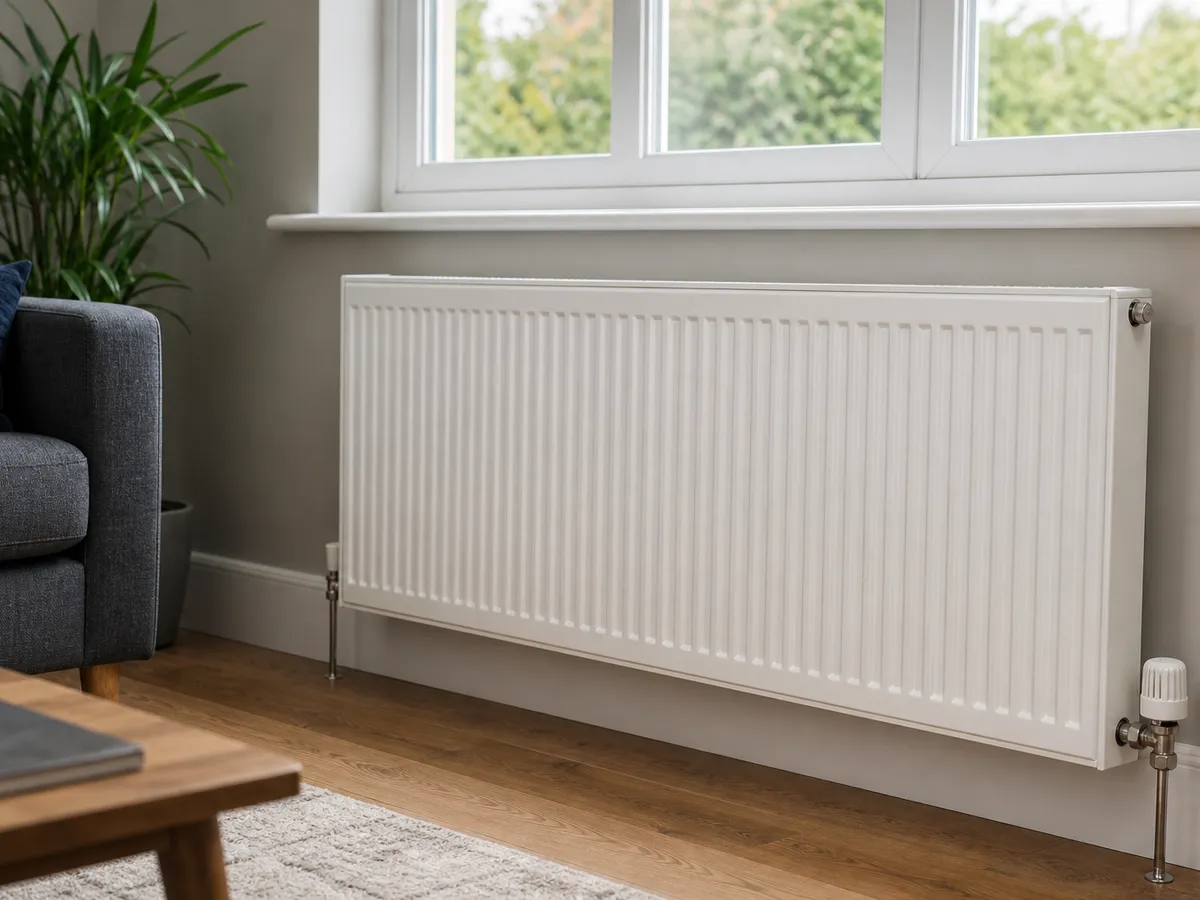
Heat pumps do not always need bigger radiators, but they often need more emitter surface area in some rooms because flow temperatures run lower than a gas boiler. At 40°C flow, a radiator puts out less heat per square metre than it would at 70°C. Insulation reduces how much heat each room needs; upgrading one or two undersized panels is routine on otherwise suitable homes. The MCS survey lists exactly which rooms change before you sign a fixed quote.
At a glance
How flow temperature drives radiator size
A radiator’s output scales with the difference between water temperature and room air temperature. Turn the flow down from 70°C to 45°C and the same panel delivers less heat. Manufacturers publish output tables at standard delta-T values; the survey uses those tables against each room’s calculated heat loss in watts.
That is why insulation matters first. A room that loses 2 kW at design outdoor temperature needs a smaller emitter at 45°C if walls and loft are upgraded than if the same room leaks heat through uninsulated fabric. The home suitability guide treats cavity and loft work as part of the project, not an optional extra.
What the MCS heat-loss survey checks
Every heat pump quote at UKEM follows an MCS home survey. For emitters, the surveyor records:
- Room dimensions and heat loss (walls, windows, ceiling height, ventilation).
- Existing radiators (type, dimensions, position).
- Design flow temperature for the chosen heat pump and property.
- Pass or fail per room and the recommended replacement size where output falls short.
You see the outcome before the install is ordered. Radiator upgrades quoted at survey stage are part of the fixed price, alongside the outdoor unit, cylinder, controls, and labour.
Which rooms usually upgrade
Patterns repeat across UK housing stock:
- Large lounge, single panel on an external wall: often the first upgrade to a type 22 double convector or a wider panel.
- Small bedrooms with old type-11 radiators: may need taller or double panels.
- Conservatories and extensions with high glazing area: higher heat loss per square metre.
- Well-insulated mid-terrace bedrooms: frequently pass without change.
Underfloor heating downstairs reduces radiator demand upstairs in many new-build and renovation projects. Where UFH already exists, the survey accounts for it as the primary emitter on that zone.
Radiators and running cost
Oversizing emitters slightly, or running at the lower end of the flow band, lets the heat pump modulate at partial load for longer periods. That improves SCOP and keeps running costs closer to the figures in our guides. Forcing the unit to 60°C flow to avoid radiator changes raises electricity use and can push SCOP into territory where running costs look less attractive versus gas.
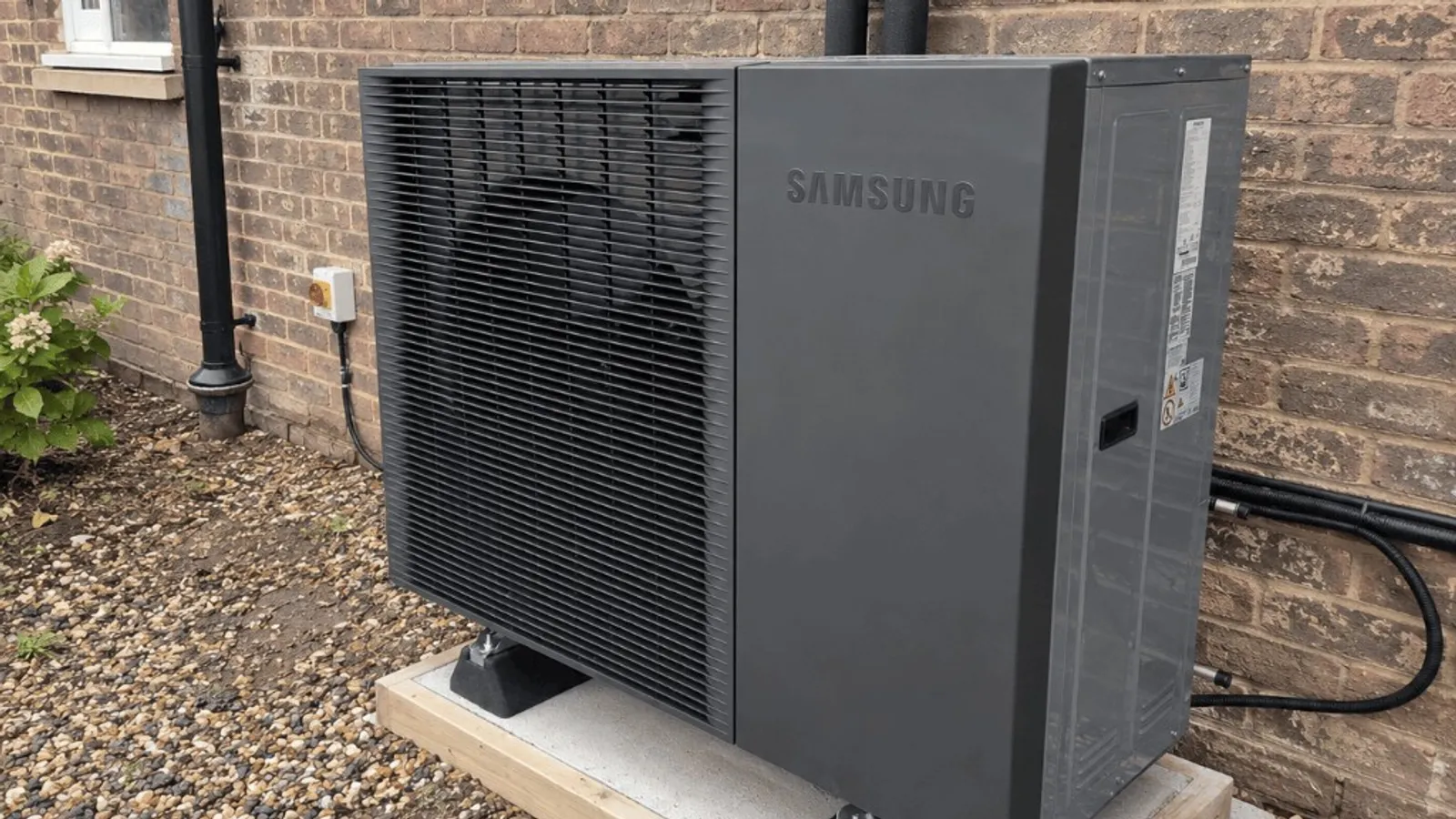
Weather-compensation controls (standard on Samsung, Vaillant, and Ideal systems UKEM fits) adjust flow temperature with outdoor conditions, so emitters sized for design-day loss still work efficiently on mild days.
How this fits the wider install
Radiator work sits in the same timeline as the outdoor unit and cylinder. Most installs complete in two to four days on site, with emitter swaps scheduled alongside pipework and commissioning. Noise siting and MCS 020 are decided in parallel at survey; they do not change which radiators upgrade, but they can change where the outdoor unit sits relative to your boundary.
If the survey shows heavy emitter work across many rooms, that is often a signal to improve fabric first or accept a slightly higher design flow temperature and discuss the efficiency trade-off openly before you commit.
Request a heat pump quote to book the MCS survey; emitter sizing is included in the same visit.
Frequently asked questions
Why do heat pumps need larger radiators than gas boilers?
Radiators do not store heat the way a cylinder does; they transfer it into the room at a rate that depends on surface area and flow temperature. A gas boiler can push water at 70°C or more, so a modest single panel keeps a room warm. A heat pump is most efficient at 35 to 50°C flow, which means each square metre of radiator puts less heat into the room. The fix is either more panel area (a double convector instead of a single, or a taller type 22 panel) or better insulation so the room needs less heat in the first place. The home suitability guide covers insulation as the first lever.
Will every radiator in my house need replacing?
No. In a cavity-insulated semi or detached home, many rooms already have adequate emitters once the survey runs at the design flow temperature. Upgrades cluster in the coldest rooms: large lounges with single panels, small bedrooms with old type-11 rads, or extensions built before current insulation standards. The MCS heat-loss report names each room that fails and the size needed. UKEM prices those changes before you accept the quote.
Can I keep my radiators and run the heat pump hotter?
You can, but efficiency drops. Running at 55°C or 60°C to avoid radiator changes raises electricity use and can push SCOP into territory where running costs look less attractive versus gas. The better sequence is fabric first (loft and cavity), then right-size emitters for 40 to 45°C in mid-winter, which is where modern R290 units from Samsung, Vaillant, and Ideal are designed to operate. The running costs guide shows how flow temperature moves the annual bill.
Does underfloor heating work with a heat pump?
Yes, and it is one of the best pairings. Underfloor heating uses a large surface area at low flow temperature, which matches how air-to-water heat pumps prefer to run. Retrofit UFH is not always practical on every floor, but where it exists or is planned, the survey may show fewer radiator upgrades upstairs. Mixed systems (UFH downstairs, radiators upstairs) are common on UKEM installs.
Who decides which radiators change on my install?
The MCS-certified heat-loss calculation, not guesswork. The surveyor measures rooms, notes existing emitters, and compares heat demand to output at the chosen flow temperature. UKEM shares that list with you before order. If you want to defer a non-critical upgrade, discuss it at quote stage; leaving a room under-sized will show up as a cold spot in winter, not as a hidden surcharge later.
Last updated: