









A two-bedroom park home needing around 10,000 kWh of heat and hot water a year costs roughly £600 to £2,600 to heat, and the fuel you are on decides where in that range you land. Oil usually sits at the bottom, LPG in the middle, and panel heaters or electric radiators at the top. The second thing that decides it is the year your home was built, because the insulation standard park homes are made to has been tightened four times since 1989.
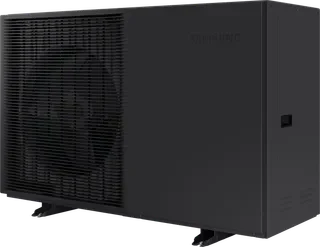
Heating with oil or LPG? For eligible residential park homes, switching to a heat pump is free, fully installed, with the Boiler Upgrade Scheme grant, in a limited-time offer until 31 March 2027. Homes on electric heating can qualify too, and eligibility is confirmed at a free survey.
What does it cost to heat a park home for a year?
The honest way to compare heating systems is cost per kWh of heat delivered into the room, not cost per unit of fuel bought. A litre of kerosene and a kWh of electricity are not comparable until you account for what each one turns into once it has been through a boiler or a heater.
YEARLY HEATING BILL BY FUEL
Same electricity, very different bills
Same park home, same 10,000 kWh of heat and hot water. Electricity uses the Ofgem October to December 2026 cap average; the floating bars show the range delivered fuels move through.
| Heating | Yearly bill |
|---|---|
| Panel heaters or electric radiators | About £2,600 |
| LPG boiler | £1,000 to £1,400 |
| Oil boiler | £600 to £1,200 |
| Air source heat pump, SCOP 3.0 | About £870 |
| Air source heat pump, SCOP 3.5 | About £750 |
Those yearly totals are just cost per kWh of heat multiplied by 10,000 kWh. The table below shows both sides of that sum, and adds Economy 7 storage heaters, which do not land on a single yearly figure because so much depends on how long the charge lasts into the evening.
| Heating system | Cost per kWh of heat | Yearly cost at 10,000 kWh |
|---|---|---|
| Panel heaters or electric radiators | 26p | around £2,600 |
| Storage heaters on Economy 7 | Below the single rate overnight, above it by day | Depends on how much heat holds until evening |
| LPG boiler | 10p to 14p | £1,000 to £1,400 |
| Oil boiler | 6p to 12p | £600 to £1,200 |
| Air source heat pump at SCOP 3.0 | ~8.8p | around £870 |
| Air source heat pump at SCOP 3.5 | ~7.5p | around £750 |
All figures are for heating and hot water in a two-bed park home using 10,000 kWh of heat a year; standing charges, cooking, lighting and appliances are left out. Electricity figures use the Ofgem October to December 2026 price cap direct-debit average. If your home is larger, older or occupied all day, scale the yearly column up. LPG assumes 65p to 90p per litre and oil assumes 55p to 115p per litre, both through a boiler running at about 90 percent efficiency. Those two fuels track global markets, which is why they are quoted as bands rather than a single number.
Why does a park home cost more to heat than a house the same size?
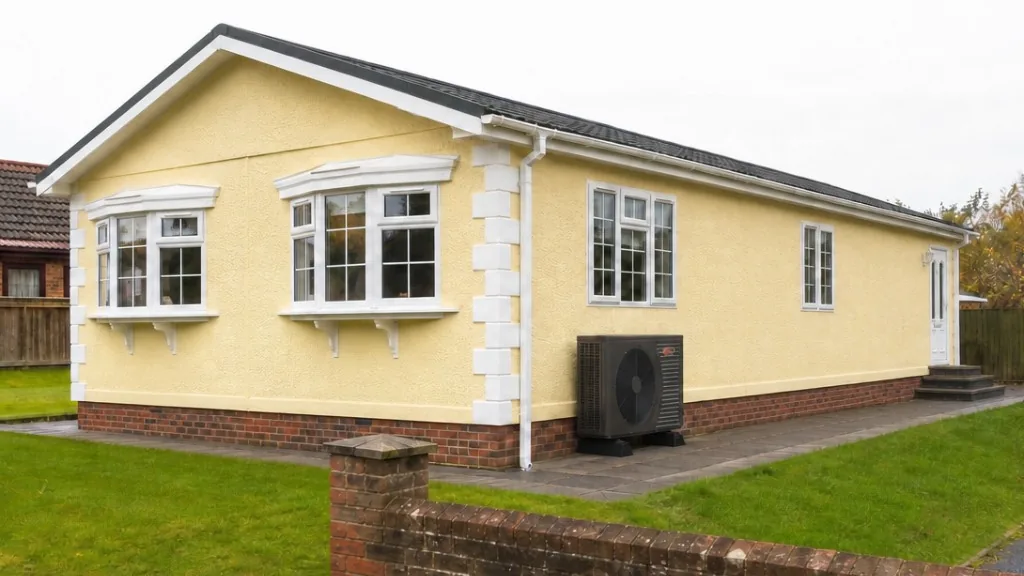
A park home is not a small bungalow. It is a timber-framed structure on a steel chassis, with thin wall and floor build-ups compared with a brick house of the same floor area. Heat escapes through a much larger share of its surface because every wall is an outside wall, and the floor is a suspended cassette rather than a concrete slab on the ground.
You are almost certainly off the gas grid
Very few residential parks have a mains gas connection. That single fact sets a floor under your bill, because mains gas is the cheapest common heating fuel in Britain and it is not on the menu.
What is left is electricity, bottled or bulk LPG, or oil, and every one of them costs more per unit of heat delivered than gas does. Comparing your bill to a friend’s gas-heated house is comparing two different markets.

The shell is thin on every face
Wall cavities in a park home are measured in tens of millimetres, not the couple of hundred you get in a modern house. The floor is a suspended timber cassette over a cold undercroft, not a ground-bearing slab, which is why park home floors can feel colder even when the base is properly skirted. Brick or panel skirting is normal on a residential park home: it closes the wind path that you see under a holiday caravan, but it is not floor insulation and should not be sold as such.
A shallow, thin roof. Warm air rises. In a park home it meets a thin, low-pitched roof, and heat leaves straight through it.
Thin walls. Wall cavities are measured in tens of millimetres, not the couple of hundred you get in a modern house.
Every wall faces outside. A mid-terrace house has a warm neighbour on each side. A park home stands alone, so all four walls lose heat.
A suspended floor cassette. The floor is timber over a cold undercroft, not a slab on the ground. Skirting closes the base, but it is not floor insulation.
Heat leaves on every side. The roof, four outside walls and a thin suspended floor all lose heat at once. That is why a park home needs more heat than a house of the same floor area.
| Part | Why heat escapes |
|---|---|
| Shallow roof | Thin, low-pitched roof |
| Thin walls | Cavities measured in tens of millimetres |
| No neighbour | Every wall faces outside |
| Suspended floor cassette | Timber floor over a cold undercroft; skirting is not floor insulation |
Does your park home’s build year change the bill?
More than almost anything else you can control. Residential park homes are built to BS 3632, the British Standard that sets out how they must be made, including the maximum U-values allowed for walls, floors and roof. A lower U-value means less heat escaping per square metre, and the standard has tightened its figures at every revision.
The current version, BS 3632:2023, came into effect in September 2023 and replaced the 2015 version:
| Element | BS 3632:2015 | BS 3632:2023 |
|---|---|---|
| Walls | 0.35 | 0.30 |
| Floors | 0.35 | 0.26 |
| Roof | 0.20 | 0.20 |
Maximum average U-values in W/m²K. Lower is warmer.
BS 3632 MAXIMUM U-VALUES
The floor did the most work between revisions
Maximum average U-values in W/m²K. Lower is warmer.
| Element | BS 3632:2015 | BS 3632:2023 |
|---|---|---|
| Walls | 0.35 | 0.30 |
| Floors | 0.35 | 0.26 |
| Roof | 0.20 | 0.20 |
That is the most recent tightening, and it is the one with figures we can point at. Between a 2023 home and a genuinely old one the gap is far wider, and here we have to be straight with you: we have left the older revisions out of the table. Figures for the 1989, 1995 and 2005 versions circulate widely online, but we could not stand any of them up against the standard itself or any published source, and a number in a table on an installer’s website is exactly the kind of thing that gets repeated until it looks like a fact.
What matters is not which revision your home was signed off under. It is whether anything has been done to the fabric since.
So use the question that actually has an answer. A home built before the 2015 revision, with its original walls, floor and windows and no insulation work since, will need noticeably more heat than a recent one on the same park. If you know the year your home was made and you know it has never been improved, you already have the important half of the picture. If it has had external wall insulation, an underfloor upgrade or replacement double glazing, the build year tells you much less than the work does.
Storage heaters, panel heaters and electric boilers
Direct electric heating is the most expensive common way to make heat in Britain, and it is the most common setup in older park homes. The reason is arithmetic rather than any fault in the equipment: one unit of electricity in produces one unit of heat out, so you pay the full 26p per kWh with no multiplier working in your favour.
Does Economy 7 make storage heaters cheaper?
It can, and it often does not. Economy 7 gives you around seven cheaper hours overnight and charges a higher rate than a standard single tariff for the remaining seventeen.
ECONOMY 7 IN ONE DAY
Cheap overnight, dearer for the other seventeen hours
| Hours | Rate | What happens |
|---|---|---|
| 00:00 to 07:00 | Cheaper | Storage heaters charge |
| 07:00 to 24:00 | Higher than a standard single rate | When stored heat runs out, the top-up is bought at the dear rate |
The maths works when your heaters store enough heat overnight to carry the home through to bedtime. It stops working the moment you reach for a plug-in fan heater at four in the afternoon, because that top-up is billed at the expensive daytime rate.
Older storage heaters lose much of their charge by mid-afternoon, exactly when you want it. High heat retention models hold on to it far longer, which is why two homes on the same tariff with the same number of heaters can end up hundreds of pounds apart.
Can you actually choose your tariff?
Everything above assumes you buy electricity from a supplier you chose. On plenty of parks that is not how it works. The park takes a single supply and meters each pitch, and you pay the park owner rather than an energy company.
If that is your situation, you have no supplier account to switch and often no way to get an Economy 7 rate at all, because the tariff is whatever the park is on. What you do have is a protection of a different kind. Under Ofgem’s maximum resale price rules, a site owner may only sell you energy at the price they paid for it. No margin is allowed on reselling domestic energy, and for park homes specifically an administration charge for meter reading and invoicing can only be made if it is written into your agreement. Where energy is bundled into the pitch fee instead, the rules work differently again.

Panel heaters and electric boilers
Panel heaters and electric radiators have no storage element at all, so every kWh is bought at whatever the rate is when you press the button, usually during the expensive part of the day. An electric boiler is the same arithmetic wrapped around a wet system: it runs your radiators properly, but it is still one unit in for one unit out. If any of these describe your setup, the running-cost case for change is stronger than for any other fuel, and we cover the practicalities in swapping storage heaters for a heat pump. From 1 October 2026 to 31 March 2027, household electricity carries no VAT, which takes just under 5% off every electric heating bill here, but one unit in still buys one unit of heat.
LPG and oil: cheaper per unit, paid for in advance
Both of these beat direct electric on cost per kWh of heat, and both come with a cash-flow problem that never shows up in a per-unit comparison. You buy the fuel before you burn it, in quantities of several hundred pounds at a time, and the price you pay depends on when you happened to order.

What does LPG cost to heat a park home?
At 65p to 90p a litre through a 90 percent efficient boiler, LPG delivers heat at roughly 10p to 14p per kWh. Cylinders cost more per litre than a bulk tank, and a rented tank adds a standing cost whether you use it or not. If the tank belongs to your supplier, switching supplier is harder than it looks, because the tank usually has to go back or be bought out. The full picture, including what a like-for-like boiler swap runs to, is in what an LPG swap involves.
What does oil cost to heat a park home?
Kerosene at 55p to 115p a litre works out at around 6p to 12p per kWh of heat, which makes oil the cheapest of the three conventional options in most years. The catch is the width of that band. Heating oil is priced off global crude markets and can move sharply between one delivery and the next, so a good year and a bad year are genuinely different budgets. The break-even is easy to remember: whenever kerosene costs more than about 80p a litre, a heat pump at a seasonal efficiency of 3.0 delivers heat for less than an oil boiler does.
Tank condition matters as well, since a steel single-skin tank near the end of its life is a replacement cost waiting to happen. We set out the oil replacement options separately.
How much could a heat pump cut the yearly bill?
A heat pump does not make heat, it moves it, which is why it breaks the one-in-one-out rule that makes direct electric heating so costly. At a seasonal efficiency of 3.0, one unit of electricity becomes three units of heat, so the same 26p buys three times as much warmth.
Run that through the worked example. A park home needing 10,000 kWh of heat a year draws about 3,300 kWh of electricity at SCOP 3.0, which is around £870 on the current cap. The same home on panel heaters draws the full 10,000 kWh and pays around £2,600.
- ~£2,600 a year On panel heaters. All 10,000 kWh bought as electricity, one unit in for one unit of heat out.
- ~£870 a year On a heat pump at SCOP 3.0. Around 3,300 kWh bought, one unit in for roughly three units of heat.
Against LPG at the middle of its band the gap is narrower, closer to a few hundred pounds a year, and against oil it turns on the price: above about 80p a litre the heat pump is cheaper to run, while against cheap oil the gap can be narrow enough that the grant, not the running cost, is what makes the case.
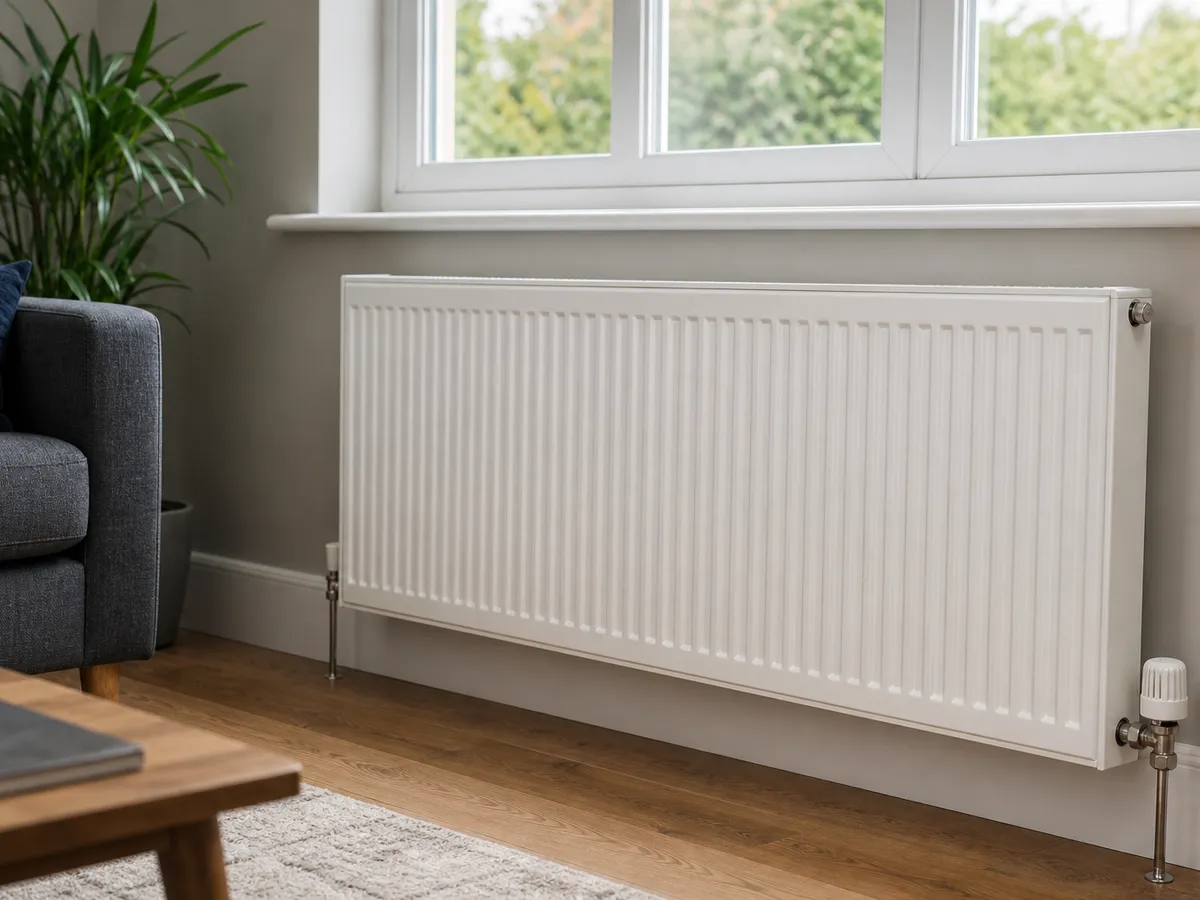
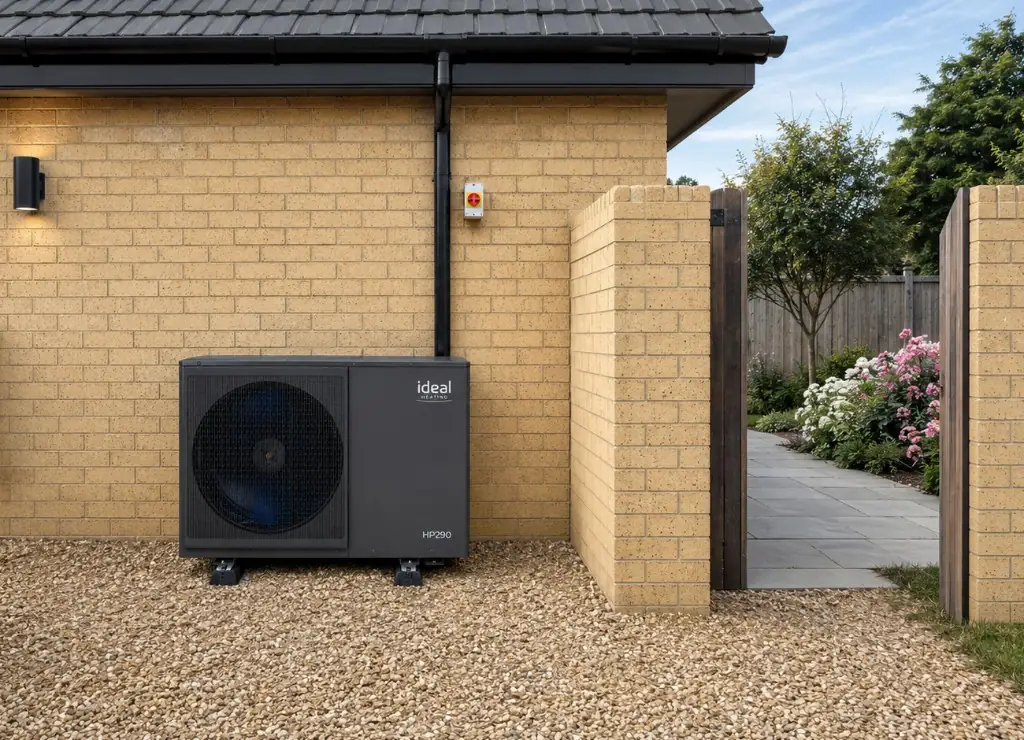
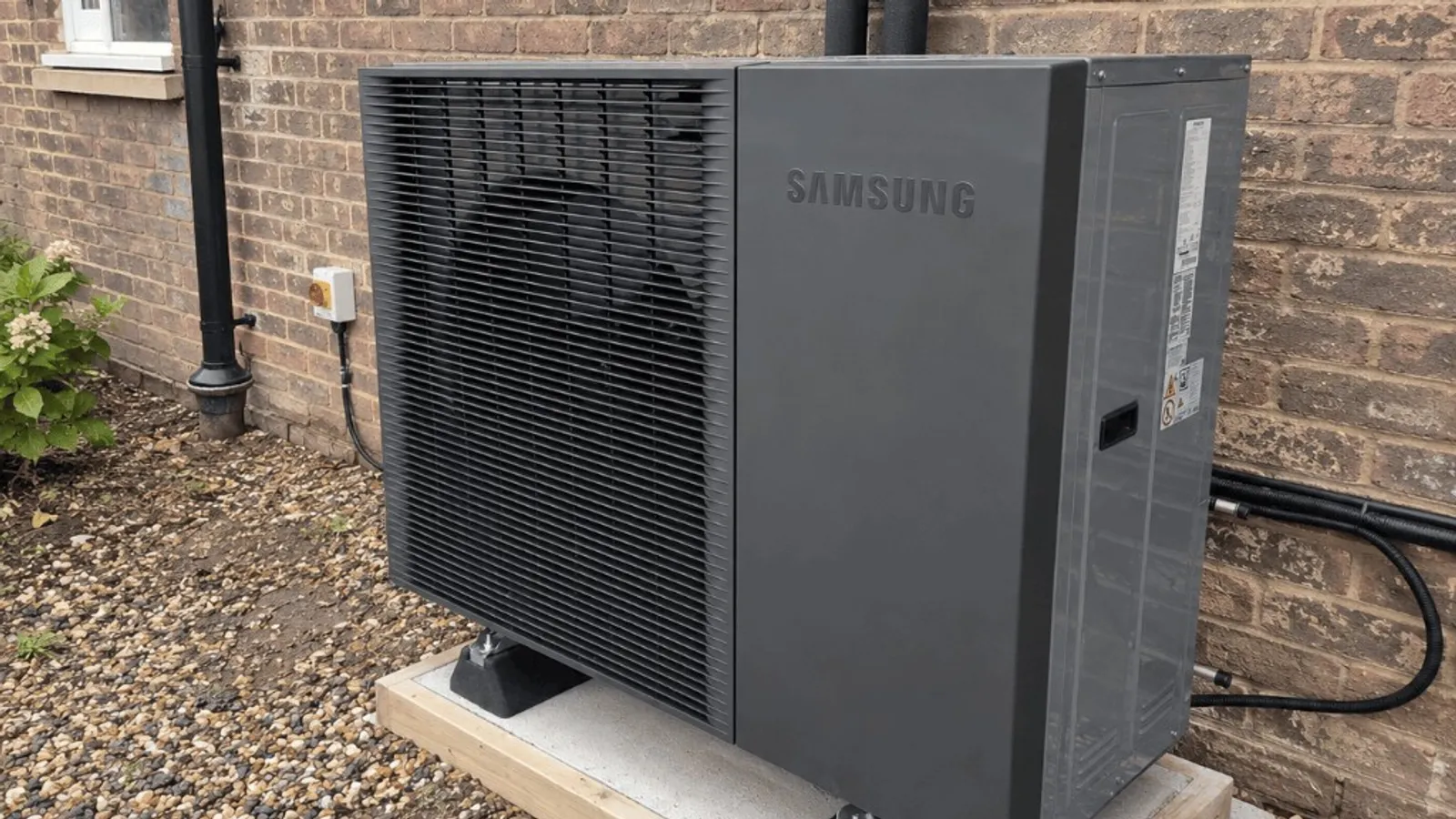
Park homes suit air source heat pumps better than most housing stock, because the heat load is small and well defined. Compact units start at 5 kW, run on the standard single-phase supply every park home already has, and high-temperature models work with existing radiators.
The grant side is where the numbers get interesting. The Boiler Upgrade Scheme takes £9,000 off an oil or LPG swap until 31 March 2027, and £7,500 off an electric one, with UKEM applying to Ofgem on your behalf as part of the install. How far the grant goes on a park home installation is set out in what a park home heat pump costs after the grant.
Three park homes, three very different bills
The three below are illustrative rather than real customers, built from the fuel costs above so you can find the one closest to your own home. Whether a home like yours qualifies for the grant is confirmed at a free survey.
1994 two-bed on panel heaters, retired couple at home all day. The worst combination in this article. Original fabric from two revisions of the standard ago means demand is high before anyone touches a thermostat, and direct electric then charges the dearest possible rate for every one of those units. All-day occupancy removes the one saving grace, because there is no empty house overnight for a cheap tariff to work on. Draught-proofing pays here before any new heat source does.
2008 two-bed on a bulk LPG tank, couple out at work. Fabric and fuel cost both sit mid-table, and the heating only runs morning and evening, so the bill is uncomfortable rather than alarming. What makes the case for change is the £9,000 grant and an end to ordering fuel in advance, not a dramatic cut in running cost.
2019 two-bed on an oil boiler, one occupant. This home is already close to the floor of what a park home can cost to heat: 2015-standard fabric, usually the cheapest of the conventional fuels, and one person’s demand. A switch still attracts £9,000, and it is worth making with open eyes about a running-cost saving that may be modest.
What moves your bill more than the fuel does
Before changing any heating system, these are worth an afternoon each. Several cost nothing.
- Hot water temperature. A cylinder held at 65°C every day costs noticeably more than one at 50°C with a weekly high-temperature cycle.
- Draughts at skirting junctions, service risers and door thresholds, which are often the biggest source of uncontrolled heat loss once the walls and roof are sealed.
- Storage heater dials left where the last occupant set them, so the home stores heat it does not need and dumps it before evening.
- Heating unused rooms. Thermostatic radiator valves on a wet system let you drop unused rooms without touching the main thermostat.
- Standing charges on a second fuel you barely use, which sometimes cost more per year than the fuel itself.
The Warm Home Discount park homes route
The ordinary Warm Home Discount is applied by energy suppliers to a customer’s account, which quietly excludes a large number of park home residents: if the park meters your supply, you have no supplier account for a discount to land in.
There is a separate route for exactly this reason. The Park Homes Warm Home Discount is run by Charis rather than by suppliers, and it pays into your bank account instead. Charis opens a new round each winter and sets the payment per round (the 2025/26 round paid £150); its page shows the current round, the amount and how to apply.
Broadly, past rounds have asked that you live in the park home permanently, that you pay council tax on it, and that you either receive a means-tested benefit or fall under a household income threshold. Terms are set per round, so check the current ones when it opens. Funding is capped and allocated first come, first served, which in practice rewards applying early rather than in February.
When switching heating won’t fix your bill
A fuel switch changes the price of each unit of heat. It does not change how many units your home needs, and in a few situations that distinction decides the outcome.
If your home predates the 2015 revision and has never been improved, the fabric is doing more damage than the fuel. A heat pump will still cut the cost per unit of heat, though you will be paying that lower rate on a stubbornly high number of units.
Draught-proofing around the skirting and service penetrations comes first, whatever heat source you end up with.
An oil boiler in a post-2015 home puts you near the practical floor for park home heating costs already. The case for change there rests on the grant, the end of deliveries and the age of your boiler rather than on a running-cost saving that may not materialise. Holiday statics are a separate matter again: none of the grant arithmetic here applies unless the home is a residential park home lived in as your main residence on a residentially licensed park.
Costs also depend on how well the new system is set up. A heat pump run like a gas boiler, switched off when you go out and blasted on return, gives back a chunk of its efficiency advantage, and how SCOP translates to a real bill goes through that in detail.
Work out your own number first
Find your fuel in the table at the top, then adjust for your home: older and never improved pushes you up the range, recent or insulated since pulls you down. That gets you a realistic estimate before you read a single meter. Then check the cheap wins: hot water temperature, draughts at the skirting, whether your storage heaters are set to store heat you actually use, and whether you are buying electricity from a supplier or from the park. Those cost little and they apply no matter what you heat with. Only once you know your real demand does a fuel comparison mean anything, because the cheapest unit of heat is still expensive if your home needs too many of them.
Sources
- If you live in a home with a business energy contract (Ofgem) for the maximum resale price rules where the park meters your supply
- Energy price cap (Ofgem) for the electricity unit rate used throughout, which updates on this page each quarter
- Park Homes Warm Home Discount (Charis) for the round dates and how to register
- Apply for the Boiler Upgrade Scheme (GOV.UK) for the £7,500 and £9,000 grant rates and the eligibility rules
- Park and mobile homes (GOV.UK) for what counts as a residential park home
BS 3632:2015 and BS 3632:2023 U-values are the maximum averages published in the standard. We have not reproduced figures for earlier revisions because we could not verify them; if you want the exact requirement your home was built to, the standard itself is published by BSI.
See more from UKEM in your Google results.

Frequently asked questions
How much does it cost to heat a park home for a year?
For a two-bedroom park home needing roughly 10,000 kWh of heat and hot water a year, the bill lands somewhere between about £600 and £2,600 depending entirely on the fuel. Oil usually sits at the bottom of that range, LPG in the middle, and panel heaters or electric radiators at the top, because direct electric heat costs 26p per kWh on the Ofgem October to December 2026 cap average. An older, draughtier home needs more kWh to stay warm, so it pays more on any fuel.
Why is my park home so expensive to heat?
Two reasons stack up. Park homes are timber-framed structures with thin wall and floor build-ups, and every wall is an outside wall, so they lose heat through a much larger share of their surface than a house of the same floor area. Brick or panel skirting usually closes the base, but the floor is still a suspended cassette rather than a slab on the ground. On top of that, almost no park is connected to the mains gas grid, which leaves electricity, LPG or oil, all of which cost more per unit of heat than mains gas. Build year matters too: BS 3632, the standard park homes are built to, has tightened its insulation requirements at every revision, so an older home needs more kilowatt hours before anyone touches a thermostat.
Are storage heaters cheaper to run at night?
The electricity going into them overnight is cheaper, but that is only half the picture. An Economy 7 tariff buys you roughly seven off-peak hours at a reduced unit rate and charges a higher rate than a standard tariff for the other seventeen. It works out well if your heaters genuinely store enough heat to last the day, and badly if they run out by late afternoon and you top up with a plug-in heater at the peak rate. Older storage heaters with poor retention are the usual culprit. One thing to check first: if the park owner meters and resells your electricity rather than you holding your own supplier account, an Economy 7 rate may not be available to you at all.
Do park homes use more energy than a house?
Per square metre, usually yes. Per home, usually no, because park homes are small. A typical two-bedroom park home needs somewhere around 10,000 kWh of heat and hot water a year against roughly 12,000 kWh for a three-bedroom semi, but it is doing that across far less floor area. The energy intensity is what costs you, and it is why a park home bill can rival a much larger house.
How much could a heat pump cut my park home heating bill?
If you are on panel heaters or electric radiators, roughly two thirds off the cost of each unit of heat, because a heat pump at a seasonal efficiency of 3.0 turns one unit of electricity into three units of heat. Against LPG the gap is smaller but still real, and against oil it depends on where kerosene prices sit that year. The saving is on running cost only; the Boiler Upgrade Scheme handles the install side, and UKEM applies to Ofgem on your behalf.
Does a park home need mains gas for central heating?
No. Plenty of park homes already run wet central heating with radiators from an LPG or oil boiler, and a heat pump connects to that same pipework. If your home has never had radiators, because it runs on storage heaters or a warm air unit, the radiators and pipework go in as part of the job. That takes the install from a straight swap to a two to four day fit.
Last updated: