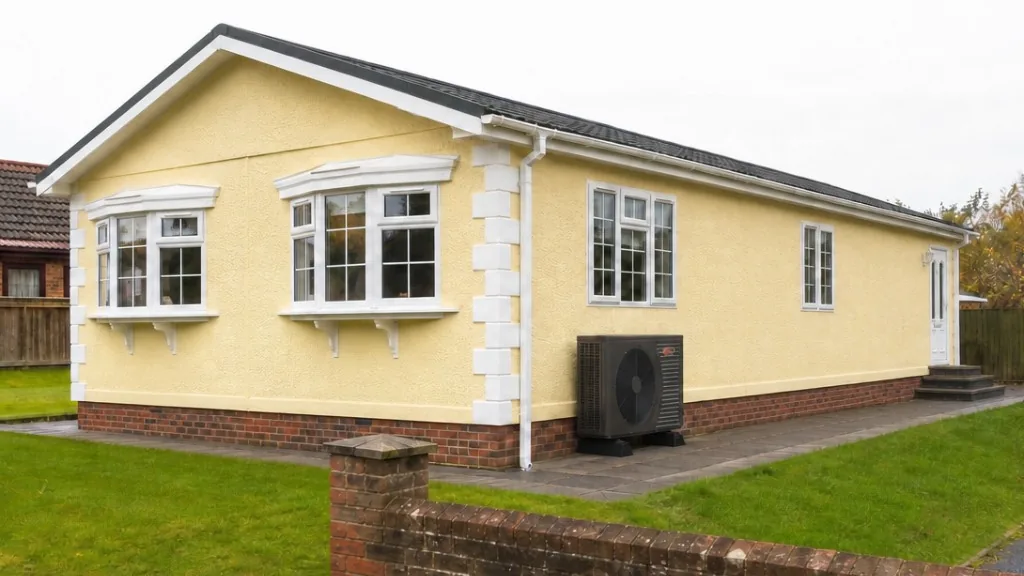






Modern air source heat pumps from Samsung, Vaillant, and Ideal typically measure 25 to 38 dB(A) at three metres on manufacturer sound-pressure data at low load. That is quieter than most people expect and closer to a fridge than a gas boiler flue. What matters for planning is a different number: MCS 020 predicts noise at 1 m from your neighbour’s habitable windows and doors, with a 37 dB(A) ceiling for permitted development in England. UKEM runs that calculation during the home survey before quoting, so noise surprises on install day are rare.
At a glance
What decibels mean in a garden
Decibels are logarithmic: every 10 dB(A) sounds roughly twice as loud to the human ear. That is why the gap between 35 dB(A) and 45 dB(A) feels larger than the numbers suggest.
How heat pump noise compares
Sound pressure in dB(A) from published Samsung, Vaillant, and Ideal datasheets at 3 m on low load. MCS 020 uses a different distance at the neighbour's window.
- Samsung R290 Gen 7 Quiet Mode (3 m) High 20s
- Vaillant aroTHERM plus 5 kW (3 m) 36
- Ideal HP290 low load (3 m) Low 30s
- MCS 020 ceiling (neighbour, 1 m) 37 max
- Fridge (1 m) 40-45
- Quiet conversation (1 m) ~50
- Suburban daytime background 45-55
Brochure figures are measured in test conditions. Real gardens add reflections from walls, fences, and hard paving. The MCS calculator applies those corrections so the neighbour-window prediction is conservative.
Manufacturer noise: the models UKEM installs
All three brands in the UKEM range publish sound power and sound pressure data for planning and customer brochures. Capacities and modes differ, but the pattern is the same: low load is quiet; peak heating and defrost are louder for shorter periods.
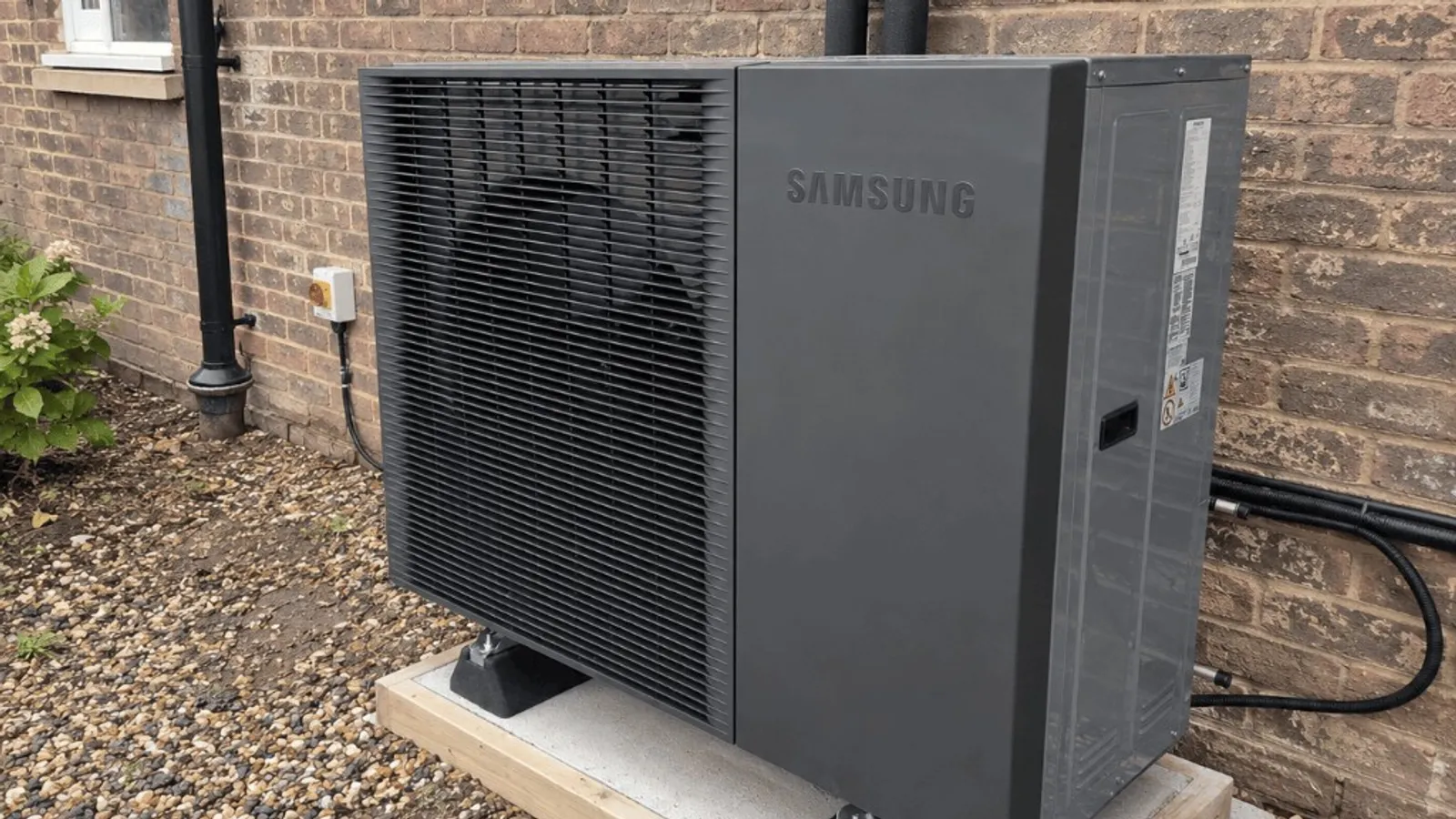
- Samsung R290 Gen 7: variable-speed compressor; Quiet Mode targets the high 20s dB(A) at 3 m on published curves.
- Vaillant aroTHERM plus: 5 kW unit quoted at 36 dB(A) at 3 m on the manufacturer datasheet; larger outputs scale up slightly.
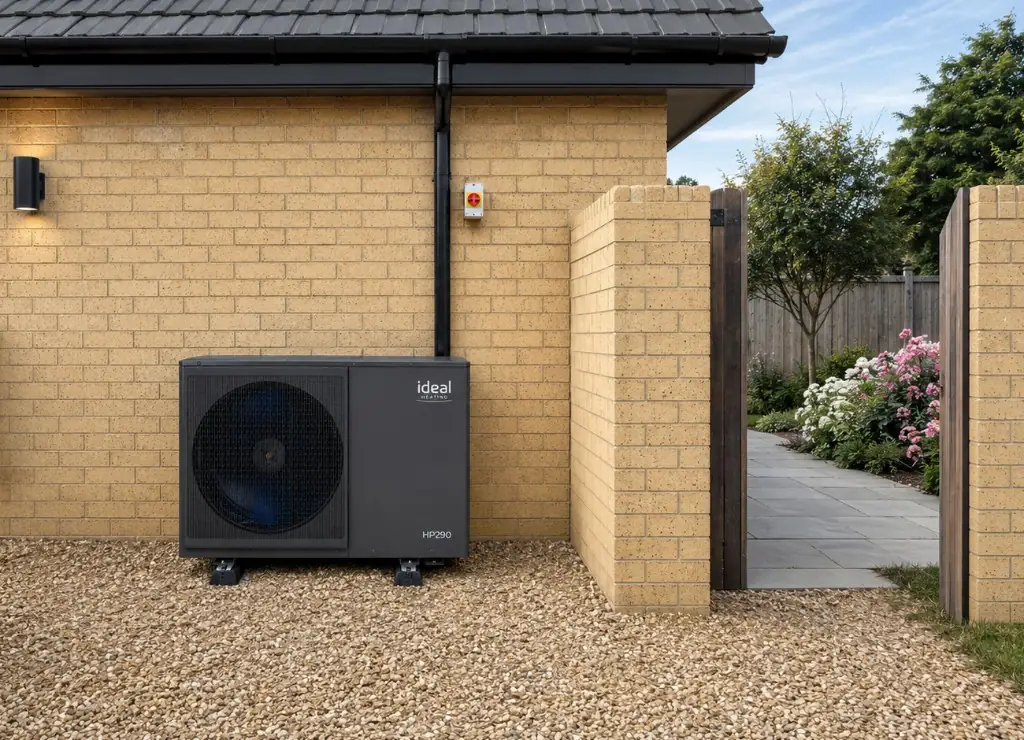
- Ideal HP290: low-30s dB(A) at comparable distance on low load; compact footprint suits tight side returns.
The heat pumps product page includes an interactive noise ruler built from the same published envelopes.
MCS 020 and the neighbour’s window
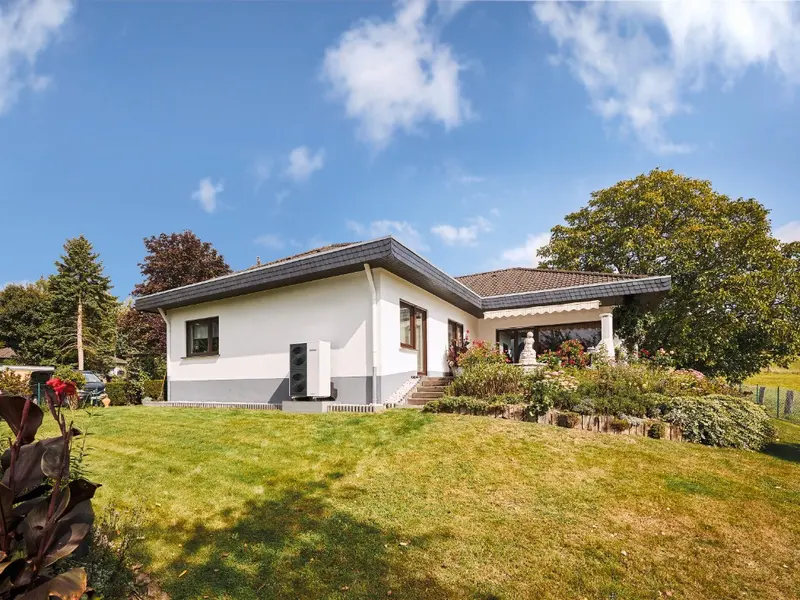
Permitted development in England does not ask “is it loud in your garden?” It asks whether the predicted sound pressure at 1 m from the centre of every neighbouring habitable-room window and door stays at or below 37 dB(A).
Two different noise tests
Manufacturers publish sound pressure at 3 m from the outdoor unit. Permitted development in England checks predicted noise at 1 m from the neighbour's habitable-room window. A quiet garden does not automatically mean the install passes MCS 020.
How quiet is it in your garden?
Used on datasheets and in sales material. Answers what you might hear on a patio or path.
Typical: 25-38 dB(A) at 3 m on low load
- Sound pressure is measured 3 m from the outdoor unit, in open air.
- Matches where you might stand on a patio, path, or lawn.
- Figures assume low load; defrost and peak heating run louder for short periods.
Will the neighbour's window pass?
Used for permitted development in England. Answers whether the install can go ahead without full planning permission.
Must stay at or below 37 dB(A) at the window
- Predicted sound pressure at 1 m from the centre of the nearest neighbour's habitable-room window (bedroom, living room, kitchen).
- The calculator adds distance from your unit, fan direction, fences, and wall reflections.
- Result must stay at or below 37 dB(A) for permitted development in England.
Since 28 May 2026, MCS 020 a) is the only certification route accepted for that test in England. The installer records the calculation before work starts. Scotland and Wales have their own permitted development conditions and continue to use the original MCS 020 with its 42 dB(A) limit; noise is still part of the design conversation everywhere UKEM installs.
The dedicated MCS 020 news article covers the policy date and paperwork. This guide focuses on what the numbers mean for day-to-day living.
Siting choices that keep noise down
Installers control noise more through position than through brand alone:
- Distance from the neighbour’s windows. Every metre helps; MCS applies standard distance attenuation.
- Fan direction. Pointing the grille away from habitable rooms, not across a boundary fence.
- Barriers. Brick walls, fences, and acoustic fences between unit and receiver window can improve the calculated result where MCS rules allow.
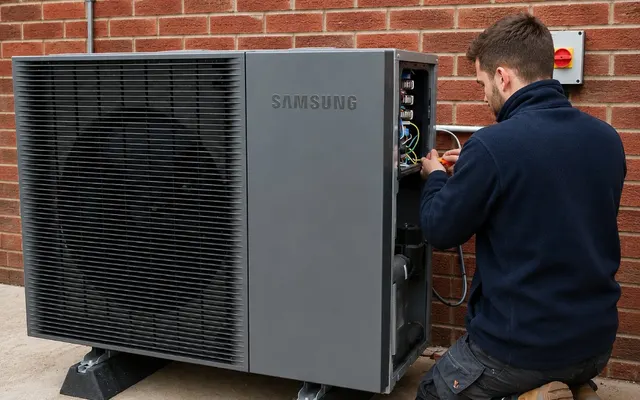
- Ground vs wall mount. Ground pads with anti-vibration feet (as on the Ideal HP290 install below) reduce structure-borne rumble through the wall.
- Quiet modes and schedules. Supported controllers can cap output overnight when the property owner wants an extra margin.
What you hear inside the house
Heat pumps run longer cycles than gas boilers but at lower fan and compressor speeds for much of the time. With the outdoor unit on a side wall, most households cannot hear it from the next room, let alone upstairs.
The exceptions are worth knowing: a unit mounted directly outside a bedroom window, lightweight conservatory walls that transmit vibration, or an open window on the same elevation as the fan during peak output. The survey avoids those layouts where possible.
If you are sensitive to background noise at night, say so at survey stage. The designer can prioritise walls away from sleeping rooms and enable quiet schedules where the controller supports them.
When noise blocks the install
Failure cases are uncommon but real:
- Terraced rear gardens with the only viable wall facing a neighbour’s bedroom at close range
- Shared drives where the only pad sits on the boundary
- Conservation areas with extra siting rules on top of MCS 020
When MCS 020 fails on every option, the choices are a full planning application (eight to thirteen weeks plus fee in many authorities) or not proceeding. UKEM will tell you which side of that line your plot sits on before you pay for an install.
How this fits the wider decision
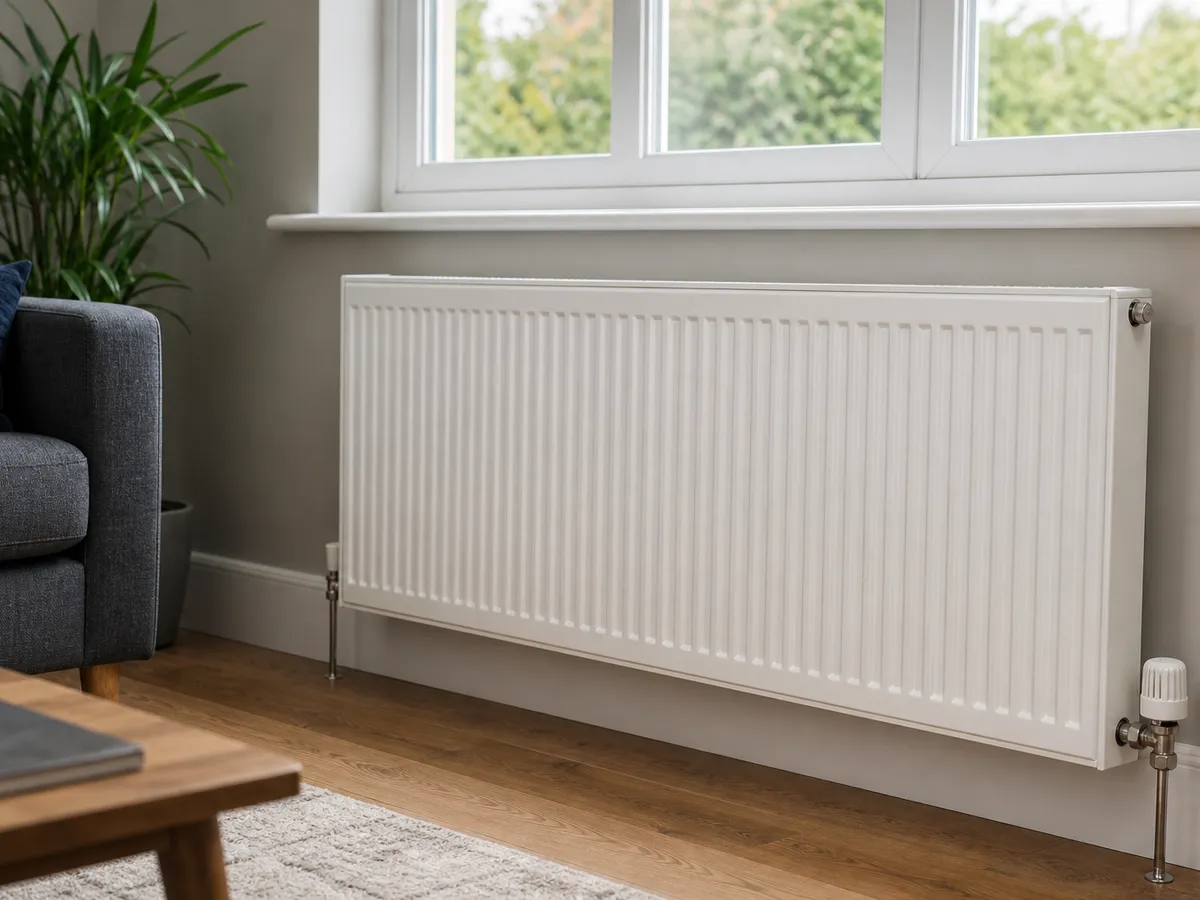
Noise rarely decides the project on its own. It sits alongside home suitability, radiators, running costs, and the installation timeline. If outdoor space and insulation look fine but the boundary is tight, book the survey and let MCS 020 run on your actual walls rather than assuming the worst from an older heat pump reputation.
Request a heat pump quote to schedule the survey; noise is scored as part of the same visit.
Frequently asked questions
How loud is a heat pump compared to everyday noise?
At three metres on low load, the air-to-water models UKEM installs typically sit between 25 and 38 dB(A) on manufacturer sound-pressure data. That is in the same band as a quiet library or a fridge humming in the next room. Suburban daytime background is often 45 to 55 dB(A), which is why a correctly sited unit rarely dominates what you hear in the garden. Peak output during defrost or very cold snaps runs louder for short periods.
Will my neighbours hear my heat pump?
That depends on siting, not just the unit. MCS 020 calculates predicted noise at 1 m from the centre of the neighbour's habitable-room windows and doors, not at your kitchen door. A unit facing a wide garden usually passes easily; a fan grille aimed across a narrow party wall toward a bedroom window is the scenario installers redesign around. The interactive noise section on our heat pumps page uses the same published data envelope.
What are typical noise figures for Samsung, Vaillant, and Ideal heat pumps?
Published sound pressure varies by capacity and mode. Samsung R290 Gen 7 Quiet Mode sits in the high 20s dB(A) at 3 m on datasheet figures. Vaillant aroTHERM plus 5 kW is quoted at 36 dB(A) at 3 m. Ideal HP290 publishes similar low-30s dB(A) ratings at comparable distances on low load. Larger kW outputs and defrost cycles run higher. The MCS survey uses sound power data and distance corrections, not a single brochure number.
What happens if my install fails the MCS 020 noise test?
The installer tries another wall, a ground pad further from the boundary, acoustic screening where MCS allows it, or a quieter/smaller model. Full planning permission is the fallback if no siting passes 37 dB(A) at the neighbour's windows. That adds weeks and a fee, so redesign is almost always cheaper. See the MCS 020 news piece for the 28 May 2026 rule change.
Are heat pumps noisier at night?
They can run for longer periods overnight in cold weather because weather compensation keeps a steady target temperature. Modern variable-speed units ramp down fan and compressor speed when load is low, which is when night running happens. If noise at night is a concern, the survey prioritises walls away from bedroom windows and may enable quiet schedules on supported controllers. Avoid placing the unit directly under your own open bedroom window if you are a light sleeper.
Last updated: