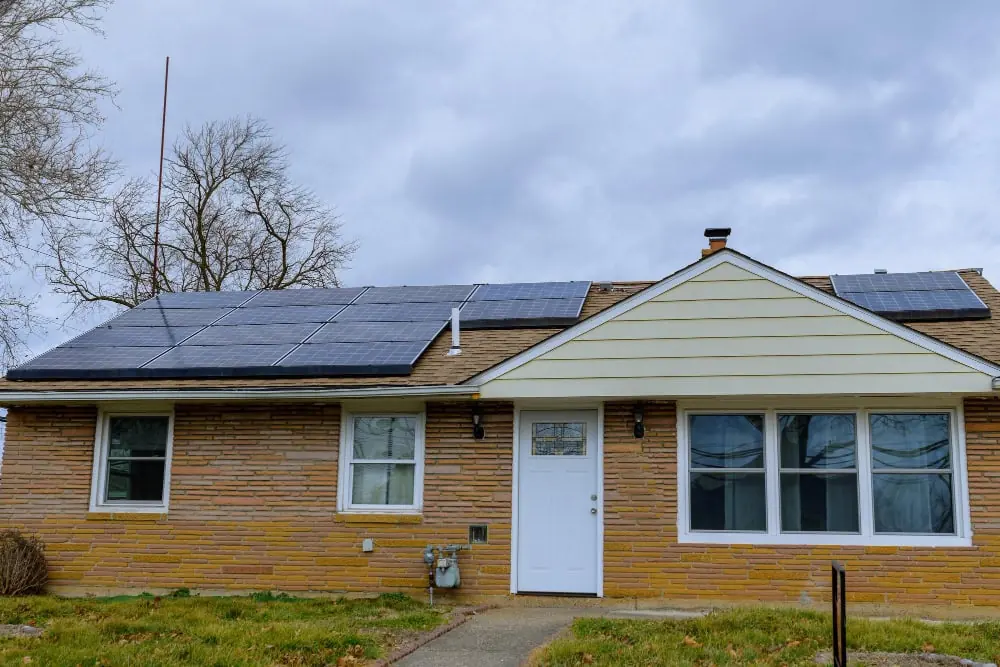







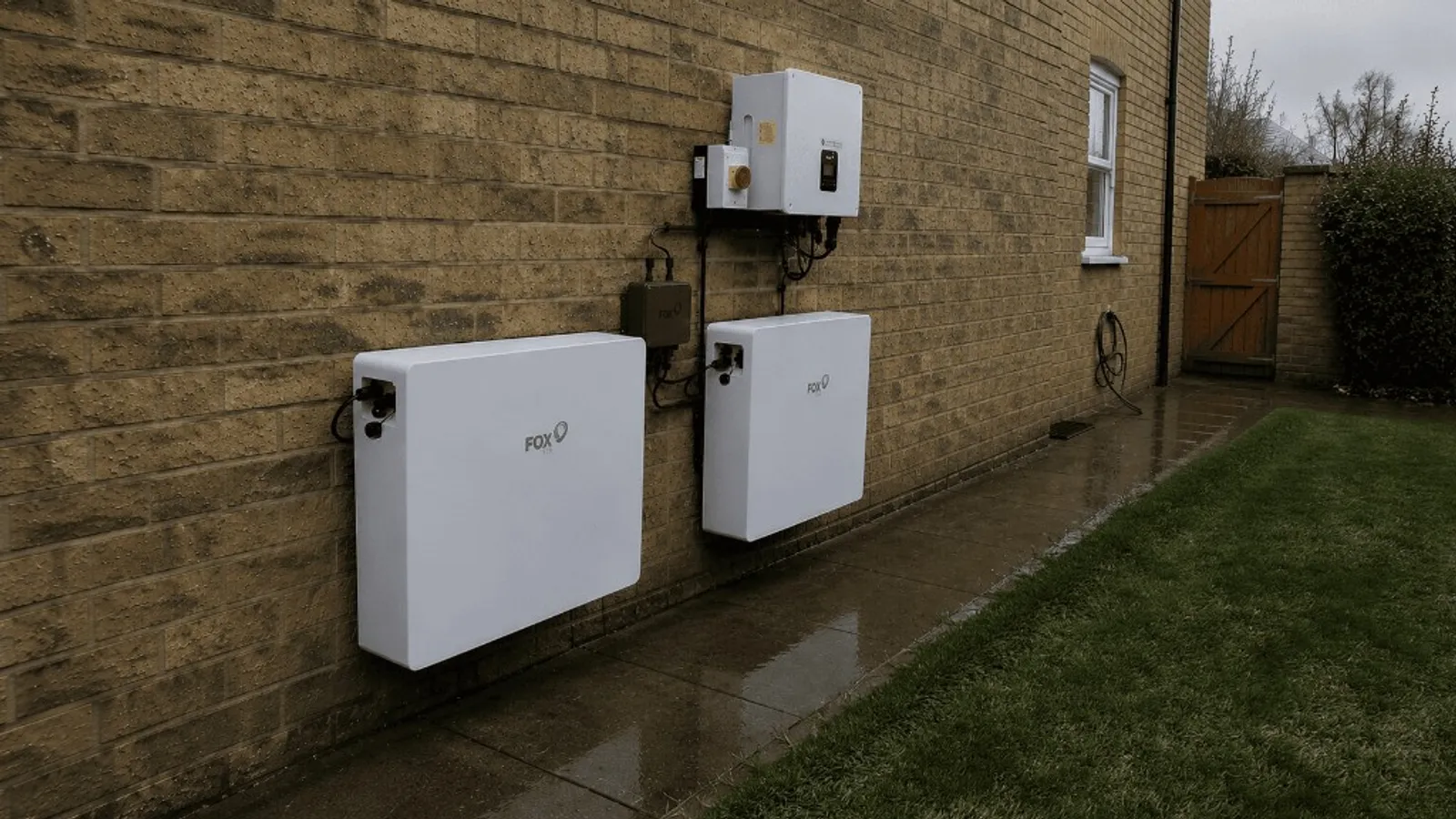
Most UK homes with existing solar can add a home battery without touching the panels on the roof. The retrofit mounts storage and inverter hardware on the wall or in a garage, wires it into your consumer unit, and reconfigures the system so daytime surplus charges the battery instead of exporting at a low rate. Self-consumption often climbs from roughly 40% to 70-80%, which is where the bill saving comes from. The panels stay where they are; the work is at the inverter, the battery, and the meter.
At a glance
Why retrofit instead of waiting for a full system swap?
If your panels are still performing well, replacing them to add storage would waste the asset on the roof. Retrofit targets the gap in the economics: you already generate more than you use at midday, but you import at peak rates in the evening. A battery closes that loop.
The battery worth-it guide covers the maths in detail. On a typical 28p import / 5p export split, every stored kWh you reuse is worth roughly 23p of avoided import minus lost export. Annual savings for a 10 kWh battery on a 4 kWp array often land in the £400-£600 band on top of what solar already saves, though tariffs and usage patterns move that figure.
Where your solar energy goes: before and after a battery
Typical UK household bands on a 4 kWp array. Actual split depends on whether you are home in the day and how big the battery is.
- Used at home (no battery) ~40%
- Exported (no battery) ~60%
- Used at home (with ~10 kWh battery) 70-80%
- Exported (with battery) 20-30%
Hybrid swap vs AC-coupled add-on
Retrofit hardware falls into two main routes. The right one depends on your existing inverter, its warranty, and wall space.
Two retrofit paths (simplified)
Hybrid replacement is one box managing panels, battery, and grid. AC-coupled adds a battery inverter beside your existing solar inverter.
| Route | Best when | Trade-off |
|---|---|---|
| Hybrid inverter swap | Inverter is ageing, non-hybrid, or you want one control app | Replaces the solar inverter; short solar downtime during swap |
| AC-coupled add-on | Existing inverter is new and warranty-sensitive | Extra box on the wall; small efficiency loss converting AC to DC and back |
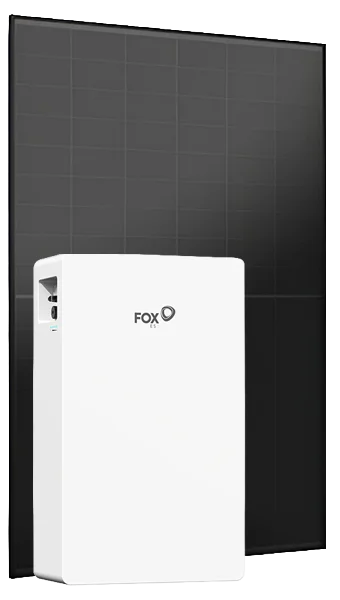
UKEM installs Fox ESS and Tesla Powerwall 3 retrofits. Fox ESS LFP units suit most daily-cycling retrofit jobs; Powerwall 3 integrates battery and inverter when a hybrid-style wall unit fits the brief. Both are covered on the battery storage product page and the combined solar and battery page.
What happens on retrofit day?
A straightforward battery retrofit is usually around one day on site:
- Mount the battery and any new inverter hardware on a suitable wall or floor stand.
- Install DC and AC isolators, cable routes, and protective devices to current wiring regulations.
- Connect to the consumer unit or dedicated circuit; upgrade the consumer unit only if the survey finds it necessary.
- Commission the system, set export limit and charge windows, and pair the monitoring app.
- Update MCS documentation and hand over operating instructions.
Solar generation may pause briefly if the hybrid inverter is being swapped. AC-coupled retrofits often leave the existing solar online for most of the day. Either way, you should plan for the engineer to need clear access to the inverter location, consumer unit, and battery wall. For a full new array rather than a retrofit, see the solar installation timeline guide.
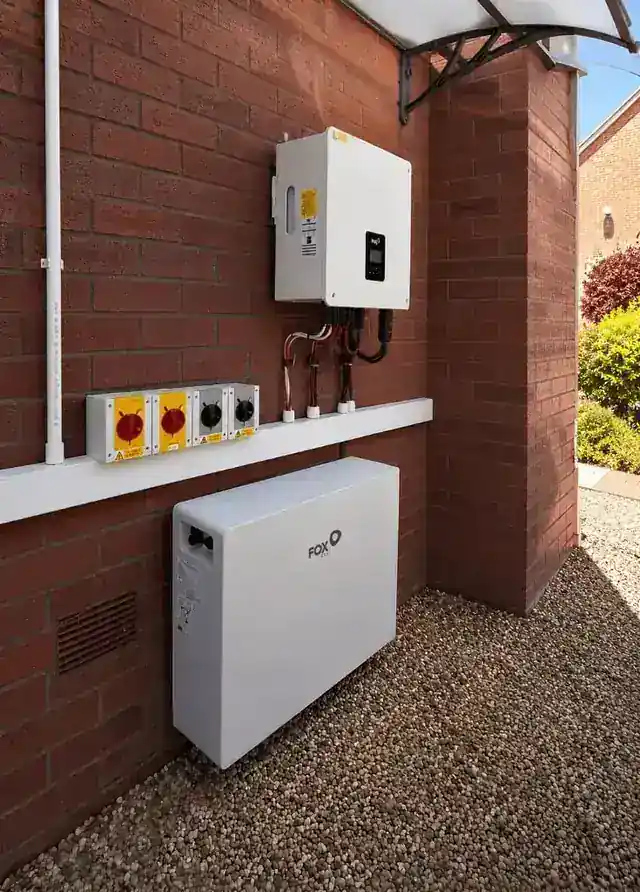
DNO notification, MCS, and SEG
Grid-connected storage must be installed and notified correctly. UKEM handles Distribution Network Operator (DNO) notification for the added export/import capacity where required. The system stays MCS-registered, which keeps you inside the rules for the Smart Export Guarantee and preserves buyer confidence if you sell the property.
If your original install was pre-MCS or used non-standard equipment, tell us upfront. Bringing documentation up to standard may be part of the retrofit scope.
Sizing the battery to your existing array
Size storage against evening demand and typical surplus, not panel count alone.
| Home profile | Typical array | Battery starting point |
|---|---|---|
| Flat, low evening load | 2-3 kWp | 5-6 kWh |
| 3-bed semi, standard use | 3-5 kWp | 10 kWh |
| Large home, heat pump or EV | 5-8 kWp | 15-20 kWh |
A battery that is too small fills by midday and still exports in summer. One that is too large may never fully cycle in winter, which wastes usable capacity. The generation side is covered in the how many solar panels guide; the value side in the battery worth-it guide.
When retrofit is not the right next step
- You are already at home most days and self-consume most of what you generate.
- Your array is very small and rarely produces a surplus worth storing.
- You plan an EV charger soon and can schedule daytime charging against solar instead.
- Your roof is shaded or the existing install underperforms; fix generation before adding storage.
In those cases, a smart EV charger or a tariff change may capture the same value for less outlay. See our EV charger install guide if that sounds like your household.
VAT, finance, and quoting
Home battery storage is zero-rated for VAT under energy-saving materials relief until March 2027, after which the reduced rate is expected to return. Retrofit qualifies when installed as part of a domestic storage system by a competent installer.
0% finance is available on home batteries over 12 to 24 months (a 25% deposit applies), with longer no-deposit pay-monthly options through Shermin Finance. Finance is subject to status and affordability. UKEM Group is an Introducer Appointed Representative of Shermin Finance Limited, authorised and regulated by the Financial Conduct Authority. Shermin Finance Limited acts as a credit broker, not a lender. Full finance terms are on our website.
Battery-only retrofits are quoted from a short conversation about your existing inverter, array size, and export setup. No home survey is required in the same way as a heat pump, though photos of your inverter label and consumer unit speed up compatibility checks.
Getting a retrofit quote from UKEM
Tell us what inverter and array you have, how much you export, and whether backup in a power cut matters; both routes cover it, with whole-home backup included on the Tesla Powerwall 3 and available as an optional add-on on Fox ESS. We confirm hybrid vs AC-coupled routing, size the Fox ESS or Powerwall option, and put a fixed installed price in writing. Common retrofit questions are covered in the battery storage FAQ.
If you are still planning solar and storage together, the combined route on the solar and battery storage page is usually cheaper than two separate visits. If panels are already up and the economics point to storage, retrofit is the sensible next step.
Frequently asked questions
Can I add a battery to any existing solar system?
Most grid-connected domestic arrays can accept a battery retrofit, but the route depends on what is already on the wall. Systems with a modern hybrid inverter may only need the battery and commissioning. Older string-inverter setups usually need either a hybrid inverter swap or an AC-coupled battery inverter added alongside the existing unit. Very old or non-MCS installs may need a compliance check before anything is added. UKEM confirms compatibility from your inverter model, meter setup, and export arrangement before quoting.
Do I need to replace my solar inverter for a battery?
Not always. If your inverter is hybrid-ready or due for replacement anyway, swapping to a hybrid inverter that manages panels, battery, and grid in one box is the neatest long-term setup. If the existing inverter is new and under warranty, an AC-coupled battery inverter keeps the solar side untouched and adds storage on a separate AC connection. Both routes work; the right one depends on age, warranty, and how much wall space you have.
Will adding a battery affect my Smart Export Guarantee payments?
No, provided the retrofit is done by an MCS-certified installer and the export meter still reads correctly. You continue to export surplus you cannot store, usually at a lower rate than you pay to import. A battery reduces export volume because more generation is used at home first. That trade is the point: you keep more value inside the house rather than selling cheap and buying back dear. Ofgem's SEG guidance covers eligibility.
How long does a solar battery retrofit take?
On-site work is typically around one day for a straightforward retrofit: mount the battery, wire the inverter path, install isolators, commission the system, and walk you through the app. Quote to install is usually a few days to a week for battery-only work, longer if a hybrid inverter swap or consumer unit upgrade is needed. Solar and battery together are quoted as around one week quote-to-install in UKEM's standard timeframes.
What size battery should I add to my existing solar?
Match storage to your evening load and typical surplus, not the headline panel kWp alone. Many three-bedroom homes with a 4 kWp array land well on a 10 kWh battery; smaller flats may suit 5-6 kWh, while homes with a heat pump or EV may want 15 kWh or more. The battery worth-it guide walks through the import/export maths; the solar sizing guide covers the generation side.
Last updated: