








A heat pump install at UKEM runs from first enquiry to MCS sign-off in around two weeks, with two to four days of on-site fitting. Unlike boilers, solar, or EV chargers, heat pumps always need a home survey before we fix a price, because emitter sizing, flow temperature, and outdoor unit placement all change the running cost and the quote. Once the survey is done, you get a fixed all-in figure, BUS paperwork started if you qualify, and a dated install slot. The steps below are what that timeline looks like in practice.
At a glance
Step 1: Enquiry and eligibility check
The process starts online or by phone. We ask about your current heating (gas, oil, LPG, or electric), the property type, and whether you have off-street space for an outdoor unit. That conversation rules out obvious mismatches early: listed buildings that need full planning, flats with no outdoor space, or homes where insulation work has to come first.
If the basics fit, we book the MCS home survey. There is no fixed price at this stage, because the survey is what turns a rough range into a number you can sign off on.
Step 2: The MCS home survey
The survey takes one to three hours on site. The surveyor measures every heated room, calculates design heat loss to MCS standards, and notes window areas, ceiling heights, and insulation levels. That heat-loss sheet drives three decisions:
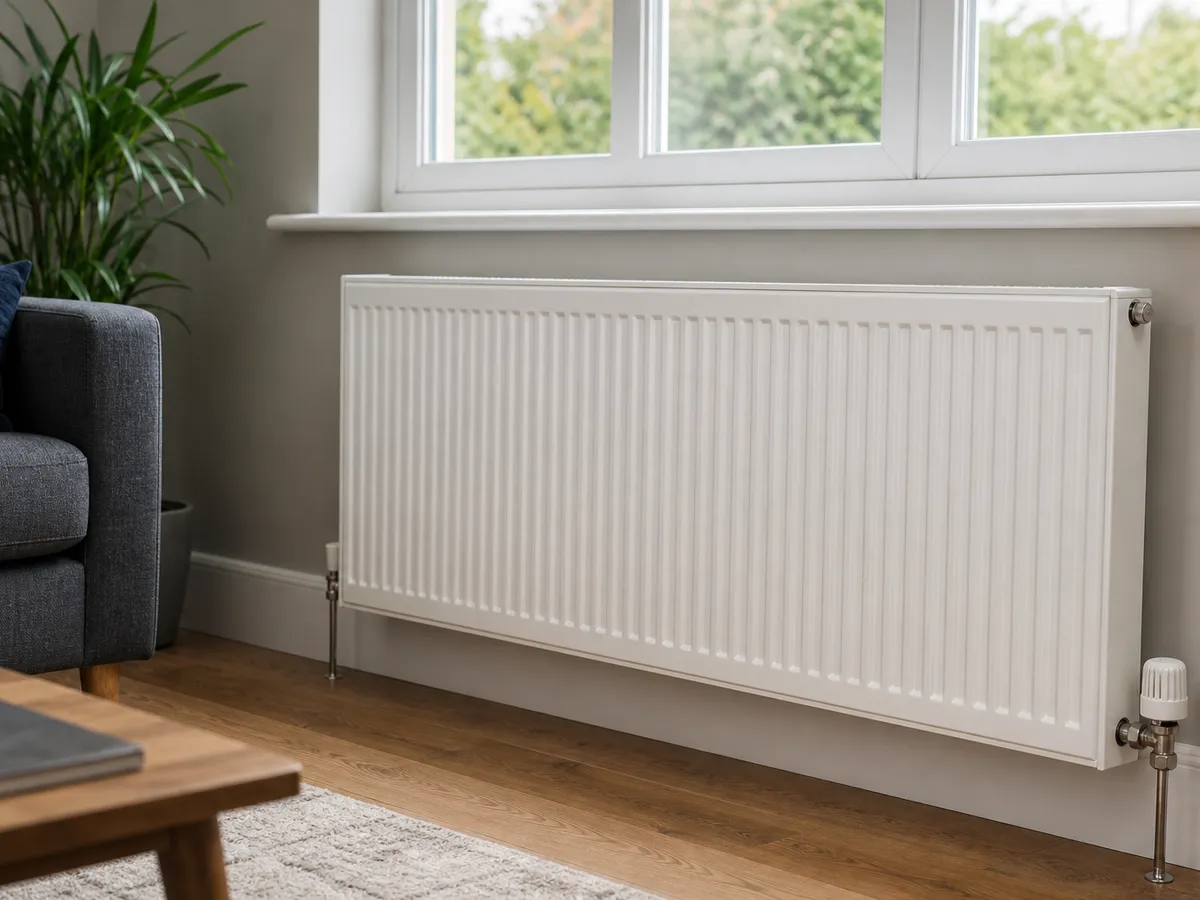
- Emitter sizing. Heat pumps run at lower flow temperatures than gas boilers (typically 35 to 50°C rather than 60 to 70°C), so rooms may need larger radiators or additional panel area. The survey lists which emitters stay and which grow. In a well-insulated home, most radiators often remain; in colder rooms, one or two upgrades are common.
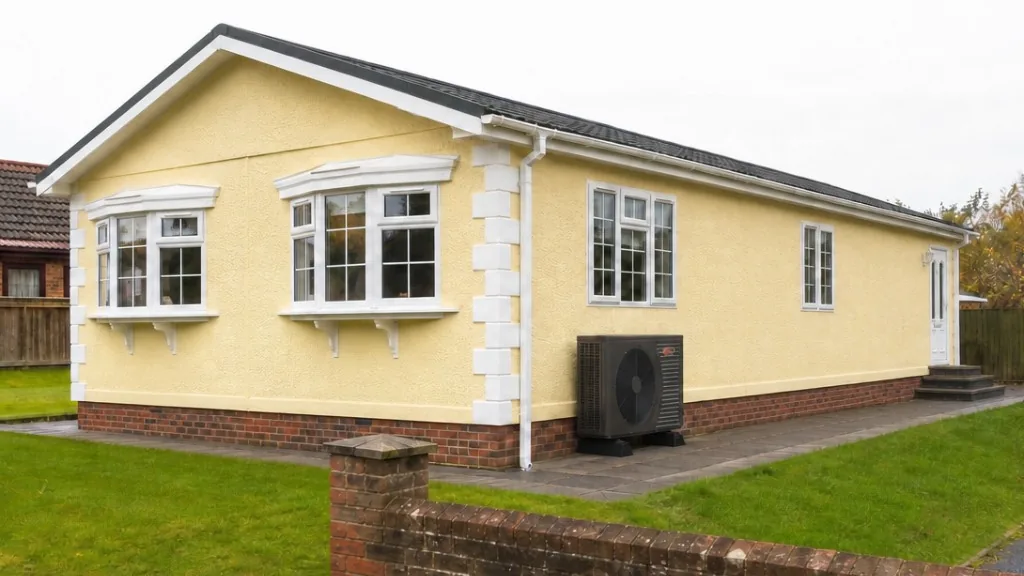
- Outdoor unit location. The unit needs stable footing, service access, and a clear air path. The surveyor also runs the MCS 020 acoustic check: predicted noise at 1m from each neighbour’s habitable windows and doors must stay at or below 37 dB(A) for permitted development in England. If the plot is tight, the survey may recommend a quieter model or a different wall before quoting.
- Cylinder and pipework. Air-to-water heat pumps need a hot water store. The survey confirms cylinder size, where it fits (usually replacing or upgrading the existing cylinder space), and what pipework routes are realistic.
You do not need to prepare much beyond clear access to every room, the loft if we need to check insulation, and the garden or side path where the outdoor unit will sit.
Step 3: Fixed quote, BUS application, and install date
Within a few days of the survey, you receive a fixed all-in quote covering the heat pump, cylinder, any radiator changes, pipework, commissioning, and MCS certification. If the property qualifies for the Boiler Upgrade Scheme, the published grant (£7,500, or £9,000 until 31 March 2027 for oil and LPG homes) is shown as a line-item discount on the quote, and UKEM starts the Ofgem application once you accept.
Heat pump installations are also zero-rated for VAT until 31 March 2027, which reduces the headline compared with post-2027 pricing. Scotland uses Home Energy Scotland instead of BUS; the survey and install process is the same, but the grant route differs.
When you are ready to proceed, we agree an install week. Lead time is typically around two weeks from accepted quote to first day on site, though busy periods in spring and autumn can push that slightly.
Step 4: On-site installation (two to four days)
Day one usually focuses on the outdoor unit: mounting the bracket or pad, running refrigerant lines, and starting indoor pipework. Days two and three cover the cylinder, radiator upgrades, and control wiring. A larger home with more emitter changes or a long pipe run sits at the four-day end; a compact semi with minimal radiator work can sometimes finish in two.
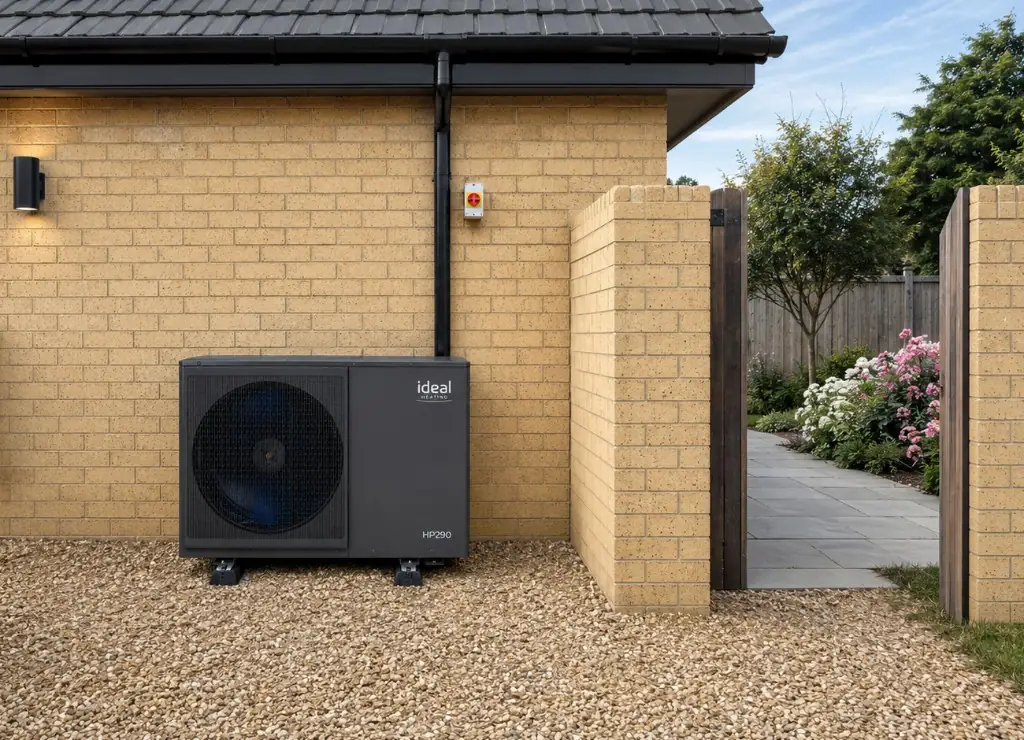
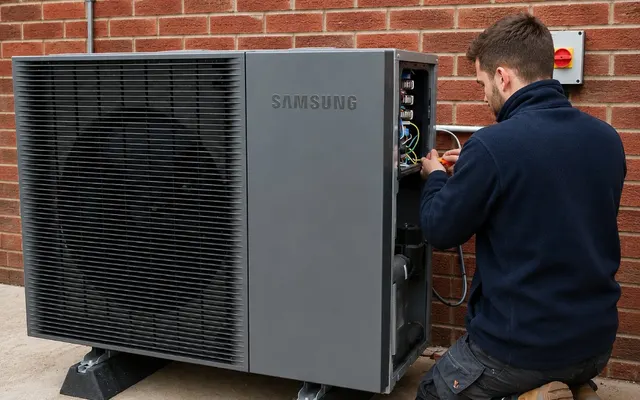
UKEM installs Samsung R290 Gen 7, Vaillant Arotherm Plus, and Ideal HP290 units. All three are R290 (propane) refrigerant models with published low-noise figures and MCS product listings. The survey recommendation, not a catalogue default, determines which unit goes on your quote.
Your old heating system goes offline during the changeover. Plan for a short window without central heating while pipework is drained, connected, and pressure-tested. Hot water may be unavailable for part of a day while the cylinder is swapped or commissioned.
Step 5: Commissioning, MCS sign-off, and handover
The final day is commissioning: filling and purging the system, setting flow temperatures, pairing the controller with weather compensation, and running hot water and heating cycles room by room. The engineer registers the install on the MCS database and leaves you with the MCS certificate, which is the document BUS redemption and future property sales rely on.
Handover includes a walkthrough of the controller, how to set a steady target temperature (heat pumps work best without aggressive boiler-style setbacks), and what to expect from the first few weeks of operation. Longer run cycles and a gentler warm-up are normal; they are signs of low-flow design, not a fault. Ongoing upkeep is covered in the maintenance guide.
Manufacturer warranty length depends on the chosen model (typically two to ten years on the product). UKEM adds a two-year workmanship warranty on the install itself.
What to read next
- Heat pump running costs for the bill maths once the system is live.
- Heat pump vs gas boiler if you are still weighing the switch.
- MCS 020 planning update for the 28 May 2026 permitted development change.
- Heat pumps product page for brands, warranties, and how to book a survey.
If the survey confirms your home is a good fit, request a heat pump quote and we will schedule the site visit as the next step.
Frequently asked questions
How long does a heat pump installation take from quote to handover?
Most UKEM heat pump installs run from accepted quote to handover in around two weeks. The on-site fitting itself takes two to four days, depending on how many radiators need upgrading, whether the cylinder is new, and how much pipework has to move. A straightforward swap on a well-insulated semi with one or two emitter changes sits at the shorter end; a larger detached home with more radiator work sits at the longer end.
Why does a heat pump need a survey when a boiler does not?
A gas boiler quote can usually be built from your existing setup, hot water demand, and a few photos. A heat pump cannot, because running cost and comfort depend on room-by-room heat loss, flow temperature, emitter surface area, and where the outdoor unit sits relative to neighbours. The MCS-certified survey produces those numbers before anyone commits to a price. That is also when we check MCS 020 noise against the nearest habitable window.
Will my heating be off during the install?
Yes, for part of the fitting window. The old boiler or heating system comes offline while the heat pump, cylinder, and any upgraded radiators are connected and commissioned. UKEM schedules the work so you are not left without hot water longer than necessary, and the engineer walks you through the new controls before leaving. Most households plan the install for a mild week rather than a cold snap if they can.
Does UKEM handle the Boiler Upgrade Scheme paperwork?
Yes. When your property and chosen system meet the published BUS rules, we submit the Ofgem application as part of the install. The grant is paid to the installer and comes off your invoice, so you are not asked to pay the full price and reclaim it later. The published rate is £7,500, or £9,000 until 31 March 2027 for off-gas-grid homes replacing oil or LPG heating; always confirm the live figure on gov.uk. See the 2026 UK energy grants guide for the full eligibility list.
Which heat pump brands does UKEM install?
UKEM fits Samsung R290 Gen 7, Vaillant Arotherm Plus, Ideal HP290, and Trianco Activair R290 air source heat pumps. All four are MCS-listed, publish sound power data for planning checks, and carry manufacturer warranties in the two-to-ten-year range depending on the model. The survey recommends the best match for your property's heat loss and available outdoor space, not a one-size-fits-all default.
Last updated: