






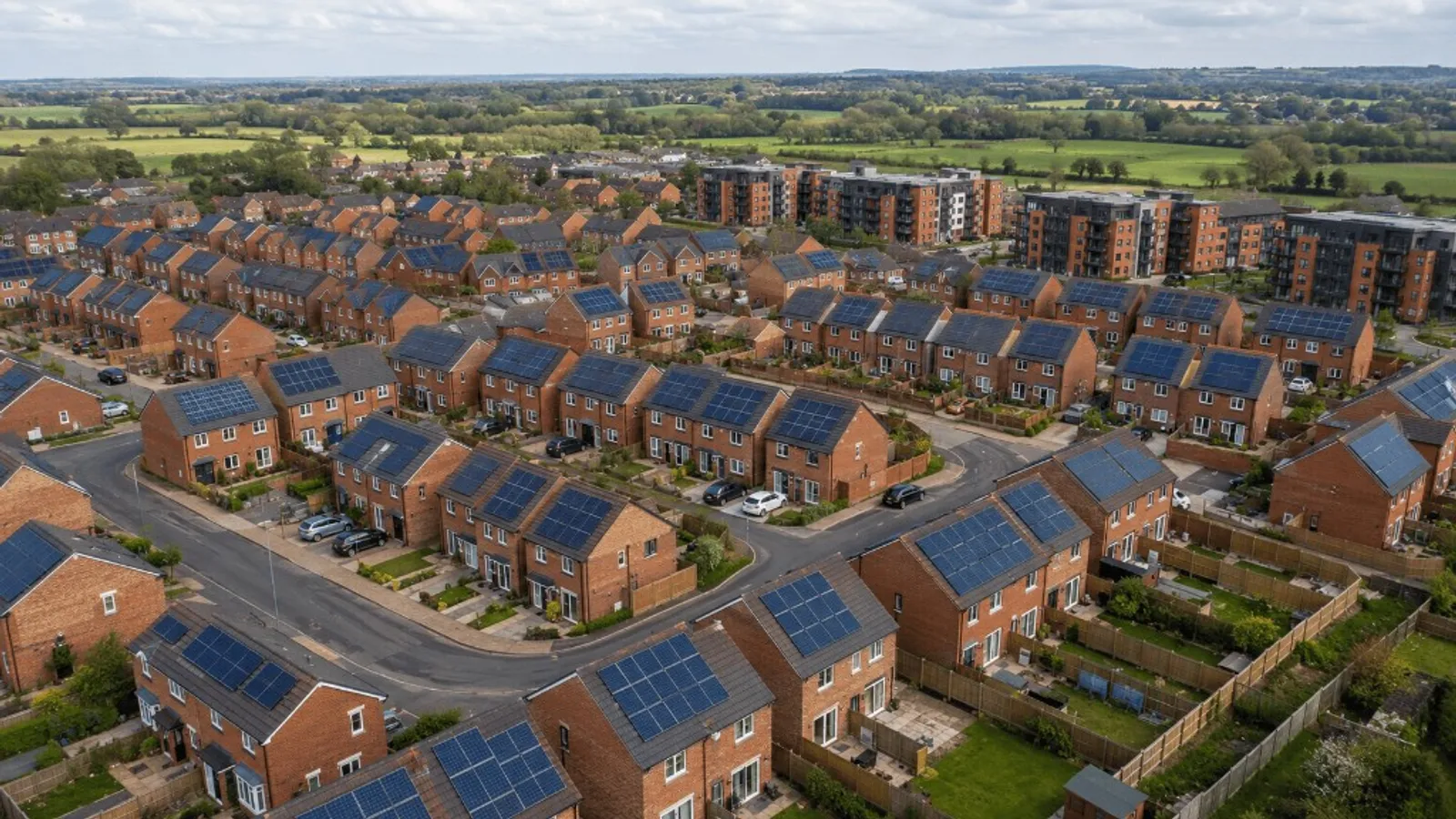
The UK passed 2 million solar installations at the end of March 2026, with 2,003,000 systems on the ground and 22.1 GW of installed capacity, according to government solar deployment figures reported by Solar Power Portal. The milestone was carried over the line by a record month: 27,607 systems went in during March alone, the strongest single month for UK solar since 2012.
The numbers behind the milestone
March 2026 added 121 MW of new solar capacity to the grid, and the 12 months to March added 2.3 GW, an annual growth rate of 11.7% on the previous year (PV Magazine). Residential rooftop made up the bulk of installations: 66% of systems installed in March, contributing 85 MW of the 121 MW.
That split between count and capacity is worth pausing on. Arrays under 50 kW (the residential and small-business band) account for 99% of installations but only 37% of total capacity. The remaining 63% sits in larger commercial roofs, solar parks, and ground-mounted farms. Two million is a homeowner story by volume, a developer story by megawatts.

What’s driving the surge in installs
The pickup is being pulled along by three policy and price levers that line up for the homeowner:
- 0% VAT on energy-saving materials. Solar PV and battery storage installations are zero-rated until 31 March 2027, after which the rate is currently set to revert to 5%. On a typical residential install, that’s a four-figure saving locked in. The full eligibility detail is on gov.uk’s VAT on energy-saving materials page.
- Smart Export Guarantee. Every licensed energy supplier with 150,000+ customers has to offer an SEG export tariff, paying you for unused electricity sent to the grid. Rates vary by supplier but the structural payment is built in.
- Energy price volatility. Mains electricity is still well above pre-2022 levels, which shortens the payback period on a system every time the price cap moves.
Falling panel hardware costs sit underneath all three. A 4 kWp residential system costs less in real terms today than it did three years ago, even with installation labour, scaffolding, and inverters factored in.
How the capacity trajectory looks
The UK had around 17 GW of solar at the end of 2024, sits at 22.1 GW in March 2026, and the government target is 45 GW by 2030. That’s a doubling in under five years from where the country is now. The 12-month run rate of 2.3 GW is up sharply but still below the pace needed.
| Period | Total capacity | Year-on-year added |
|---|---|---|
| End 2024 | ~17 GW | Reference point |
| End March 2025 | ~19.8 GW | +2.8 GW (catching up) |
| End March 2026 | 22.1 GW | +2.3 GW (+11.7%) |
| 2030 target | 45 GW | ~4-5 GW per year needed |
Residential alone won’t close the gap, but it’s pulling more than its statistical weight on volume. The constraint over the next four years sits more on commercial rooftop and solar farms, where planning timelines and grid connection queues are slower-moving than putting panels on a house.
What it means if you’re thinking about solar
For a homeowner sitting at the kitchen table comparing quotes, the milestone changes the picture in three practical ways.
Lead times are longer than they were in 2024. Installer order books are full, especially in spring when sunshine triggers the seasonal rush. From accepted quote to scaffolding up, 8-12 weeks is a realistic window, and busy installers can be quoting into late summer by April.
Supply of MCS-certified installers is broader. With record monthly install volumes, more electricians have qualified through MCS in the last 12 months, so getting three competitive quotes is easier than it was. The flip side: quality varies more when a market scales fast, so check certifications and references properly.
Sizing decisions still come down to your own use. The headline market numbers don’t change the household calculation. If you want to walk through it, our guides cover how many solar panels you need for your usage and roof, and whether battery storage is worth it once you factor in export tariffs versus self-consumption. For the wider funding picture, see our UK energy grants in 2026 overview.
The 2 million milestone is a market signal, not a discount. The reasons to install solar now are the ones that have been on the table for the last two years: 0% VAT until March 2027, an export tariff that pays you for surplus generation, and electricity prices that haven’t softened enough to change the maths. The reason more people acted in March 2026 than in any month for 13 years is that those reasons are stacking up at the same time.
If you’re working through the numbers for your own home, the solar and battery storage hub has the product specifics, and the grants and funding page covers what’s available alongside the VAT relief. Home battery installs jumped 130% in H1 2025, so storage now bolts onto a meaningful share of new solar installs by default. We’ll update this article when April 2026 deployment data is published.
Frequently asked questions
What does the 2 million milestone mean for me as a homeowner?
Why has solar grown so quickly in the UK?
Will solar panels get cheaper now that the market is bigger?
Is the UK on track for 45 GW by 2030?
Should I wait or install solar now?
Last updated: