







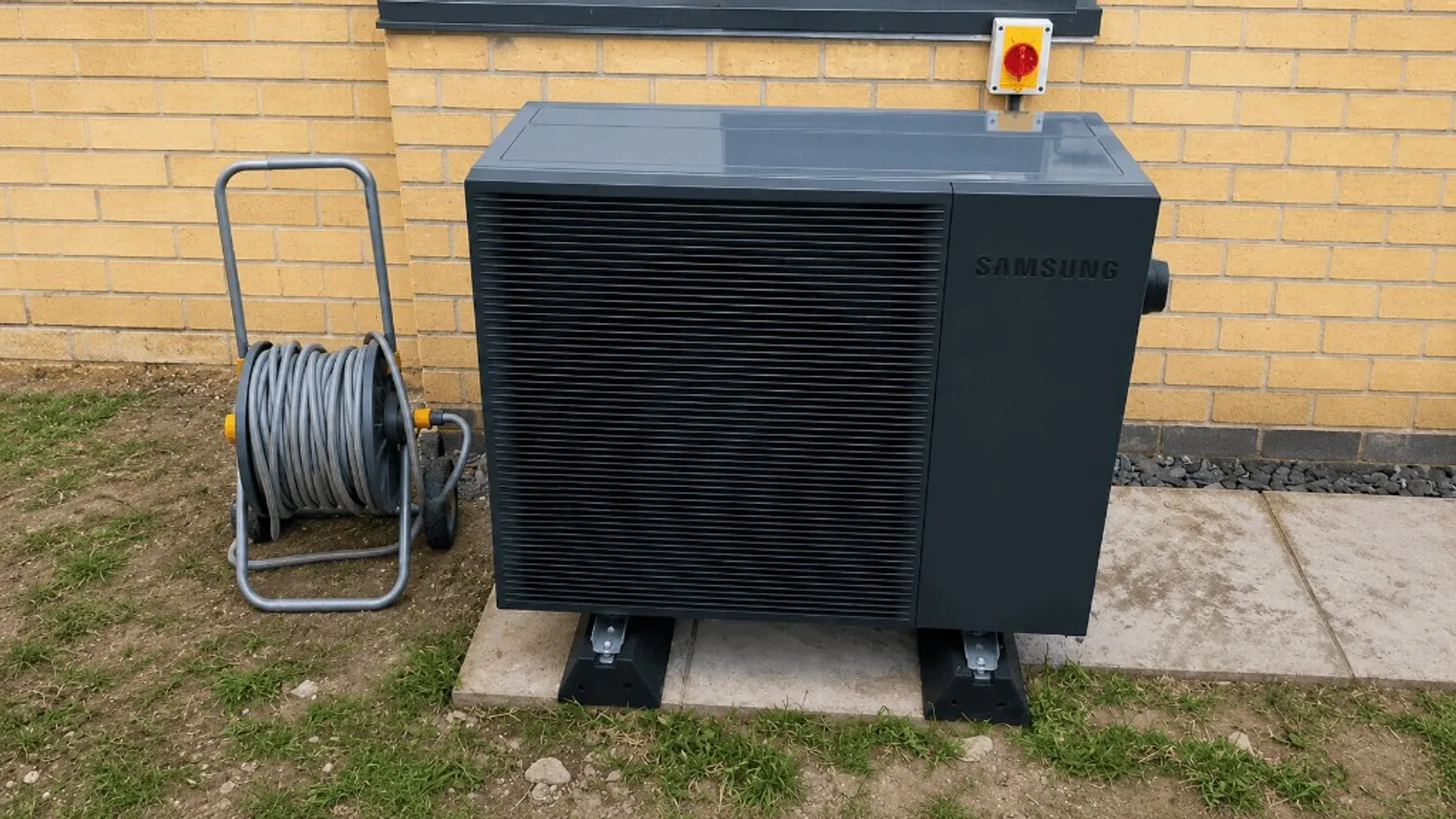
The UK has reached 250,000 certified heat pump installations, according to MCS data published in February 2026. The milestone covers every heat pump signed off under the Microgeneration Certification Scheme since records began in 2009. 2025 was the strongest year on record, up 34 percent on 2024, and the Boiler Upgrade Scheme funded 43 percent of all 2025 installs.
What the 250,000 figure actually represents
MCS certifies heat pumps, solar panels, batteries, and biomass boilers fitted under recognised installer schemes. The 250,000 number is heat pumps only. The wider total across all small-scale renewables sits at 2.4 million MCS installs since 2009, with solar accounting for the bulk of that.
The 250,000 figure is cumulative, not annual. The year-on-year picture is more telling:
| Year | Heat pumps installed (MCS) | Growth on prior year |
|---|---|---|
| 2022 | ~55,000 | - |
| 2023 | ~71,000 | +29% |
| 2024 | 98,345 | +39% |
| 2025 | ~132,000 (provisional) | +34% |
2024 was the first year MCS heat pump installs cleared the 90,000 mark. 2025 added more than 30,000 on top. The supply chain has scaled at roughly a third per year for three years running.

Why uptake jumped in 2025
Two forces are doing most of the work: the Boiler Upgrade Scheme and energy prices.
BUS pays £7,500 toward many qualifying air source or ground source heat pump installs at the time the voucher redeems. Ofgem’s latest figures show 102,735 BUS applications submitted by October 2025, 88,650 vouchers issued, and 67,536 installations completed and paid. October 2025 alone saw a record 3,350 paid redemptions. 97 percent of those applications were for air source heat pumps; ground source made up the other 3 percent.
The second factor is the gas-electricity price ratio. With electricity at roughly 24p per kWh and gas at 7p per kWh, a heat pump running at SCOP 3.5 already matches a gas boiler on cost per kWh of heat delivered. On a heat-pump-friendly tariff such as Octopus Cosy, the heat pump wins clearly. For the full maths, see our heat pump running costs guide and the heat pump vs gas boiler comparison.
Who is installing them
The typical 2025 BUS install is an air source unit replacing a gas combi in a 3-bed semi, fitted in a single working week, with the grant paid directly to the installer. Around 40 percent of applications come from off-gas-grid homes (oil, LPG, or electric heating), the segment the April 2026 grant uplift is aimed at.
MCS-registered heat pump installers have roughly doubled since 2022. Lead times in most of the UK are now 4 to 8 weeks for a survey and 6 to 12 weeks to installation, down from 16 to 24 weeks in 2022.
How to read the 250,000 honestly
Heat pumps still heat under 1 percent of UK homes. Gas boilers heat around 85 percent. The Climate Change Committee’s pathway to net zero calls for 600,000 installs a year by 2028, so the curve has to keep getting steeper. The 250,000 figure matters because it shows the supply chain works, the grant pays out, and customers stay satisfied. It does not show the job is done.
For a homeowner deciding now, the practical signals are: equipment prices have stabilised, installer availability has improved, BUS pays out reliably (Ofgem data shows median voucher-to-payment under 90 days), and the grant uplift in April 2026 makes oil and LPG replacements cheaper still. The market is mature enough to make a decision against, rather than wait on. See the full grant rules in our UK energy grants 2026 guide, or apply for the Boiler Upgrade Scheme directly through gov.uk.
Frequently asked questions
What does MCS-certified actually mean?
MCS is the Microgeneration Certification Scheme, the UK quality mark for small-scale renewable installations. A certified heat pump install means the installer is MCS-registered, the equipment meets the scheme's product standards, and the system has been signed off against MCS technical rules. Crucially, MCS certification is the gateway to the Boiler Upgrade Scheme grant. No MCS certificate, no £7,500 grant.
Why is 250,000 still a small number against UK heating?
The UK has roughly 30 million homes, so 250,000 heat pumps is under 1 percent of the housing stock. Gas boilers still heat around 85 percent of homes. The 250,000 figure matters because it represents a working supply chain, trained installers, and a grant funnel that actually pays out. The Climate Change Committee's targets call for 600,000 installs a year by 2028, so the trajectory has to keep steepening.
How does the Boiler Upgrade Scheme work?
BUS is a government grant administered by Ofgem. An MCS-certified installer applies on your behalf and the grant is paid directly to them, reducing the price you pay. The published rate for many qualifying air source and ground source heat pumps is £7,500. Biomass on off-gas-grid homes uses a separate published cap. Always confirm the live figures on gov.uk.
Are heat pumps actually popular with the people who install them?
According to MCS consumer outreach, 95 percent of owners are satisfied with their heat pump. That figure aligns with independent surveys from Nesta and the Energy Saving Trust, which both report satisfaction levels at or above what gas boiler owners report. The minority of complaints cluster around noise, hot water recovery, and bills in homes where the system was undersized or the home was poorly insulated, not the technology itself.
Will I have to wait longer for a heat pump install?
Heat pump demand is rising, and BUS-backed quotes need survey time. Booking now locks in design work and installer capacity; delaying purely on grant rumours usually costs more in fuel than any future voucher tweak might save. UKEM is taking BUS-eligible bookings on today's published £7,500 rate.
Last updated: