




A smart EV charger pairs with an app and an electricity tariff so charging shifts to the cheapest hours instead of starting the moment you plug in. Since July 2022, every new home charger fitted in England, Scotland, and Wales has had to be smart by law. The biggest financial gain comes from pairing one with a time-of-use tariff and shifting overnight charging to the off-peak window. On a flat tariff, smart is more about convenience than savings.
What does “smart” actually mean?
The legal definition lives in the Electric Vehicles (Smart Charge Points) Regulations 2021. Any charger sold for home or workplace use in England, Scotland, or Wales has to meet four requirements:
- Scheduled charging by default, with a pre-set off-peak window of 8pm to 8am.
- A randomised delay of up to ten minutes when charging starts, to spread load across the grid.
- Demand-side response, so the charger can read grid signals.
- Minimum cybersecurity standards on the firmware and the app.
In practice that turns into the features homeowners use: scheduling, app control, tariff integration, and solar integration.
How does scheduling cut your charging bill?
Scheduling lets you tell the charger when the car needs to be ready, then let it work out the cheapest window to charge. Most overnight EV tariffs run a low-rate block from around 11.30pm to 5.30am, often as cheap as 7p per kWh against a 24p+ daytime rate.
A typical 60 kWh battery costs around £4 to fill from low overnight, versus £15 on the day rate. That’s the kind of saving that pays back the smart features many times over. If plans change, a tap in the app switches the charger back to charging immediately at the standard rate.
Tariff optimisation and time-of-use plans
Smart chargers pair with time-of-use EV tariffs from most major UK suppliers (Octopus Go, EDF GoElectric, OVO Charge Anytime, and similar). The smartest plans go further: they pick the cheapest half-hour slots automatically each night, including outside the standard off-peak window when grid demand drops. Ofgem publishes a neutral overview of smart and time-of-use tariffs.
Some chargers integrate directly with the tariff API, so optimisation happens without input from you. Others need you to set the off-peak window manually. Both approaches deliver the same headline saving when used consistently.
Beyond scheduling, what else can a smart charger do?
A few features sit on top of the smart core:
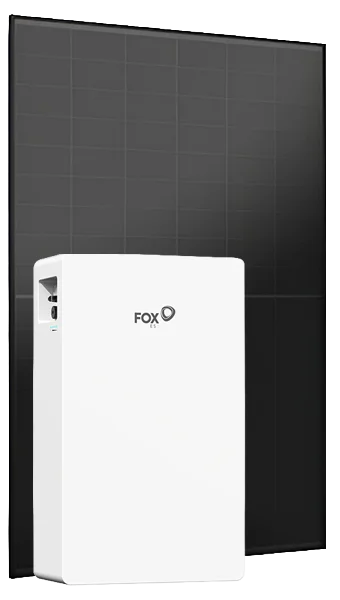
- Solar diversion lets the charger draw surplus solar generation rather than pulling from the grid. A 4 kWp array can add 20-40 miles of range a day in a UK summer at zero marginal cost. Winter is smaller, but it’s a useful top-up the rest of the year. The is battery storage worth it guide covers how this fits with whole-home solar.
- Load management uses a CT clamp on your incoming supply so the charger throttles down when an oven or immersion heater is running. Your main fuse stays intact without needing a supply upgrade.
- Remote control covers the rest: starting and stopping a session, locking the charger to a schedule when someone borrows the car, granting guest access, and tracking kWh and cost over time.
How do Ohme and Tesla Wall Connector handle smart features?
UKEM installs two charger families. Both are 7.4 kW single-phase units that meet the 2021 regulations.
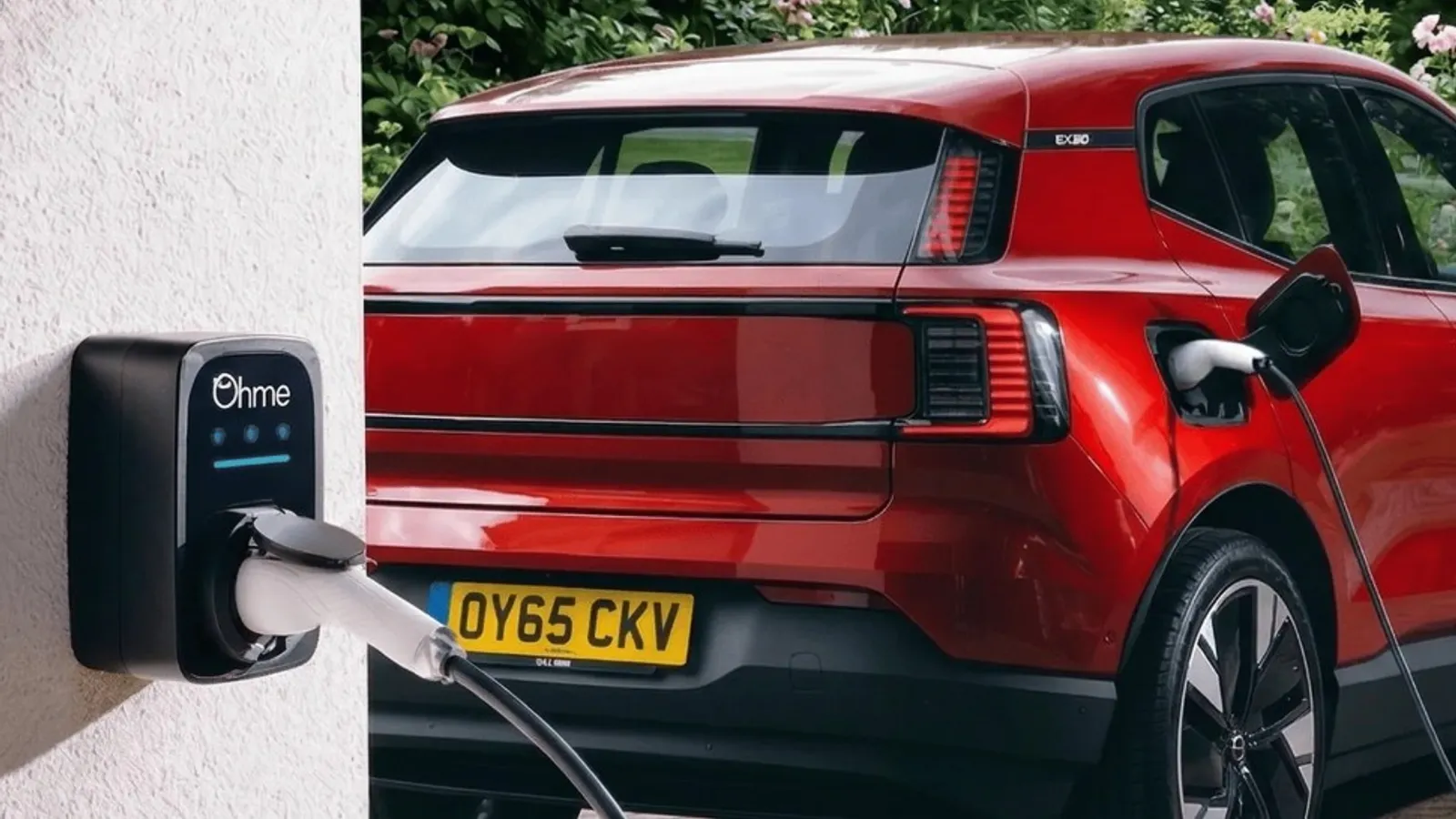
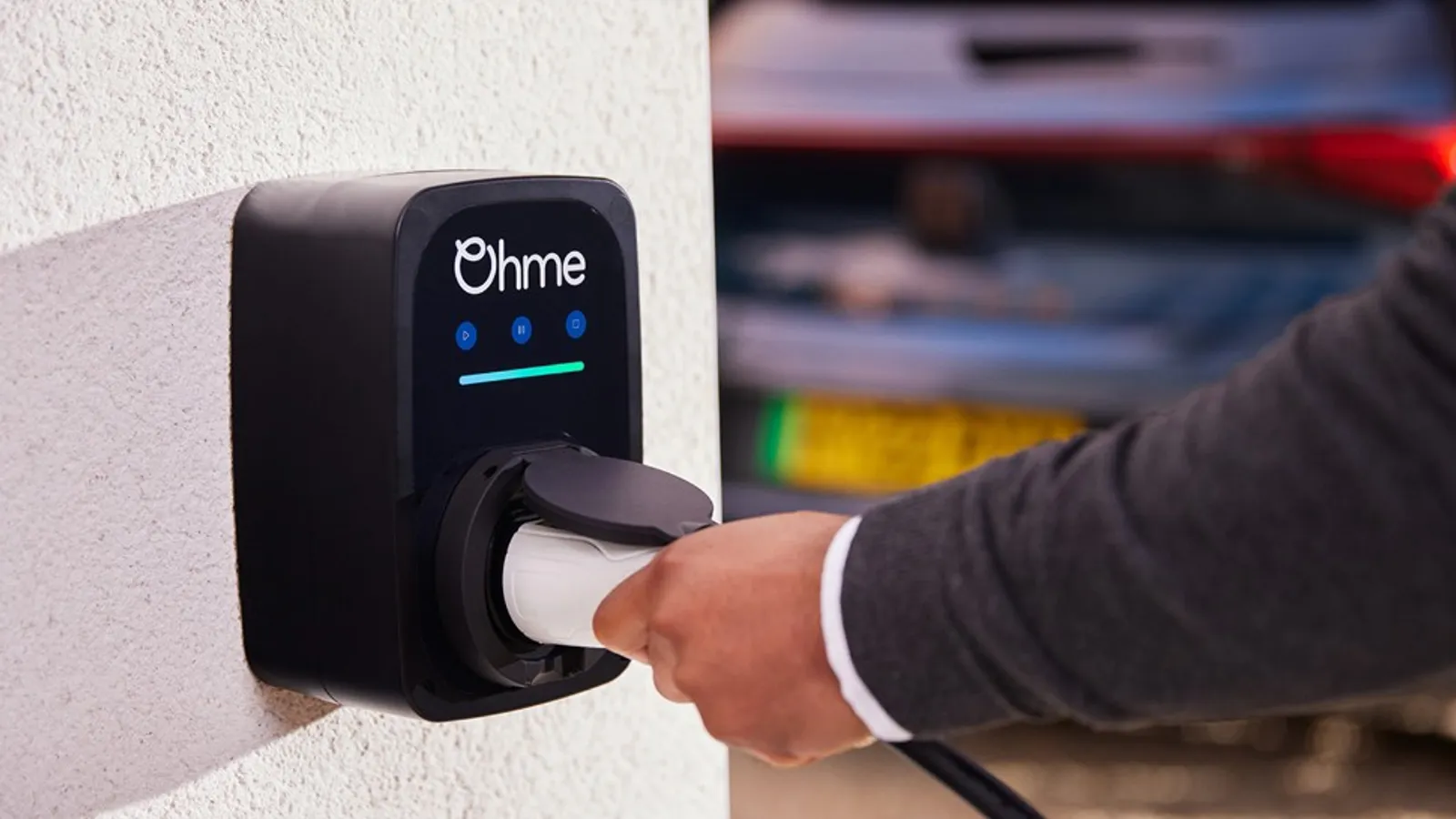
Ohme ePod is the compact app-only model. It works with most UK time-of-use tariffs, integrates directly with the smartest EV tariffs, and supports Solar Boost for solar diversion. Ohme Home Pro has the same internals plus a built-in display, useful if you’d rather check status at the wall than open the app.
Tesla Wall Connector is built around the Tesla app but charges any EV with a Type 2 socket. Scheduling and tariff control happen in the Tesla app. Solar charging works through a Tesla Powerwall, which manages whether spare solar goes to the house, battery, or car. Without a Powerwall, scheduling and monitoring still work; solar diversion doesn’t.
When are smart features actually worth it?
Smart features pay back hardest on a time-of-use tariff. Switch to one of the major EV tariffs, schedule overnight charging, and the running cost of an EV drops to around 2p per mile against 14-16p on petrol equivalents.
On a flat tariff, smart becomes a convenience feature rather than a money-saver. Scheduling and energy tracking still work, but the unit price of every kWh stays the same whatever time you charge. Focus the budget on solar diversion and load management instead.
What should you look for in a smart charger?
- Compliance with the 2021 Smart Charge Points Regulations (any new UK install will be).
- Direct integration with at least one major time-of-use tariff if you plan to switch.
- Solar diversion if you have or are planning solar panels.
- Built-in load balancing so you don't need a supply upgrade for high-demand cooking and hot water.
- App-based scheduling and energy reporting so you can track real running costs.
If you’ve already got solar, prioritise solar diversion. If you don’t and aren’t planning to, prioritise tariff integration. That’s where the real saving lives. The home EV charger installation guide covers the install side, and the 2026 grants overview sets out who qualifies for OZEV support.
Frequently asked questions
Is it the law for home EV chargers to be smart?
Do I need a time-of-use tariff for a smart charger to be worth it?
Can a smart EV charger draw power from my solar panels?
Will a smart charger trip my fuse box?
Last updated: