





Charging an electric car at home on a smart off-peak tariff is usually the cheapest way to drive in the UK. A 7.4 kW wall charger adds roughly 25-30 miles of range per hour on most EVs, and scheduling sessions overnight can bring the unit cost down to around 7p per kWh on tariffs like Octopus Intelligent Go or similar EV plans. The same kWh on a flat 24-28p import tariff costs three to four times as much per mile. Public rapid charging sits above both for everyday use.
At a glance
Cost per kWh: the baseline
Electricity is billed in kWh. Your unit rate and standing charge on the import meter set what each charging session costs unless solar diversion covers part of the load.
| Tariff type | Typical unit rate | Good for |
|---|---|---|
| Smart off-peak EV | ~7p/kWh overnight | Scheduled home charging |
| Flat standard variable | 24-28p/kWh | Convenience, no schedule |
| Public AC post | ~35-55p/kWh | Top-ups away from home |
| Public rapid (DC) | 50-80p+/kWh | Motorway legs |
Rates change with supplier and Ofgem cap periods; check your bill or supplier app for live figures. Under the July to September 2026 Ofgem cap, published direct debit averages sit at 26.11p/kWh electricity; off-peak EV plans still undercut that heavily in the cheap window.
Cost per mile: a worked example
Take an EV averaging 3.5 miles per kWh (typical for a family crossover or hatchback).
Off-peak home at 7p/kWh
- Cost per mile ≈ 7 ÷ 3.5 = 2p per mile
- 10,000 miles a year ≈ 2,857 kWh ≈ £200 in electricity
Flat home at 27p/kWh
- Cost per mile ≈ 27 ÷ 3.5 = 7.7p per mile
- Same 10,000 miles ≈ £770
Public rapid at 65p/kWh
- Cost per mile ≈ 65 ÷ 3.5 = 18.6p per mile
- Same distance ≈ £1,860 if used exclusively (unusual in practice)
Annual electricity cost for 10,000 miles
Same 3.5 mi/kWh car, three charging bands from the worked example above. Column height scales to the public-rapid figure.
Most drivers blend home off-peak with occasional public charging. The home charger shifts the bulk of miles into the lowest band. The rest of our EV charger guides cover install day, smart schedules, and solar charging.
What moves the bill day to day
- Tariff choice. Bigger lever than charger brand. Switching import supplier to an EV-friendly plan often saves more than hardware upgrades.
- Schedule. Smart chargers default to off-peak windows; override only when you need a fast daytime top-up.
- Battery size and efficiency. Larger packs cost more to fill; efficient models need fewer kWh per mile.
- Solar diversion. Summer surplus at zero marginal cost lowers the blended pence-per-mile figure. See the solar sizing guide.
- Load management. CT clamps prevent the charger from tripping the main fuse when the oven or shower runs; they do not change unit rate but avoid failed sessions.
Home vs public: when each makes sense
Home wins for daily commutes, overnight fills, and any car parked off-street for 8+ hours. Install cost is one-off; running cost is ongoing.
Public AC suits visitors or flats without dedicated parking if a reliable post is nearby. Unit rates are higher than home off-peak.
Public rapid is for distance, not depot fuelling. Budget it as a motorway tax, not your primary energy source.
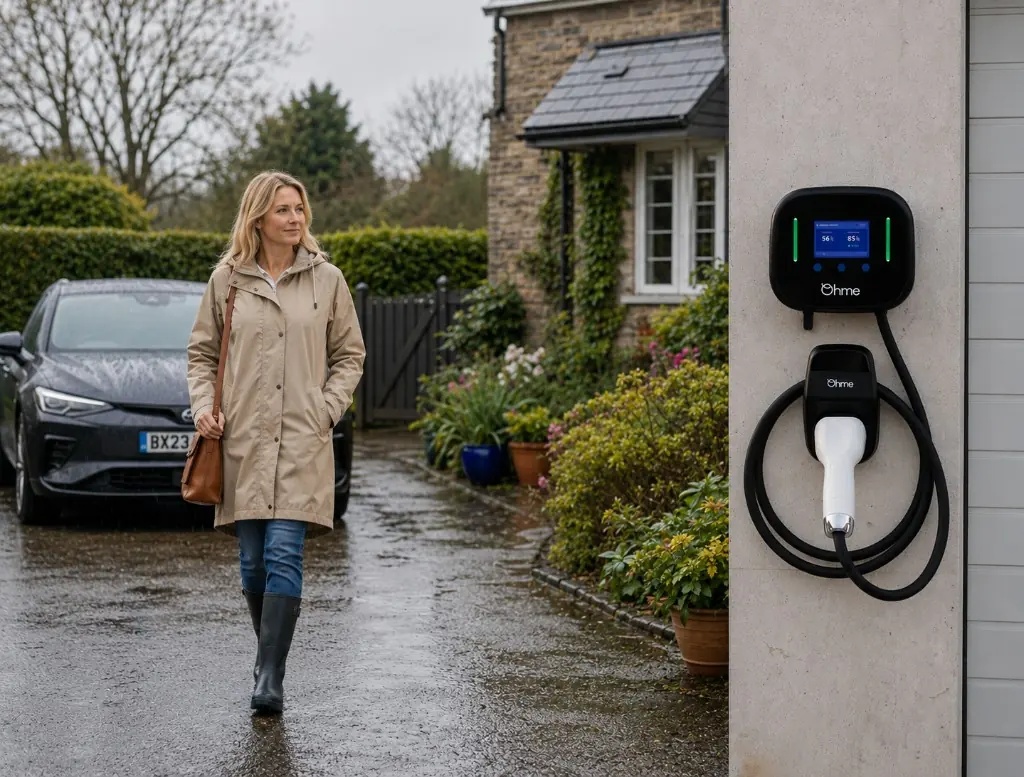
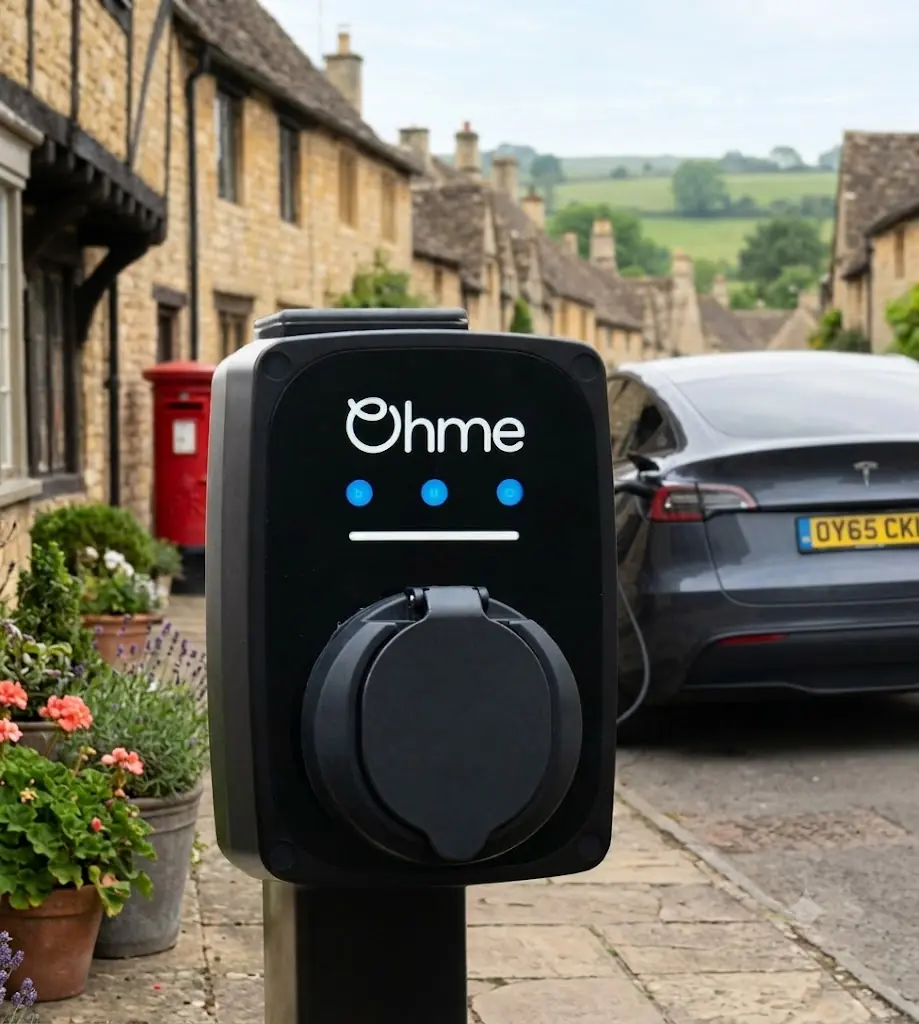
UKEM installs Ohme ePod, Ohme Home Pro, and Tesla Wall Connector at 7.4 kW on single-phase. The home EV charger guide covers the £500 chargepoint grant rules, tethered vs untethered, and what is included in the quote.
OZEV grant and install cost context
The OZEV Electric Vehicle Chargepoint Grant offers up to £500 off for eligible renters, landlords, and flat owners with dedicated parking. Homeowners who own a house are not eligible. The grant comes off the installed price when UKEM submits a qualifying application.
Fully installed home chargers typically land in the high three to low four figures depending on cable run length, consumer unit work, and model.
What to read next
- Smart EV charging explained for scheduling, solar boost, and load management.
- Home EV charger guide for install day, OZEV grant, and what is included in the quote.
- EV chargers product page for Ohme and Tesla models and warranties.
- Record EV sales in August 2026 for where the market, tariffs and the £500 grant stand.
Frequently asked questions
How much does it cost to charge an EV at home in the UK?
On a smart off-peak tariff, many UK drivers pay around 7p per kWh overnight, which on a typical efficient EV works out to roughly 2-3p per mile. On a flat import tariff at 24-28p/kWh, the same car might cost 8-12p per mile. Exact figures depend on the car's efficiency, your tariff, and how much you charge on-peak versus off-peak.
How many miles does home charging add per hour?
A 7.4 kW home charger on single-phase adds about 25-30 miles of range per hour for most modern EVs, assuming roughly 3-4 miles per kWh efficiency. A full overnight top-up from empty can take 8-12 hours on a large battery; most daily use needs only one to three hours to replace a typical commute.
Is home charging cheaper than public charging?
Usually yes. Home off-peak rates undercut most public AC posts and almost all rapid chargers. Public rapid charging can exceed 50-80p/kWh at some networks, which makes sense for occasional motorway use but not for everyday fuelling. Home charging plus scheduled off-peak hours is where the savings accumulate.
Do I need a smart charger to save money?
Since 2022, new home chargers must be smart by law. The saving comes from pairing that hardware with a time-of-use tariff and scheduling overnight sessions. On a flat tariff, smart features help with tracking and solar diversion but do not cut the unit price. See smart EV charging explained.
Can I charge from solar panels to cut cost further?
Yes. Ohme chargers support solar boost modes; Tesla Wall Connector integrates with Powerwall. In summer a 4 kWp array can add meaningful free miles. The solar sizing guide covers how much generation a typical roof can add.
Last updated: