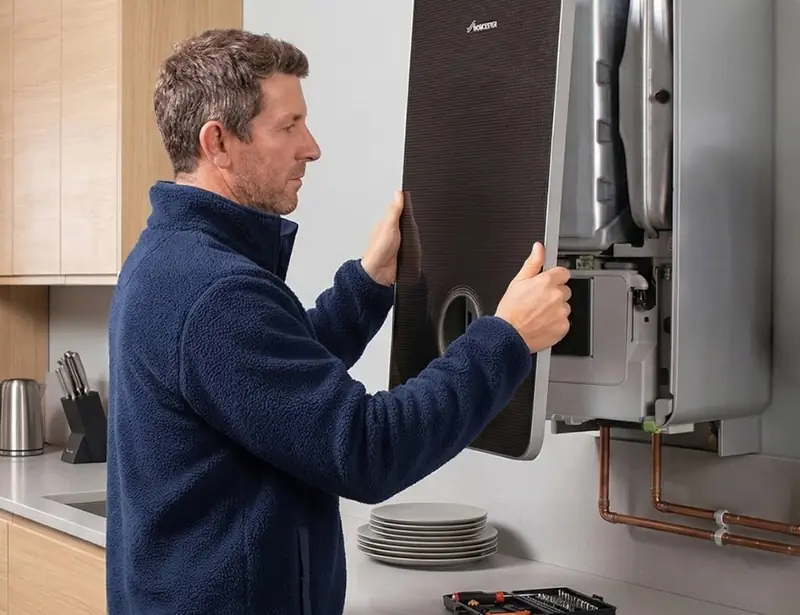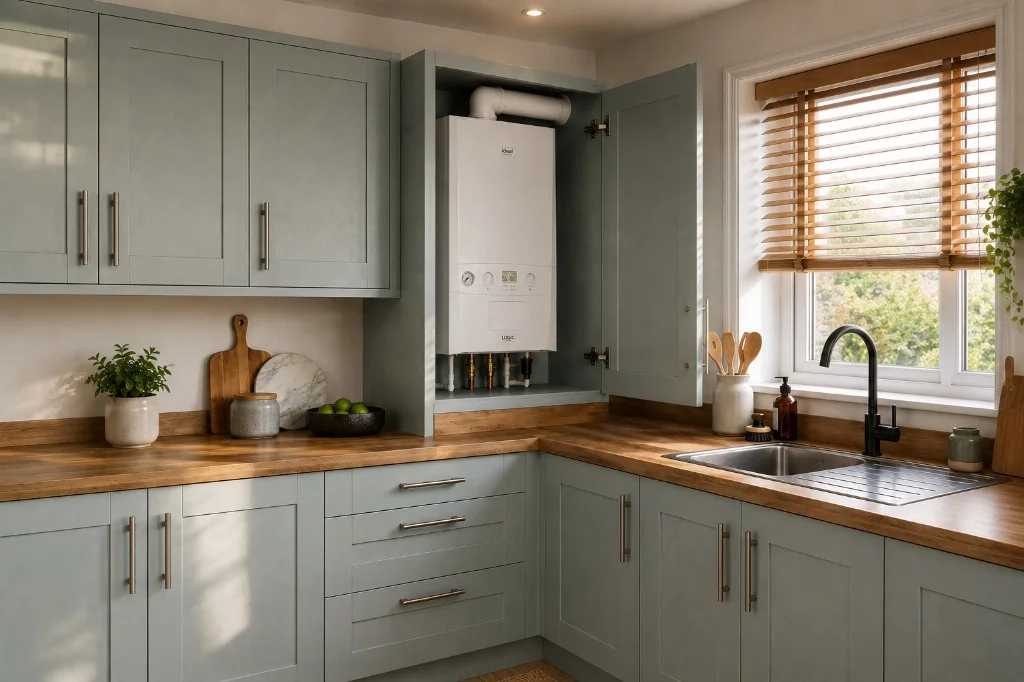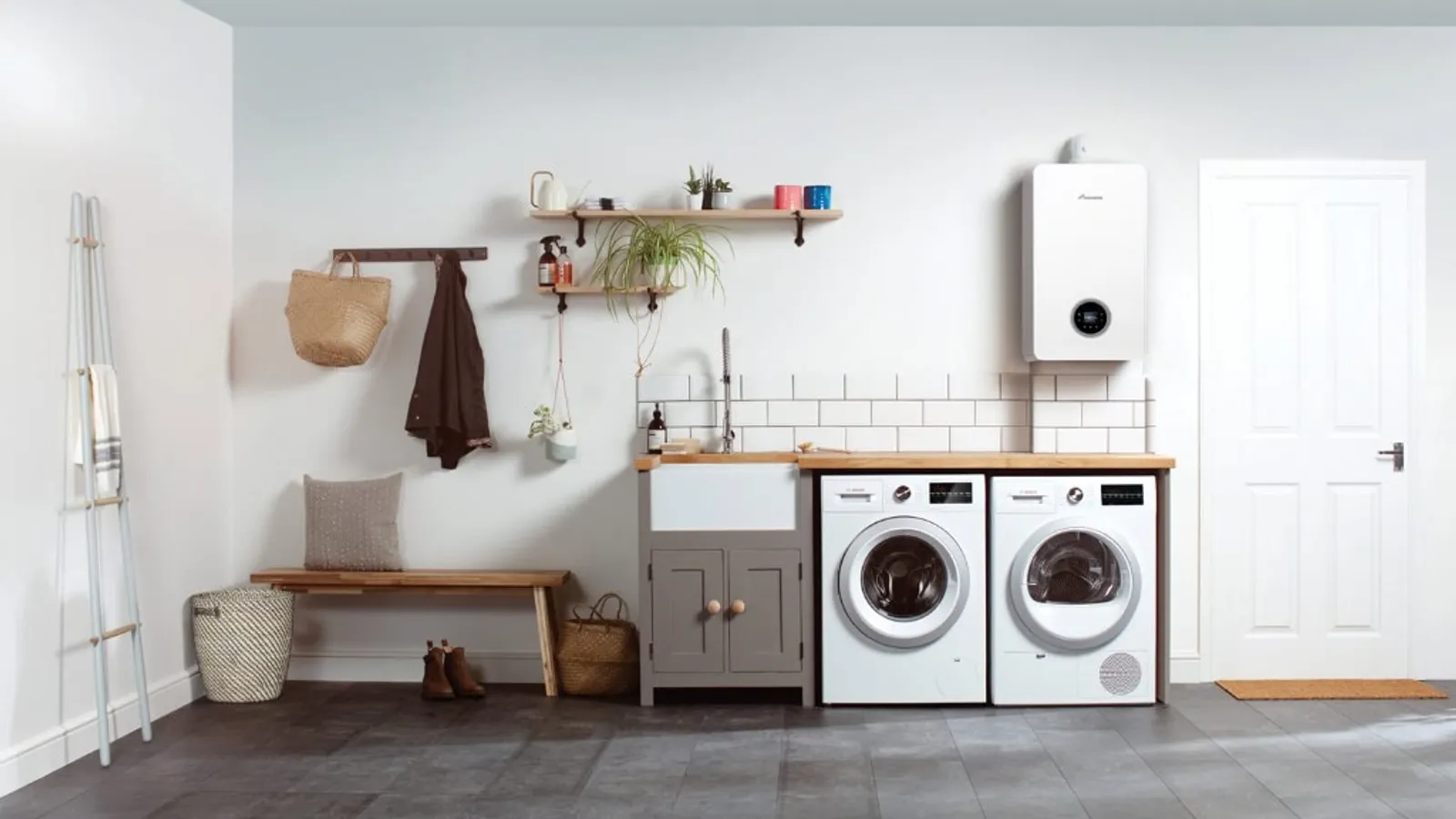









Most UK gas boilers should be replaced once they pass 10 to 15 years, break down repeatedly, or burn noticeably more gas for the same comfort. The swap itself is usually a one-day job for a like-for-like combi, or one to two days if you change boiler type. Planning ahead in spring or summer beats waiting for a cold-night breakdown. UKEM fits Worcester Bosch Greenstar 4000 and 8000 Life boilers and Ideal Logic 2 and Vogue ranges across mainland Britain, with quotes done online or by phone and no survey required.
At a glance
How long do boilers actually last?
Modern condensing gas boilers in mainland Britain typically last 10 to 15 years with annual servicing. That matches what manufacturers expect when the unit is commissioned correctly, the system water is treated, and a Gas Safe engineer services it every year.
Older non-condensing boilers, common before the mid-2000s, often lasted longer in calendar years but ran at much lower efficiency. If your home still has one of those, replacement is overdue on efficiency grounds alone, even if it still fires up.
The manufacturer warranty on a new Worcester Bosch or Ideal boiler runs 7 to 10 years, depending on the model and whether you register the install promptly. UKEM adds a 2-year workmanship warranty on top. Once the original warranty expires, parts and labour for breakdowns sit entirely with you, which is when the repair-versus-replace maths starts to bite.
Warning signs it is time to replace
Age alone is not the only trigger. These are the practical signals that a replacement quote makes more sense than another repair bill:
- Repeat breakdowns. Two or more callouts in two years on a boiler over 10 years old is the clearest pattern.
- Rising gas use. Bills climb without a change in how you heat the home or how long the heating runs.
- Uneven heating. Some rooms never reach temperature while others overheat, and balancing the radiators no longer fixes it.
- Pressure that will not hold. Topping up every few days points to a leak or failing expansion vessel.
- Yellow or lazy flame. Incomplete combustion; shut the boiler down and call a Gas Safe engineer.
- Parts on back order. If your engineer cannot source a heat exchanger or PCB within days, the unit is living on borrowed time.
- Visible corrosion or leaks. Rust around the heat exchanger or water pooling under the case rarely has a cheap fix.
Any carbon monoxide alarm activation is an immediate safety issue. Open windows, leave the property, and call the national gas emergency line. Do not restart the boiler until a Gas Safe engineer has inspected it.
Repair or replace: how to decide
There is no universal formula, but the decision usually comes down to age, repair cost, and how many winters you have left in the unit.
| Situation | Typical call |
|---|---|
| Boiler under 8 years, first minor fault | Repair |
| Boiler 10+ years, major component failure | Replace |
| Two breakdowns in two winters on an ageing unit | Replace |
| Engineer cannot source parts quickly | Replace |
| Boiler runs well after annual service, under 12 years | Keep and service |
Major repairs on old boilers (heat exchanger, fan, PCB) often land in the high hundreds. A new Ideal Logic 2 or Worcester Bosch Greenstar 4000 carries a fresh efficiency rating, lower gas use, and a new warranty stack. Spread over the next decade, the replacement usually wins once the old unit is already unreliable.
That does not mean every fault is terminal. A failed thermostat or pressure relief valve on a younger boiler is a straightforward fix. The question is whether you are investing in a system with years of useful life ahead, or paying to keep a worn unit alive for one more winter.
Does boiler age affect efficiency?
Yes, gradually. Even a well-maintained condensing boiler loses efficiency as seals wear, scale builds, and components age. A 15-year-old unit rarely matches the up to 93% efficiency of a new condensing model, which means more gas burned for the same room temperature.
Insulation and heating controls still matter more than boiler age for overall bills, but an old inefficient boiler on top of a cold house is the worst combination. If you are already planning fabric upgrades, lining up the boiler swap in the same project avoids paying for two disruption windows.
The combi vs system vs regular guide explains how boiler type affects hot water delivery. Type rarely shifts running costs much; age and efficiency rating do. See the boiler running costs guide for worked annual examples.
When is the best time to replace?
Spring and summer are the practical sweet spot across England, Scotland, and Wales. Heating demand is low, install slots are easier to book, and you are not relying on a failing unit through the coldest months.
From October onward, breakdown callouts spike and install calendars fill. UKEM keeps emergency capacity through winter, but a planned swap in June beats a panicked call in January.
Lead times from quote to install are typically three to five working days for boilers. A like-for-like combi swap is one day on site; conversions from system or regular setups take one to two days because cylinders, tanks, and pipework change.
Should you replace with another gas boiler or a heat pump?
For most homes today, a new gas boiler is still the fastest, least disruptive route. UKEM fits Worcester Bosch Greenstar 4000 and 8000 Life combis and Ideal Logic 2 and Ideal Vogue combi and system boilers. The full lineup and what each range suits are on the boilers product page.
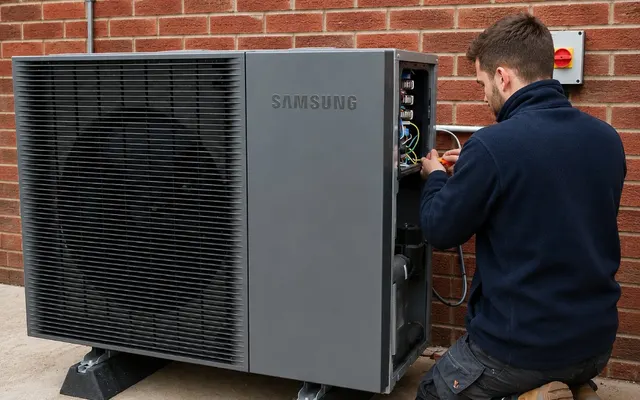
A heat pump is worth serious consideration if your home is well insulated, has space for an outdoor unit and a hot water cylinder, and you want to cut carbon and lock in lower running costs long term. The Boiler Upgrade Scheme pays up to £9,000 toward an eligible air source heat pump in England and Wales; oil and LPG homes get the top rate until 31 March 2027, other eligible homes £7,500. Scotland uses Home Energy Scotland instead.
Heat pumps need an MCS survey before a fixed quote and take around two weeks from enquiry to handover. Gas boilers do not need a survey; the quote is built from a short conversation about your existing setup. The heat pump vs gas boiler comparison walks through three real UK scenarios so you can see where each option wins.
New gas boiler suits
- Quick replacement after a failing combi or system boiler.
- Flats and homes with no outdoor space or cylinder room.
- Properties where insulation upgrades are not planned yet.
- Households that need heat restored within days, not weeks.
Heat pump worth comparing
- Well-insulated semi or detached with garden or side wall space.
- Off-gas homes on oil or LPG with high baseline running costs.
- Homes already planning a cylinder and radiator upgrade.
- Owners who can wait for survey-led install (around two weeks).
What happens once you decide to replace
The path from decision to warm house is straightforward:
- Get a fixed quote. Online or by phone; no survey needed for gas boilers. UKEM sizes the unit to your home and hot water demand.
- Pick the type. Combi, system, or regular. The new boiler guide covers types, brands, and what is included in the install.
- Book the date. Spring and summer slots are the most flexible; winter slots exist but fill faster.
- Install day. Gas Safe commissioning, new flue, magnetic filter, and handover. Most combi swaps finish in one day.
- Register the warranty. Manufacturer cover (7 to 10 years) plus UKEM’s 2-year workmanship warranty.
0% finance is available on selected boilers (a deposit applies), with longer no-deposit pay-monthly options through Shermin Finance. Finance is subject to status and affordability. UKEM Group is an Introducer Appointed Representative of Shermin Finance Limited, authorised and regulated by the Financial Conduct Authority. Shermin Finance Limited acts as a credit broker, not a lender. Full terms are on the finance page.
There is no government grant specifically for replacing a gas boiler. Some low-income households may still qualify under ECO4 until the scheme closes on 31 December 2026. The 2026 grants guide covers what is still available.
If the warning signs in this guide match your boiler, get a quote while you still control the timing. The boilers product page has the ranges we fit, and the new boiler walkthrough picks up from here with the full install picture.
Frequently asked questions
How old should a boiler be before you replace it?
Is it worth repairing an old boiler?
What are the warning signs a boiler is failing?
Should I replace my boiler before winter?
Can I replace a boiler with a heat pump instead?
Last updated: