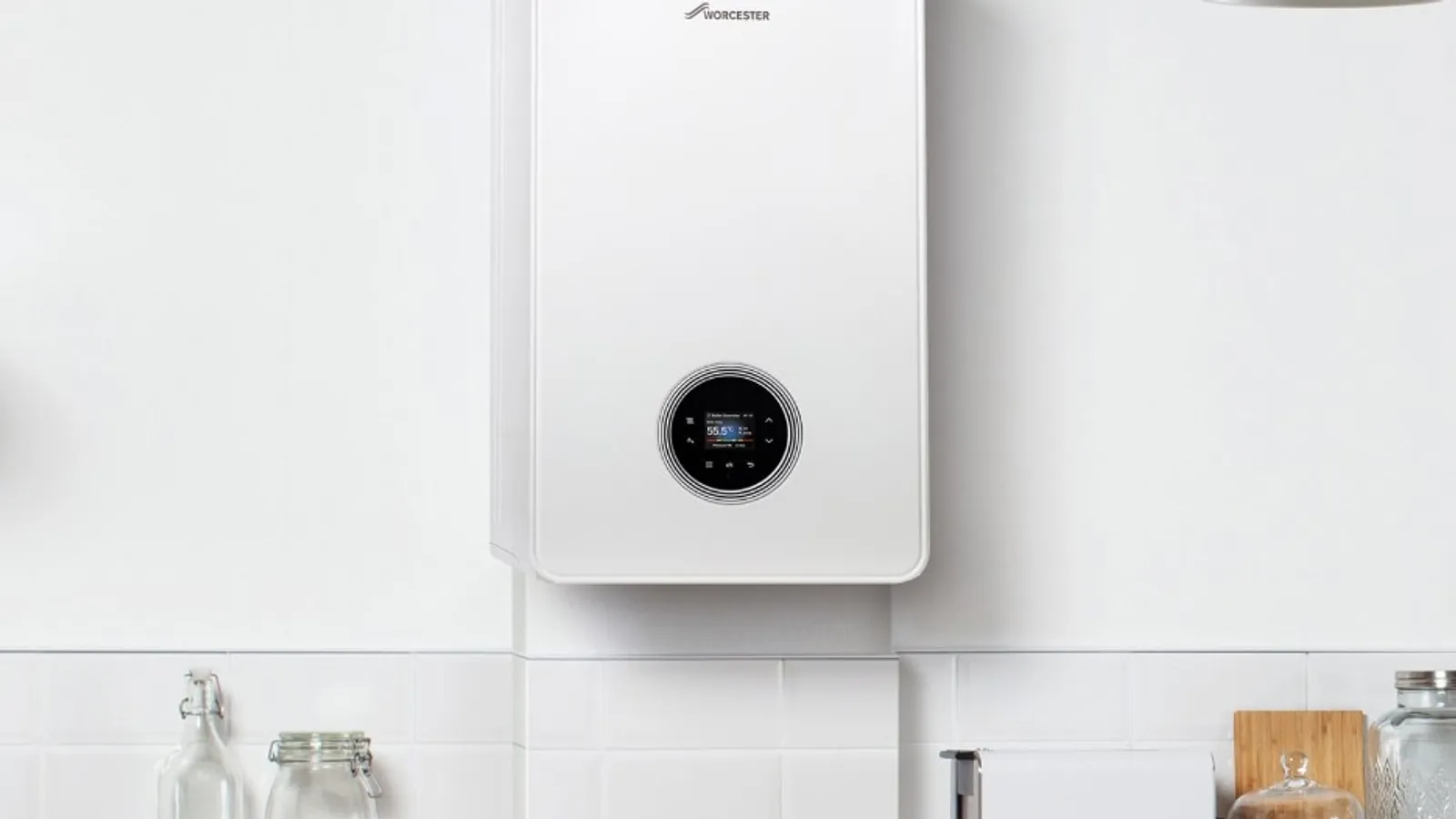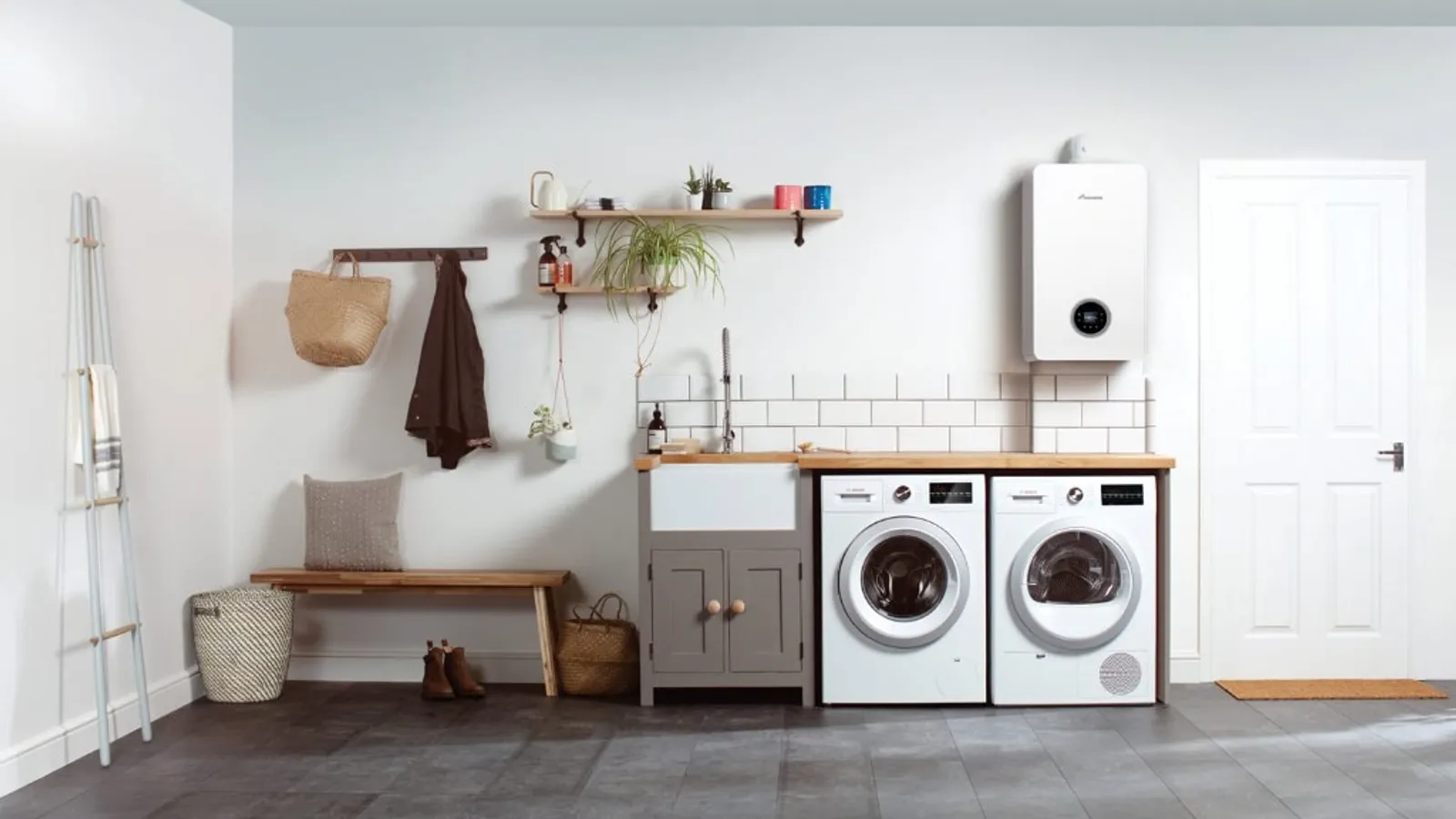







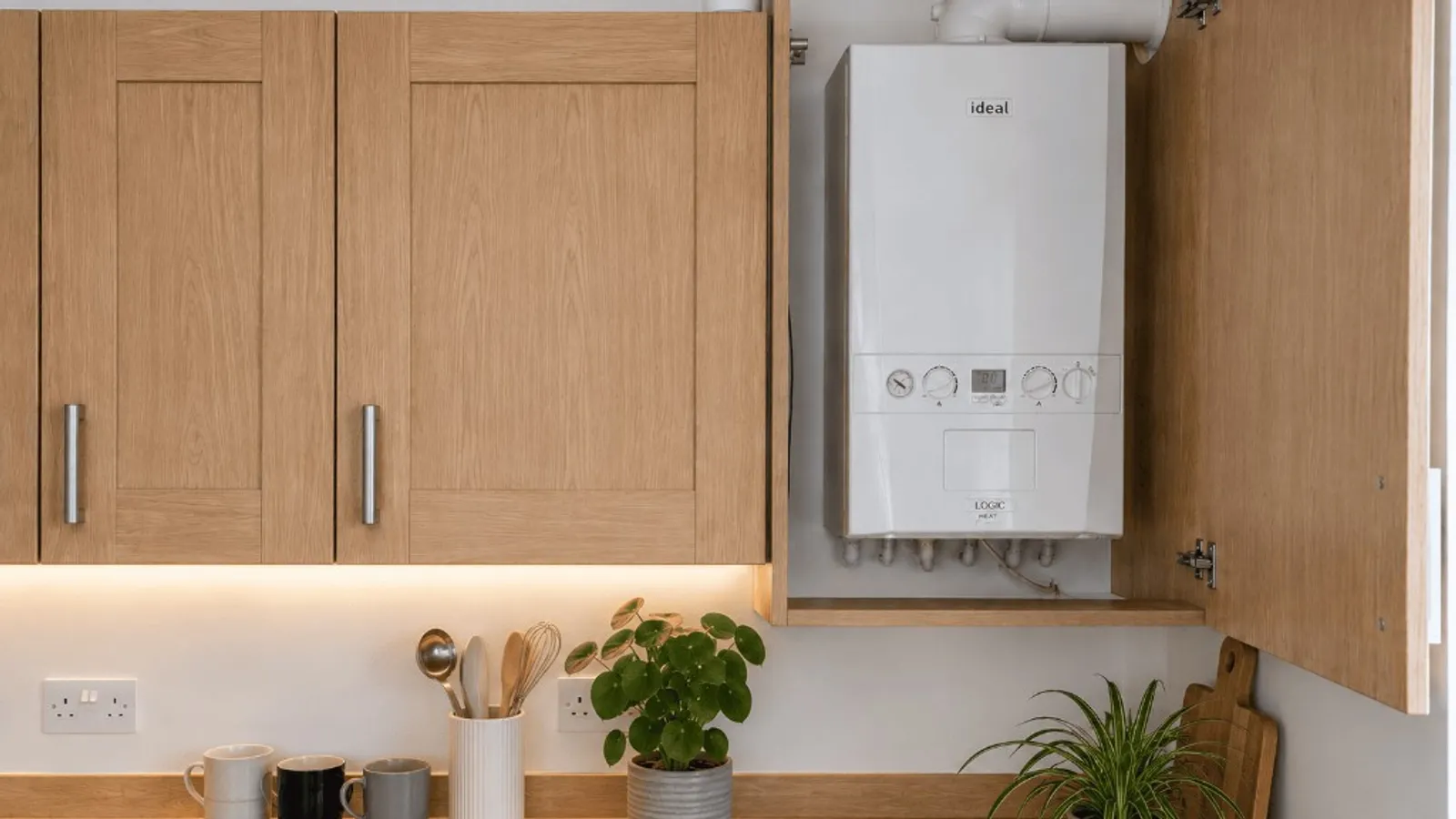
Pick a combi if you have one bathroom and want to free up the airing cupboard. Pick a system boiler if you have two bathrooms or a busy household running multiple taps at once. Pick a regular boiler only if your home is already set up that way and you don’t want to convert. Boiler type rarely makes a meaningful dent in running costs; the boiler’s efficiency rating and how well your home is insulated matter far more.
Combi boilers: hot water on demand
A combi heats water instantly when you turn on a tap, drawing from the mains rather than a stored cylinder. Nothing is held in reserve, so you never run out the way you can with a tank, and there’s no airing cupboard or loft tank taking up floor and roof space.
The trade-off is flow rate. Combis serve one outlet at a time at full pressure. Run a shower while filling a bath and the pressure at both will drop. Most modern combis from the Ideal Logic 2 range deliver around 12 to 15 litres per minute of hot water, which is plenty for a single bathroom but starts to feel weak if two showers run at once.
Combis suit flats, terraces, and three-bed semis with one bathroom. They’re the simplest replacement, the cheapest to install, and the most popular type by a long way.
System boilers: stored hot water for busier homes
A system boiler heats water and stores it in a pressurised cylinder, usually fitted in an airing cupboard. Because the water is pre-heated, multiple taps and showers can run simultaneously without the pressure drop you’d hit on a combi.
The cost of that performance is space. You need somewhere for the cylinder, plus the sealed pressurised tank arrangement that goes with it. Cylinder reheat sits between 20 and 40 minutes for a typical 200-litre tank; once it’s empty, hot water comes back fairly quickly. The Ideal Vogue system boiler range we fit is the option we go to most when a household needs simultaneous flow at multiple outlets.
System boilers suit homes with two or more bathrooms, larger families, and anyone who finds combi flow rates frustrating in practice.
Regular boilers: traditional setup with a loft tank
A regular boiler (also called heat-only or conventional) works alongside both a hot water cylinder and a cold water storage tank in the loft. Water is gravity-fed from the loft tank into the boiler and cylinder. It’s the original UK setup and still common in older homes.
The reason to keep one is mostly inertia. If your home is already configured for it, swapping like-for-like is the cheapest, least disruptive route, and it preserves the lower-pressure radiator system the house was designed around. The reason to consider replacing it with a combi or system boiler is the loft tank, which takes up space and can freeze in cold weather if poorly insulated.
How do the three types compare?
| Combi | System | Regular | |
|---|---|---|---|
| Hot water delivery | Instant, on demand | Stored in cylinder | Stored in cylinder |
| Footprint | Smallest, no cylinder | Cylinder, no loft tank | Cylinder plus loft tank |
| Two bathrooms running at once | Pressure drops | Strong flow to both | Adequate, lower pressure |
| Mains pressure dependent | Yes | No (pressurised cylinder) | No (gravity-fed) |
| Retrofit complexity | Easy if replacing combi | Medium if converting | Easiest as like-for-like |
| Typical home fit | Flats, one-bathroom houses | Two-plus bathroom homes | Older homes already set up |
Which type should you pick?
Three rules cover most decisions:
- One bathroom, one or two people at home: a combi is enough, and the simplest install.
- Two bathrooms, a family of four-plus, or any household that runs multiple showers at once: pick a system boiler with a properly sized cylinder.
- Existing gravity-fed regular setup that’s working fine: keep it. Converting to a combi or system means new pipework, removing tanks, and disrupting walls and ceilings, which rarely pays off unless you’re already mid-renovation.
If you’re between a combi and a system because you have one bathroom now but a growing family, size the system for where you’ll be in five years, not where you are today.
Does the boiler type change your gas bill?
Not significantly. All three types run at similar efficiency on modern condensing models, around 90 to 93 percent according to Energy Saving Trust. The difference is in convenience and flow, not gas use.
What does change your bill is the boiler’s efficiency rating, your home’s insulation, the temperature you set, and how well the heating controls match how you actually live. Get those right and the boiler type becomes a question of fit, not running costs.
Closing
Start with what you already have, count the bathrooms and the people who use them, and you’ll usually land on the obvious answer. The new boiler guide covers what an install actually involves, and the heat pump vs gas boiler comparison is worth a read if you’re not already committed to a gas replacement.
Frequently asked questions
Is a combi boiler enough for two bathrooms?
How long does it take a system boiler cylinder to reheat?
Should I switch from a regular boiler to a combi?
Does the boiler type affect my gas bill?
Last updated: